IMF and World Bank Meet as Global Debt Heads Toward Historic Levels
The IMF and World Bank are meeting in Bangkok as global public debt approaches historic levels and is projected to exceed 100% of world GDP by 2030.
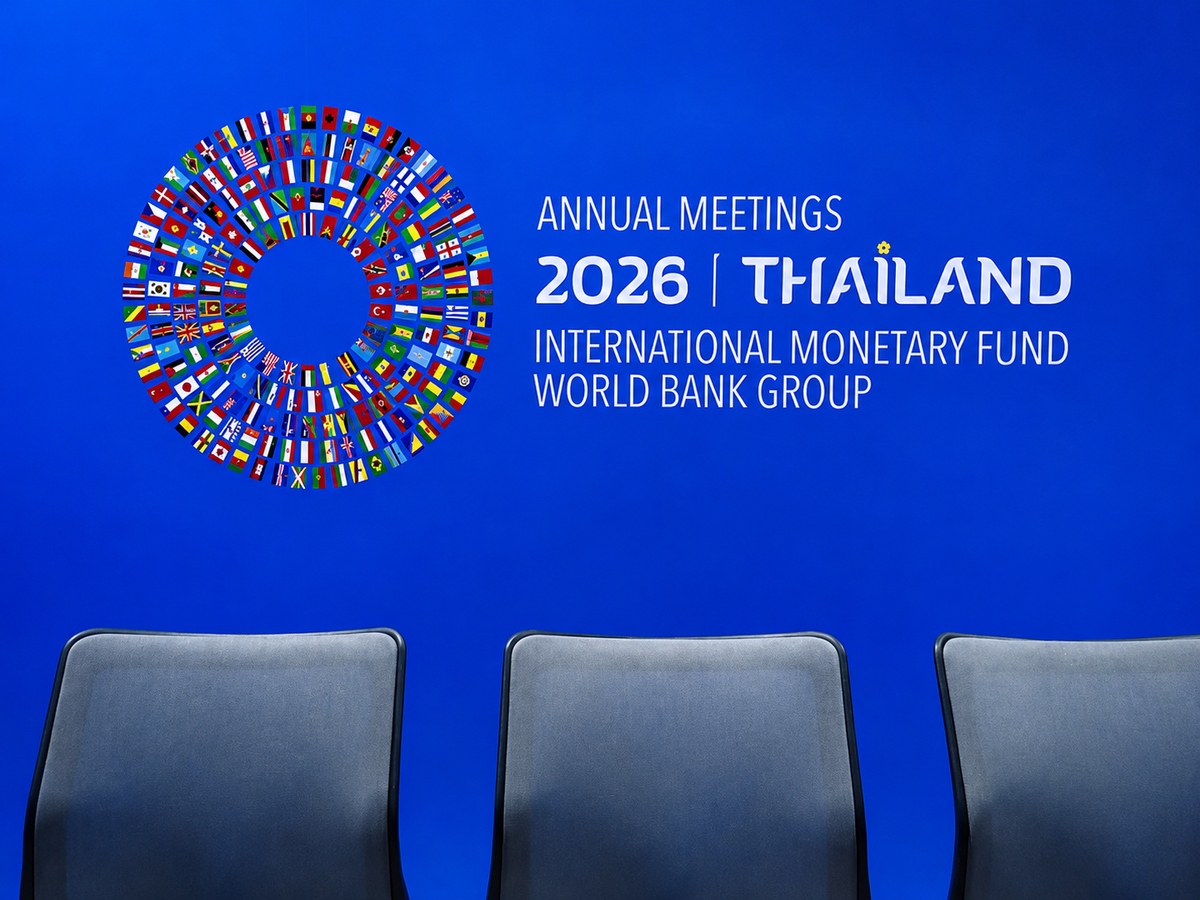
The world’s finance ministers and central bankers are gathering in Bangkok this week with an uncomfortable reality hanging over the meetings:
Governments have borrowed extraordinary amounts of money, interest costs are rising, and the global debt burden is approaching levels not seen since the aftermath of the Second World War.
The 2026 annual meetings of the International Monetary Fund and World Bank begin on October 12 and run through October 18, bringing together finance ministers, central bankers, development officials and investors from around the world.
Debt is expected to dominate much of the discussion.
Global public debt is already at historic levels and is projected to exceed 100% of world GDP by 2030, according to the IMF.
That means governments collectively would owe more than the value of everything the global economy produces in a year.
For decades, cheap money made that burden easier to ignore.
After the 2008 financial crisis, central banks kept interest rates extremely low for years. Governments borrowed heavily.
Then came the pandemic.
States spent enormous amounts supporting households, businesses and health systems. Public debt surged again.
The assumption was that governments could manage those debts because borrowing costs would remain relatively low.
That assumption is now under pressure.
Inflation forced central banks to raise interest rates.
Bond yields climbed.
And governments that accumulated enormous debt during the era of cheap money are discovering that refinancing it can become much more expensive.
IMF Managing Director Kristalina Georgieva has warned that high debt is now one of the central risks facing the global economy, particularly as governments simultaneously deal with an energy shock, geopolitical conflict and rising spending demands.
The problem is especially visible in major advanced economies.
The United States continues running large budget deficits despite operating at close to full employment.
European governments are increasing military spending dramatically.
Germany is rebuilding its armed forces.
France is dealing with political pressure over public finances.
Japan already carries one of the largest government debt burdens in the developed world.
At the same time, aging populations mean governments face higher pension and healthcare costs.
There is therefore no obvious period of austerity waiting around the corner.
Quite the opposite.
Governments want to spend more on defense.
More on energy security.
More on infrastructure.
More on AI and semiconductor capacity.
More on social programs.
More on climate resilience.
And more on servicing the debt they already accumulated.
Britain’s finance minister is expected to use the IMF meetings to urge major economies to adopt credible plans to bring borrowing under control, reflecting growing concern that fiscal policy itself is becoming a source of global financial instability.
The situation is even more difficult for poorer countries.
Developing economies are expected to make roughly $400 billion in external debt payments this year, according to the World Bank.
Around one-third of that bill is interest rather than repayment of the original debt.
For many countries, debt service is now competing directly with basic government spending.
Money used to pay foreign creditors cannot simultaneously be spent on schools, hospitals, roads or electricity infrastructure.
That creates a vicious cycle.
Weak infrastructure suppresses growth.
Weak growth reduces tax revenue.
Lower revenue makes the debt harder to service.
Governments then borrow more or raise taxes on already fragile economies.
The World Bank says it is now discussing potential crisis assistance with between 30 and 40 countries as high energy prices, fertilizer costs and other shocks put additional pressure on indebted developing states.
It has already made $25 billion available for crisis support and says that figure could eventually rise to as much as $100 billion if necessary. Reuters
The latest Middle East war has made the situation considerably worse.
The disruption of energy supplies has driven oil and diesel prices higher, creating what Reuters described as one of the largest energy shocks in modern history.
For countries that import nearly all their fuel, that immediately increases government expenditure, transportation costs and inflation.
Higher inflation then makes it harder for central banks to reduce interest rates.
Higher interest rates keep debt servicing expensive.
The world therefore finds itself trapped between two competing problems.
Governments would like lower rates because their debts are becoming increasingly costly.
Central banks cannot necessarily provide them because inflation remains a threat.
That tension is becoming particularly important in the United States.
America benefits from something most countries do not possess: the dollar is the world’s principal reserve currency, and U.S. Treasury securities remain central to the global financial system.
That allows Washington to borrow on a scale that would be impossible for many other governments.
But even the United States cannot escape arithmetic indefinitely.
As debt grows, interest increasingly becomes one of the federal government’s largest expenditures.
Eventually, governments face only a few options.
Raise taxes.
Cut spending.
Allow inflation to erode the real value of debt.
Grow the economy faster than the debt.
Or continue borrowing and hope investors remain willing to finance it.
The politically easiest choice is usually the last one.
That is precisely why debt keeps rising.
Politicians receive the benefits of spending immediately.
The cost of borrowing arrives later.
This has created a dangerous incentive structure across much of the developed world.
Governments routinely borrow during recessions.
They borrow during pandemics.
They borrow during wars.
They borrow during energy crises.
But during stronger economic periods, they rarely reduce debt enough to rebuild fiscal room for the next emergency.
Every crisis therefore begins from a higher starting point than the previous one.
The IMF increasingly wants countries to reverse that trend.
Its message is not that governments must eliminate debt.
Public borrowing can finance productive infrastructure, help economies survive recessions and spread the cost of major investments across generations.
The danger comes when debt grows persistently faster than the economy supporting it.
At that point, an increasing share of public revenue goes simply toward servicing yesterday’s spending.
There is another uncomfortable possibility.
The current AI investment boom could provide governments with exactly what they need: faster productivity growth.
The IMF says AI-related investment is helping keep global economic growth around 3%, with particularly large benefits flowing to Asian economies involved in producing chips and other technology infrastructure.
If AI genuinely raises productivity across the economy, stronger growth could make large debt burdens considerably easier to manage.
But governments cannot build fiscal policy around the assumption that a technological revolution will rescue them.
The central question in Bangkok is therefore not whether the world can continue borrowing.
It almost certainly can.
The question is how long governments can keep increasing debt faster than their economies without eventually forcing taxpayers, investors or future generations to absorb the adjustment.
For years, debt looked cheap.
Now the bill is arriving.