IMF Says AI Is Keeping the Global Economy Afloat Despite the Middle East War
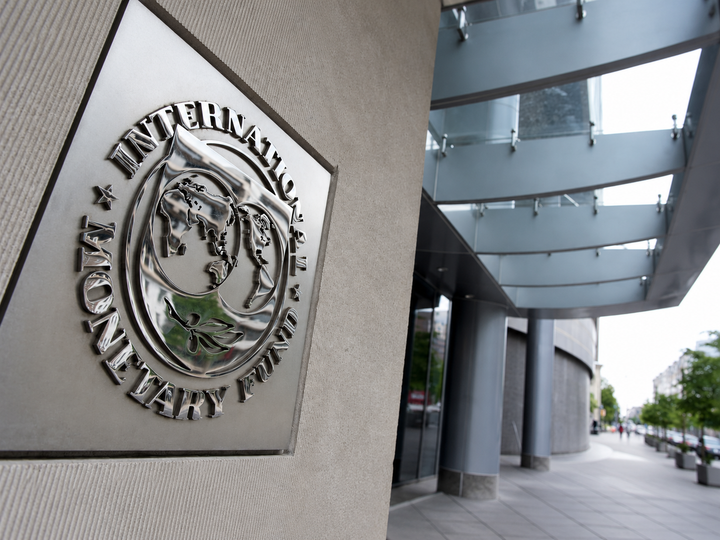
The IMF has raised its 2026 global growth forecast to 3.1%, saying massive investment in AI infrastructure is helping offset the economic damage from the Middle East war, high oil prices and disrupted trade.

Artificial intelligence is no longer just a technology story.
According to the International Monetary Fund, it is now one of the main reasons the global economy is still growing above 3% despite war in the Middle East, an energy shock and historically high debt.
The IMF raised its 2026 global growth forecast to 3.1%, up from 3.0% in July, saying unusually strong investment in AI infrastructure is helping offset the economic damage from higher oil prices, disrupted trade routes and geopolitical instability. Reuters
Without those offsets, the picture would look considerably worse.
The IMF estimates that global growth could have fallen closer to 2.5% if the energy shock had not been cushioned by rerouted oil supplies, emergency reserve releases and the extraordinary investment boom surrounding artificial intelligence. Reuters
That makes the current global economy unusually dependent on two forces moving in opposite directions.
The Middle East war is destroying growth.
AI is creating it.
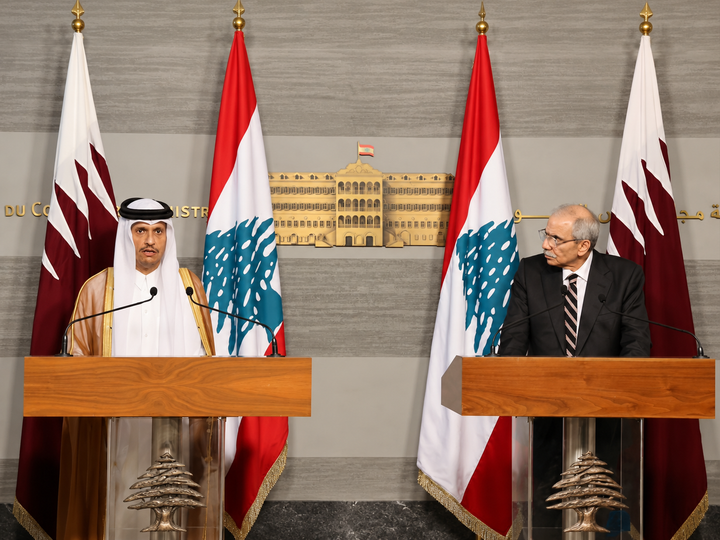
The war with Iran has driven oil prices above $100 a barrel, disrupted shipping through major energy corridors and increased transportation, fertilizer and manufacturing costs across the world.
For oil-importing countries, that works like a tax.
Households pay more for fuel.
Businesses pay more to move goods.
Farmers pay more for fertilizer and machinery.
Central banks face renewed inflation pressure just as many had hoped to continue cutting interest rates.
The IMF’s July World Economic Outlook update had already warned that the Middle East conflict was producing one of the most significant energy shocks in years, with global inflation expected at 4.7% in 2026. imf.org
AI investment is providing the counterweight.
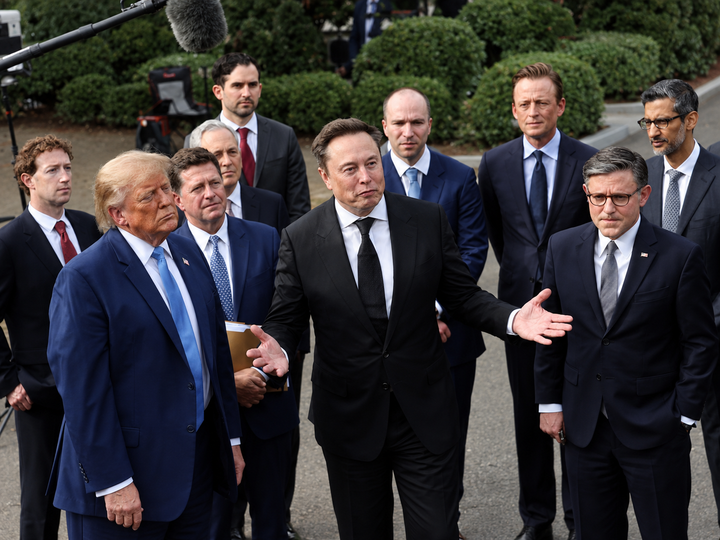
Technology companies are spending hundreds of billions of dollars on data centers, advanced chips, power generation, networking equipment and cloud infrastructure.
That money does not stay inside Silicon Valley.
It flows into construction.
Electricity generation.
Semiconductors.
Industrial equipment.
Copper.
Cooling systems.
Real estate.
Logistics.
And countries supplying the hardware required to build the AI economy.
This is particularly visible in Asia.
South Korea has benefited from enormous demand for memory chips.
Malaysia, Thailand and other manufacturing economies are gaining from data-center and electronics investment.
Mexico is receiving some benefit through technology-related exports and investment.
The IMF says economies positioned inside the AI supply chain are receiving a much larger boost than countries largely outside it. Reuters
South Korea provides one of the clearest examples.
The IMF sharply upgraded its 2026 growth forecast to 2.6%, partly because of strong exports of AI hardware and investment linked to the technology boom. imf.org
Samsung’s extraordinary recent results help explain why.
The company has reported what could become one of the largest quarterly operating profits in technology history as demand for the memory chips used in AI servers surged.
TSMC, Nvidia, SK Hynix and other semiconductor companies are experiencing similarly enormous demand.
AI is therefore doing something unusual.
It is generating an investment cycle large enough to influence global GDP.
That does not happen often.
Most new technologies initially transform individual industries.
AI is already affecting construction, energy, manufacturing, finance and trade simultaneously because the physical infrastructure required to support it is so large.
The United States remains at the center of the boom.
The IMF expects the U.S. economy to grow around 2.3% through 2027, supported by AI investment, consumer spending and tax cuts. Reuters
That resilience matters because the United States still represents roughly a quarter of the global economy.
If American technology investment were to collapse, the effect would no longer be limited to the Nasdaq.
It could materially weaken global growth.
And that is exactly what worries the IMF.
The same AI boom currently supporting the economy is becoming a major financial risk.
Technology companies are spending enormous amounts before anyone can say with certainty how profitable the resulting infrastructure will become.
Hyperscale technology companies now account for around 10% of global investment-grade bond issuance, compared with less than 1% in 2024, according to the IMF’s latest Global Financial Stability Report. Reuters
That means the AI boom is increasingly being financed with debt as well as cash.
If expected returns fail to materialize, investment could slow sharply.
Technology valuations could fall.
Companies could cut capital spending.
And one of the principal engines currently supporting the world economy would weaken at exactly the wrong moment.
The IMF is therefore warning against complacency.
AI is helping growth today.
It is not guaranteed to continue doing so.
There is also a growing divide between winners and losers.
The IMF says just 32 countries now account for roughly 95% of global growth. Reuters
Countries producing AI hardware or attracting technology investment are benefiting disproportionately.
Many poorer economies are receiving little of that upside while still paying the full cost of higher fuel, fertilizer and borrowing expenses.
Latin America illustrates the problem.
The IMF has cut its regional forecasts because countries there are absorbing the Middle East energy shock while receiving relatively little benefit from the global AI investment cycle. Regional growth is now expected at only 2.3% in 2026. Reuters
The Middle East itself has been hit even harder.
Saudi Arabia is expected to grow just 1.7% this year before rebounding in 2027.
Iran is projected to contract by 5.4%.
Iraq, Kuwait and Qatar are also suffering significant disruptions linked to energy production and transportation. imf.org
This creates a strange global picture.
One technological boom is partially offsetting one geopolitical disaster.
Data centers in Texas, chip factories in Korea and AI infrastructure across Asia are helping compensate for disrupted oil routes in the Gulf and higher energy bills in Europe.
That is remarkable.
It is also fragile.
The IMF identifies two major downside risks that could reinforce each other.
The first is another escalation in the Middle East that pushes oil prices even higher.
The second is a reassessment of AI profitability that causes investment and technology markets to fall sharply.
If both happened at once, the global economy could lose the very force currently helping it absorb the energy shock. imf.org
For now, that has not happened.
AI investment remains enormous.
Corporate spending continues.
Chip demand is strong.
And the global economy is growing faster than many economists expected when the Iran war disrupted energy markets earlier this year.
But the IMF’s message is not that artificial intelligence has saved the world economy permanently.
It is that the AI boom has bought it breathing room.
And the world is becoming increasingly dependent on that boom continuing.