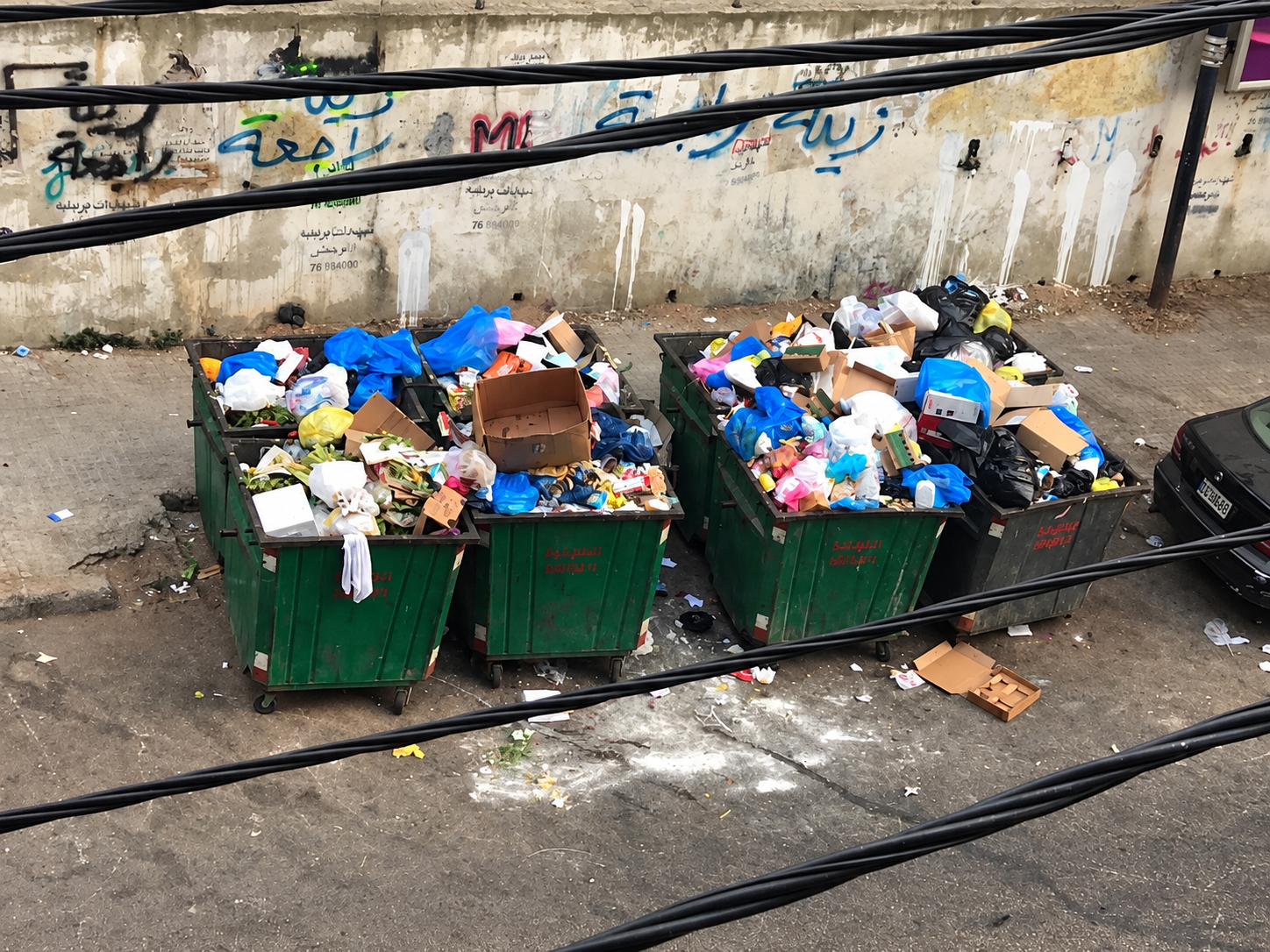
Lebanon Approves New Waste-Management Strategy as Landfills Reach Breaking Point
Lebanon's Cabinet has endorsed a new waste-management strategy centered on recycling, composting, decentralized municipal management and private investment. Authorities have two weeks to propose solutions to the growing landfill emergency.
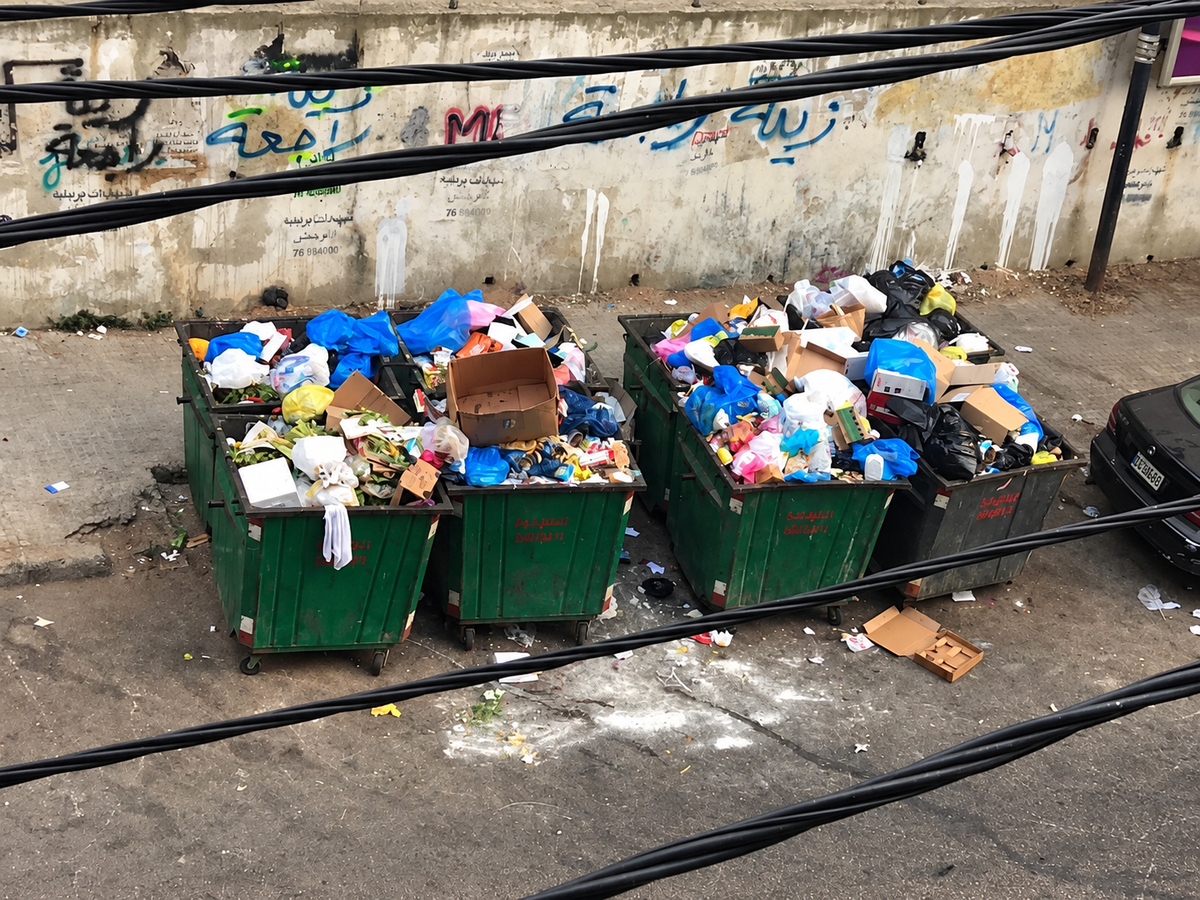
Lebanon's government has approved the main principles of a new waste-management strategy aimed at reducing the country's dependence on landfills, expanding recycling and attracting private investment into a sector plagued by repeated crises.
During a Cabinet meeting on October 29, chaired by Prime Minister Nawaf Salam, ministers endorsed a framework emphasizing waste reduction, sorting, composting, alternative fuel production and decentralized management.
The government also gave the relevant authorities two weeks to present concrete proposals addressing the country's increasingly urgent landfill crisis.
But one controversial option has returned to the discussion: incineration.
For a country that has spent more than a decade struggling with overflowing landfills, illegal dumping and recurring garbage emergencies, the latest strategy represents another attempt to resolve a problem successive governments have failed to manage.
What Does the New Strategy Propose?
The strategy establishes six main principles for managing Lebanon's household waste.
First, the government wants to reduce the amount of waste produced.
Second, municipalities will be encouraged to expand sorting at source, separating recyclable and organic materials before collection.
Third, recoverable materials such as paper, plastic, glass and metals would be extracted for recycling.
Fourth, organic waste would undergo composting or drying rather than being deposited directly in landfills.
Fifth, some remaining waste could be converted into alternative fuel.
Finally, residual waste would be disposed of through controlled landfilling or thermal treatment, subject to environmental and financial assessments.
The objective is to reduce the volume of material requiring final disposal.
This represents a departure from the approach that has historically dominated Lebanon's waste sector, where enormous quantities of mixed household garbage have been transported to landfills with limited recovery of reusable materials.
The principles are not entirely new. Lebanon has discussed recycling and waste reduction for years.
The challenge is turning those principles into functioning collection, treatment and disposal systems.
Landfills Are Running Out of Space
The urgency is becoming increasingly difficult to ignore.
The Jdeideh and Costa Brava landfills, serving Beirut and parts of Mount Lebanon, are being expanded despite warnings that further expansion is unsustainable.
Officials have presented the latest expansions as the final ones.
Meanwhile, the Tripoli landfill was temporarily closed earlier this month before reopening because no suitable alternative was available.
The Saida landfill is also saturated, while residents in Akkar have protested against continued operations at the Srar facility.
These problems expose a familiar cycle.
A landfill reaches capacity.
Residents protest.
Authorities announce emergency measures.
And the government eventually extends the life of an existing facility because no replacement system is ready.
The latest strategy is intended to end that cycle.
But doing so will require establishing alternative treatment capacity before the current disposal sites become unusable.
Municipalities Will Take a Larger Role
One of the most important proposed changes is decentralization.
Rather than relying exclusively on large centralized facilities, the strategy calls for municipalities to assume a more substantial role in waste sorting, treatment and coordination.
The National Waste Management Authority would oversee the broader framework and work with local administrations.
The approach could allow different regions to adopt solutions suited to their populations, geography and waste composition.
For example, municipalities with significant agricultural activity might benefit from facilities processing organic waste into compost.
Larger urban areas may require more sophisticated recycling and treatment infrastructure.
However, decentralization also creates challenges.
Many Lebanese municipalities face severe financial constraints and lack the equipment, staffing and technical expertise required to manage complex waste systems.
Without reliable funding and institutional oversight, transferring responsibilities could simply transfer the problem from the central government to local authorities.
Private Investment and the Cost of Waste Management
Environment Minister Tamara Elzein has emphasized the need to make the sector financially sustainable and attractive to investors.
The government's reform framework includes a cost-recovery law and the activation of the National Waste Management Authority, whose board was appointed earlier this year.
The strategy also encourages public-private partnerships, particularly build-operate-transfer arrangements.
Under this model, private companies finance and operate infrastructure for an agreed period before transferring it to the public sector.
Such projects could reduce the government's immediate capital requirements.
But they do not eliminate the cost of waste management.
Private operators must still recover their investments through service payments, fees or other contractual revenue.
Lebanon will therefore need transparent financing mechanisms to prevent new projects from becoming another source of expensive public liabilities.
Competitive procurement, independently assessed contracts and measurable operating standards will be essential.
The Controversy Over Incineration
The most disputed element of the strategy is the possibility of thermal waste treatment.
Supporters argue that modern facilities can reduce the volume of residual waste requiring landfilling and, in some cases, generate electricity or usable heat.
But environmental organizations have warned that incineration could prove expensive and inappropriate for Lebanon.
The Coalition for Household Waste Management argues that more than 70% of Lebanon's household waste is organic.
Organic material often contains substantial moisture, making mixed waste less suitable for efficient combustion without prior treatment.
Incineration also creates emissions and potentially hazardous residues, including fly ash, which require specialized handling.
The government has not approved the immediate construction of incinerators.
Information Minister Paul Morcos said relevant studies must first examine environmental risks, financial feasibility and the costs of managing hazardous residues and generating electricity.
Those assessments will be crucial before any technology is selected.
Two Weeks to Deliver Concrete Solutions
The Cabinet has instructed the Council for Development and Reconstruction, the National Waste Management Authority and relevant ministers to return within two weeks with practical proposals.
The deadline reflects growing pressure to address the immediate landfill emergency.
But it also creates an important test of the government's intentions.
Lebanon already has legislation, national strategies and institutions tasked with managing waste.
The National Waste Management Authority was established under Law 80 of 2018, while the updated strategy and cost-recovery framework advanced earlier in 2026.
The fundamental weakness has been implementation.
Another Strategy, or an Actual Solution?
Lebanon's garbage crisis is not primarily a failure to recognize the problem.
The country understands the need for sorting, recycling, composting, modern treatment facilities and environmentally responsible disposal.
What has repeatedly failed is execution.
A successful strategy would establish clear responsibilities, sustainable financing, transparent contracts and deadlines for operational facilities.
It would also measure results through reductions in landfill volumes, increased recycling rates and improved collection services.
Approving principles is a beginning, not a solution.
The real test will come when municipalities receive the necessary resources, investors sign workable agreements and treatment facilities begin operating.
Lebanese citizens have already seen enough strategies announced while garbage continues accumulating.
The government's next achievement must be visible outside the Cabinet chamber.
On cleaner streets, at functioning treatment facilities and in communities no longer living beside expanding mountains of waste.