Lebanon’s Banking Reform Faces Another Obstacle After Constitutional Council Ruling
Lebanon's Constitutional Council has annulled a key provision of the banking restructuring law following an appeal by President Joseph Aoun, reopening a dispute over the powers of Banque du Liban and the Higher Banking Commission.
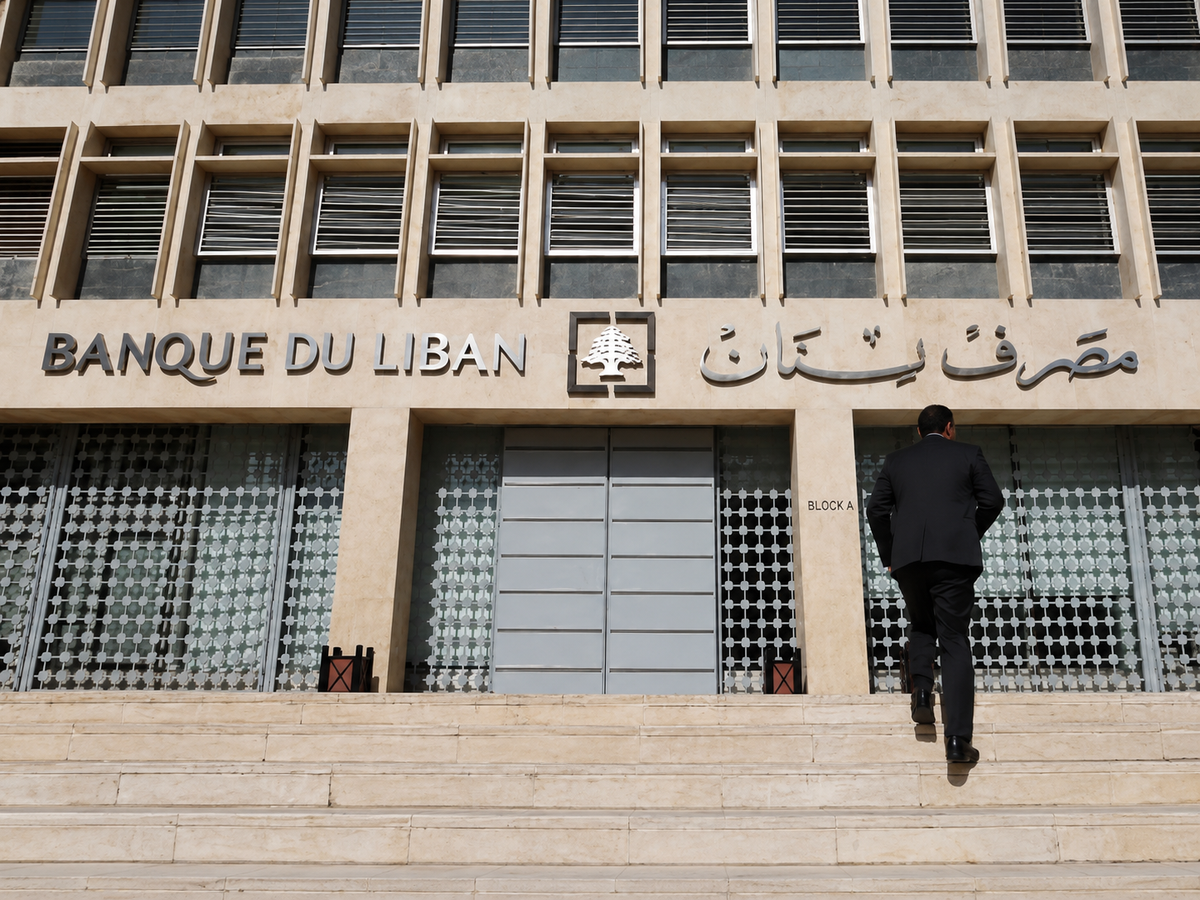
Seven years after Lebanon’s financial collapse, the country is still struggling to agree on how to restructure the banks that have kept depositors' savings effectively frozen since 2019.
The latest setback came on October 20, when the Constitutional Council unanimously annulled a key provision of the banking restructuring legislation following an appeal by President Joseph Aoun.
The ruling does not invalidate the entire banking reform law. But it reopens a dispute over who has the authority to restructure troubled banks, potentially complicating Lebanon’s negotiations with the International Monetary Fund.
For a country that desperately needs to restore confidence in its financial system, another institutional dispute is hardly reassuring.
The Constitutional Council struck down Article 3 of Law No. 71, adopted in September 2026, after determining that the provision had not been properly approved during the parliamentary voting process.
The ruling restores the previous wording under Law No. 23 of 2025, including an explicit reference to Lebanon’s Code of Money and Credit.
The court also removed provisions concerning travel bans and legal protections for bank employees involved in restructuring proceedings.
These changes may sound technical.
But they concern one of the most consequential questions in Lebanon’s recovery: who gets to decide the fate of banks that can no longer meet their obligations?
The dispute centers on the division of authority between Banque du Liban's existing institutions and the Higher Banking Commission, which is responsible for overseeing banking restructuring and resolution.
The amendments had attempted to clarify the powers of the commission and provide a framework for dealing with failed or insolvent banks.
President Aoun challenged the wording, arguing that removing the reference to the Code of Money and Credit created legal uncertainty over the Central Bank's responsibilities.
The Constitutional Council accepted the procedural challenge.
But it did not resolve the underlying institutional disagreement.
That question is now returning to Parliament.
For Lebanon, this is particularly frustrating because the country has already spent years debating banking legislation without restoring normal banking activity.
Since the financial collapse began in 2019, depositors have faced severe restrictions on accessing their savings.
Banks have largely stopped providing ordinary commercial credit.
Businesses have increasingly operated in cash.
And households that once relied on bank deposits, mortgages and personal loans have been forced to manage without a functioning financial system.
This is not a problem Lebanon can solve simply by waiting for economic growth to return.
A modern economy requires banks capable of collecting deposits, extending credit, financing investment and processing payments with public confidence.
Lebanon still lacks that foundation.
The banking restructuring law is intended to help determine which financial institutions can survive, which must be reorganized and which may eventually need to be liquidated.
It should also establish clear procedures for allocating losses and protecting depositors within the limits of available resources.
Those decisions will inevitably be painful.
But avoiding them does not make the losses disappear.
It simply prolongs uncertainty.
The IMF has repeatedly identified banking restructuring as a central requirement for a new financial assistance program.
In September, the Fund welcomed the amended banking resolution law as a significant step toward aligning Lebanon’s regulatory framework with international standards.
But it also stressed that the country must adopt a credible law addressing financial losses and deposit recovery.
That second law remains crucial.
Lebanon still needs a transparent framework establishing how the enormous losses accumulated across the banking system and central bank will be recognized and distributed.
The IMF has insisted that shareholders and junior creditors absorb losses before depositors, consistent with the hierarchy of claims.
It also wants any repayment framework to remain consistent with banking viability and public debt sustainability.
Those principles matter because Lebanon cannot rebuild its banking system by simply transferring every loss to taxpayers or promising depositors money that does not exist.
Shareholders must bear responsibility for the capital they invested.
Banks must undergo credible assessments.
The state and Banque du Liban must account transparently for their obligations.
And depositors need realistic information about what can be recovered and when.
Without that framework, restructuring risks becoming another political exercise in postponing accountability.
The latest Constitutional Council ruling does not eliminate the possibility of reform.
Parliament can revisit the disputed provision, correct the procedural problems and clarify the responsibilities of the institutions involved.
But the repeated revisions reveal how difficult it remains for Lebanon's political system to make binding decisions about the financial collapse.
Every delay carries economic consequences.
Businesses cannot rely on normal bank financing.
Potential investors remain cautious.
Depositors continue living with uncertainty over their savings.
And the government struggles to negotiate international support while essential components of its recovery strategy remain unfinished.
The timing is especially sensitive.
Lebanese officials are preparing for further discussions involving Banque du Liban, the Finance Ministry and IMF representatives.
Meetings in Paris are expected next week, ahead of another IMF engagement in Beirut.
Those discussions will have to address the legal consequences of the ruling and determine whether new amendments are necessary.
The government therefore faces another opportunity to demonstrate that banking reform is more than a sequence of legislative announcements.
There are legitimate questions about how restructuring authority should be divided.
The Central Bank must retain clearly defined responsibilities, while the institutions overseeing troubled banks need sufficient independence and legal authority to act.
The Constitutional Council was entitled to intervene when it identified an improper parliamentary procedure.
But proper procedure should not become an excuse for indefinitely delaying the substance of reform.
Lebanon has already spent seven years arguing over the consequences of its financial collapse.
The losses remain.
The deposits remain restricted.
The banks remain weakened.
And the economy continues operating without the credit system required for sustained investment and growth.
The irony is that almost everyone agrees Lebanon needs banking reform.
Yet the country's institutions still cannot settle the rules under which that reform will occur.
President Aoun, Parliament, Banque du Liban and the government now have to resolve the dispute without undermining the broader restructuring framework.
The objective should be a legally sound system that protects the public interest, recognizes financial losses honestly and restores the foundations of banking.
Not another temporary compromise designed to postpone politically difficult decisions.
Lebanon cannot rebuild an economy indefinitely financed by cash, remittances and private savings.
It needs banks that function.
And those banks cannot function normally until the country finally confronts the financial collapse instead of repeatedly rewriting the legislation meant to resolve it.