Lebanon’s Banks Are Quietly Seeing Billions of Dollars Return
Billions of dollars are once again sitting inside Lebanese banks, while nearly $1 billion in fresh-dollar checks have passed through Lebanon’s new banking system since it was introduced.
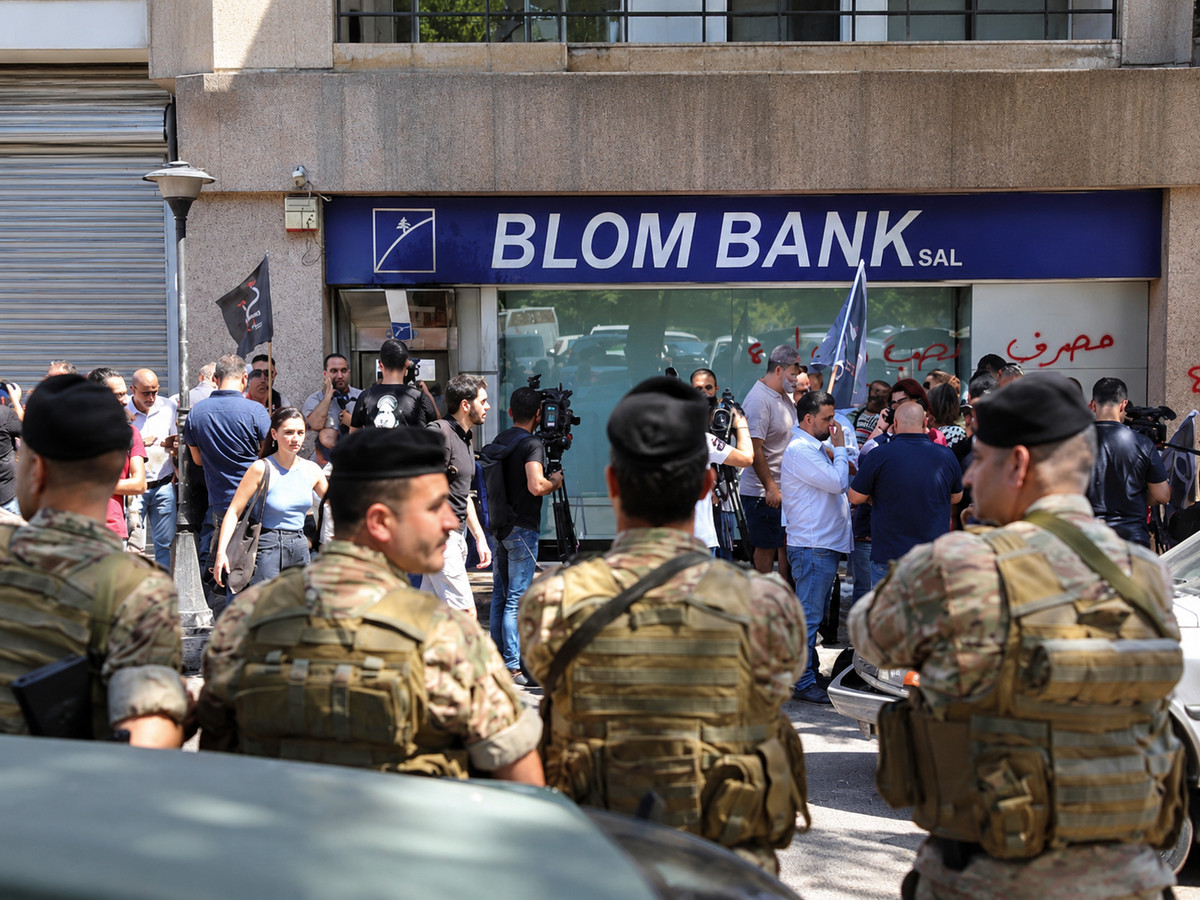
For years after Lebanon’s financial collapse, money moved in one direction: out of the banking system.
Depositors withdrew whatever they could. Businesses shifted to cash. Families kept dollars at home or abroad. Trust in banks, once central to Lebanon’s economy, collapsed alongside the financial system itself.
But something more complicated is now happening.
Billions of dollars are once again sitting inside Lebanese banks.
The important question is whether that means confidence is actually returning.
Banque du Liban’s latest detailed assessment showed that so-called “fresh” foreign-currency deposits had reached $4.36 billion by the end of June 2025. These are dollars treated separately from the deposits frozen during the 2019 crisis and can generally be withdrawn or transferred without the restrictions imposed on older accounts.
On the surface, $4.36 billion looks significant.
But the central bank itself cautioned against interpreting the number as evidence that Lebanese households and investors have simply begun trusting banks again.
Roughly half of those funds, around $2.2 billion, were linked to special accounts created under Banque du Liban’s deposit-repayment mechanisms, particularly Circular 158. Those accounts convert portions of old frozen deposits into dollars that can gradually be withdrawn under specific monthly limits.
Once those balances are excluded, Banque du Liban estimated genuinely liquid fresh deposits at around $2.16 billion.
More importantly, it said that figure had remained broadly unchanged since 2021.
In other words, billions of dollars have returned to the banking system, but not all of them represent new money flowing back because depositors suddenly trust Lebanese banks again.
Some of the apparent increase is actually old money being reclassified and gradually released through the post-crisis banking system.
Still, there are signs that banking activity is slowly returning in other forms.
By the end of July 2026, more than 76,000 fresh-dollar checks worth a cumulative $960.7 million had cleared through Lebanon’s new payment system, according to figures published by the Association of Banks in Lebanon.
The system was introduced after Banque du Liban’s Circular 165 took effect in 2023, allowing checks to be issued against fresh-dollar and fresh-lira accounts.
That may sound ordinary.
Before 2019, it was.
But after the crisis, Lebanon transformed rapidly into an almost entirely cash-based economy. Checks collapsed, credit cards lost much of their domestic importance, bank transfers became difficult and many businesses began conducting even large transactions using physical dollars.
The return of nearly $1 billion in fresh-dollar checks therefore represents something more significant than the number alone.
It suggests that at least part of Lebanon’s economy is cautiously beginning to use banks again as payment infrastructure.
That is not the same as trusting them with long-term savings.
Lebanese banks still operate under extraordinary conditions.
Pre-2019 deposits remain heavily restricted, while the total stock of deposits in the banking system is dramatically smaller than before the crisis.
Banque du Liban reported that customer deposits had fallen from around $172.1 billion in June 2019 to $88.8 billion by June 2025.
Most of that remaining amount consists of legacy deposits trapped inside the system rather than new savings.
The banks are also not yet functioning as banks normally do.
Fresh deposits must generally be backed by liquid funds held either by the banks themselves or with correspondent institutions abroad.
That protects depositors by keeping the money available for withdrawal.
But it also means banks cannot freely lend those dollars into the Lebanese economy.
Banque du Liban has acknowledged that fresh deposits therefore have little of the traditional “multiplier effect” that allows banking systems to turn deposits into loans, investment and economic activity.
Lebanon still largely lacks that mechanism.
A business looking to expand cannot rely on normal bank financing in the way it could before the crisis.
A household seeking a mortgage still faces an extremely limited lending market.
And the enormous unresolved losses from the old financial system remain.
The IMF estimates that roughly $70 billion in losses still need to be distributed among the state, Banque du Liban, commercial banks and depositors before Lebanon can complete a comprehensive banking restructuring.
That process is now beginning to move.
Parliament approved amendments to Lebanon’s bank-resolution framework in August, and the government is pushing for a new agreement with the IMF after years of stalled negotiations.
Banque du Liban has also estimated that roughly $2.2 billion could be needed to recapitalize the banking sector under its proposed restructuring framework.
If restructuring eventually produces healthier banks, protects fresh deposits and creates a credible solution for old accounts, the billions currently entering or circulating through banks could become the beginning of something more substantial.
Lebanon’s financial system once depended heavily on attracting dollars from its diaspora, investors and businesses.
That model eventually became unsustainable, but Lebanon will still need a functioning banking system if it wants to finance businesses, attract investment and move away from an economy dominated by physical cash.
For now, the numbers show the beginnings of normalization, but not yet a restoration of the old system.
Fresh dollars are being deposited.
Checks are being written again.
Businesses are using banks for transactions.
But Lebanese savers have not yet returned tens of billions of dollars to the system, and the core losses of the 2019 collapse remain unresolved.
Lebanon’s banks are beginning to see money return.
Trust will take considerably longer.