Lebanon's Second International Airport Signals a Shift in the Country's Political Balance
Lebanon's second international airport is set to open in December, ending decades of delays and opposition from Hezbollah. Beyond its economic potential for Akkar, the project reflects a changing political balance and the state's growing ability to advance long-blocked initiatives.
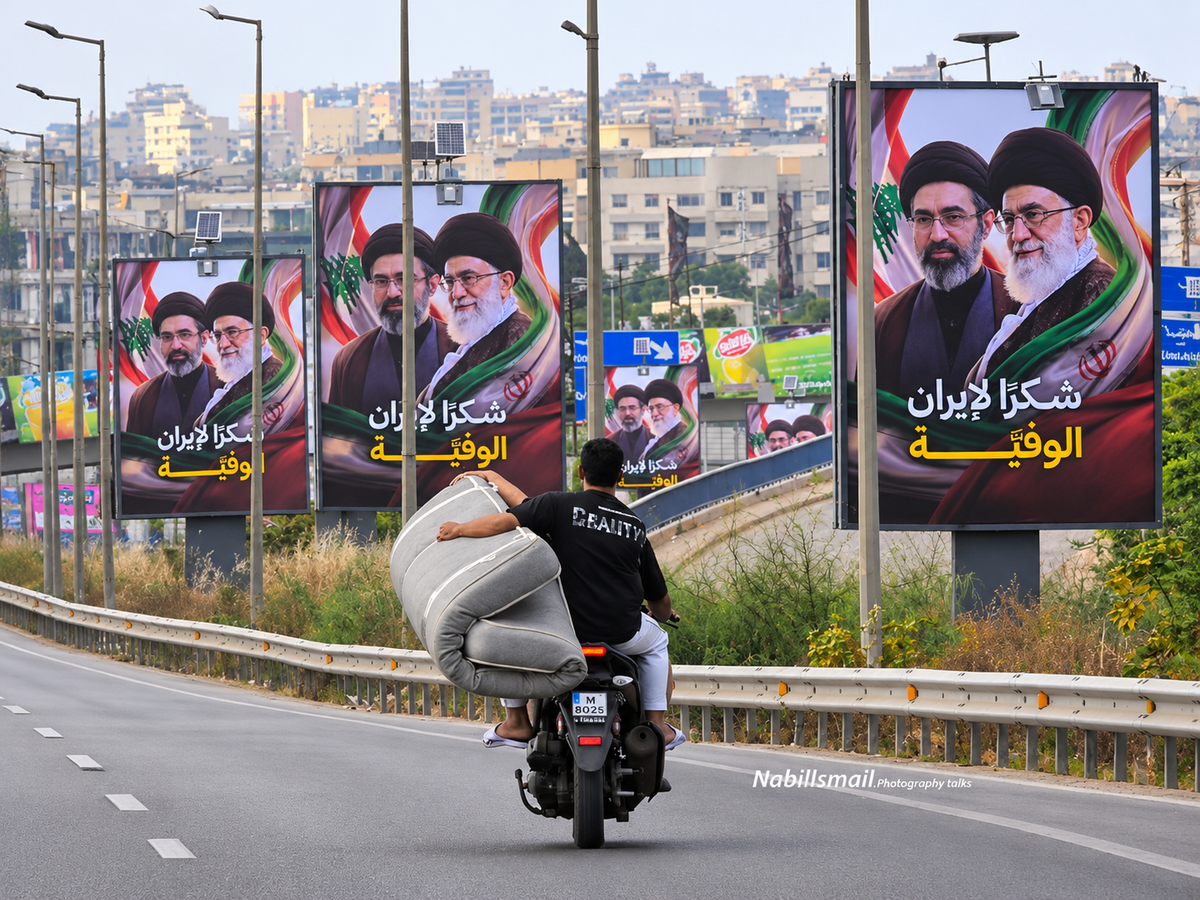
After decades of delays and political opposition, Lebanon is preparing to reopen René Mouawad Airport in Akkar. Beyond its economic potential, the project reflects the weakening of Hezbollah's political influence and the government's growing willingness to challenge longstanding constraints.
Lebanon is preparing to launch commercial flights from its second international airport on December 14, ending decades of delays surrounding a project that has become a symbol of the country's changing political landscape.
René Mouawad Airport, located in Qlayaat in northern Lebanon's Akkar governorate, will initially connect Lebanon to Türkiye, Egypt and Jordan, offering an alternative to Beirut's Rafic Hariri International Airport.
While officials have emphasized the project's economic benefits, its political significance may be equally important.
For years, Hezbollah opposed reopening the airport, according to politicians involved in earlier negotiations. The government's decision to move forward despite that opposition reflects a shift in the balance of political power following the conflicts of 2024 and 2026.
A Project Long Blocked by Political Opposition
Northern Lebanese politicians have spent decades advocating the transformation of Qlayaat's largely unused military airfield into a civilian airport.
The project was repeatedly delayed despite its potential to stimulate economic activity in Akkar, one of Lebanon's most economically disadvantaged regions.
Former MP Hadi Hobeich told Reuters that lawmakers attempted to advance the project in 2022 but encountered opposition from Hezbollah.
According to Hobeich, the organization raised objections concerning control of airport security and resisted the proposal despite support from other political factions.
The airport also faced opposition from former Syrian President Bashar al-Assad, whose government reportedly feared that the facility could come under the control of security authorities hostile to Damascus.
Hezbollah has since expressed support for developing northern Lebanon, but its earlier opposition illustrates the political obstacles that prevented the project from advancing.
The situation changed following Hezbollah's military setbacks, the collapse of Assad's government and the formation of a Lebanese government increasingly committed to asserting state authority.
Breaking Beirut Airport's Longstanding Monopoly
Beirut's Rafic Hariri International Airport has served as Lebanon's only regular commercial aviation gateway for decades.
Its location beside Beirut's southern suburbs, where Hezbollah maintains substantial influence, has made aviation security a recurring political concern.
The airport has also experienced serious disruptions during conflicts between Israel and Hezbollah, exposing the vulnerability of relying on a single international airport.
Establishing a second gateway in northern Lebanon could reduce that dependence.
More importantly, it would disperse aviation infrastructure beyond the capital and demonstrate that major national projects can proceed without requiring the approval of every powerful political faction.
Prime Minister Nawaf Salam described the decision to reopen Qlayaat as fundamentally political when launching the rehabilitation project in June.
Nevertheless, reopening the airport should not be confused with resolving Hezbollah's armed status or establishing complete state control over national security.
A Potential Economic Turning Point for Akkar
The airport could also generate significant opportunities in a region that has historically received limited public investment.
Public Works and Transport Minister Fayez Rasamny told Reuters that private investors would contribute approximately $5 million to $6 million toward rehabilitation and operations.
The government has awarded a four-year operating concession to Sky Lounge Services.
The company hopes the project could generate up to $20 million in government revenue over four years, although this remains a projection rather than guaranteed income.
Initial operations are expected to include seven weekly return flights operated by Mada Airways: three to Istanbul, two to Cairo and two to Amman.
Future expansion could support tourism, agricultural exports, freight services and commercial activity connected to the Port of Tripoli and the Tripoli Special Economic Zone.
The airport could also serve travelers from neighboring parts of Syria.
Will the December Opening Proceed as Planned?
Despite the political breakthrough, several practical obstacles remain.
Technical testing began on November 22, but runway rehabilitation, security screening equipment, customs facilities and other operational requirements still need to be completed.
The planned December 14 commercial launch remains dependent on final safety approvals and operational readiness.
Authorities have also expanded the proposed passenger terminal from approximately 2,000 to 4,700 square meters.
Rasamny has stressed that the airport will complement Beirut rather than replace it.
Its longer-term commercial success will depend on passenger demand, airline participation, competitive ticket prices and continued infrastructure investment.
A Test of Lebanon's Changing Political Order
Qlayaat's reopening demonstrates how changes in Lebanon's political balance can unlock projects that remained stalled for decades.
Hezbollah's weakened influence has allowed the government to advance an initiative previously constrained by political disagreements.
However, the airport's significance should ultimately be measured by more than its symbolic challenge to Hezbollah.
The government must demonstrate that it can operate the facility transparently, maintain security, attract investment and deliver economic benefits to northern Lebanon.
Lebanon's second airport represents a notable shift away from the political paralysis that has obstructed national development. But its success will depend on whether the state can translate newfound political freedom into functioning institutions and lasting economic progress.