Qatar’s Prime Minister Visits Beirut With Reported Plan to Address Electricity Crisis
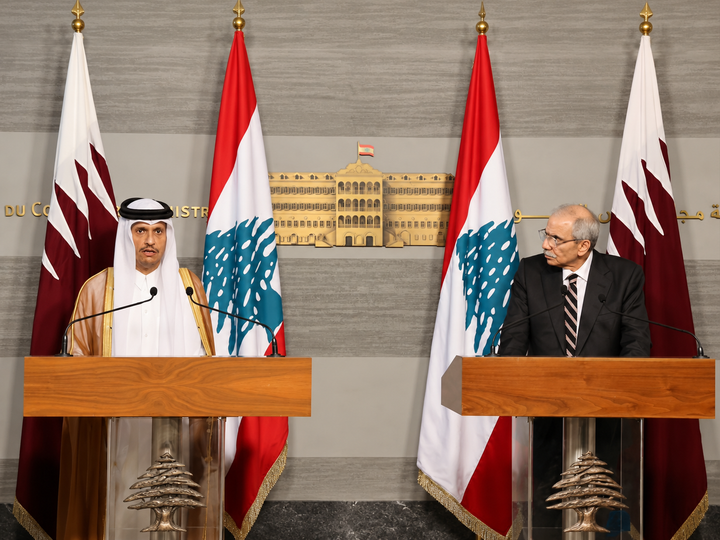
Qatar’s Prime Minister Sheikh Mohammed bin Abdulrahman Al Thani has arrived in Beirut with a reported plan to support Lebanon’s electricity sector, including possible assistance with power generation and fuel supplies.
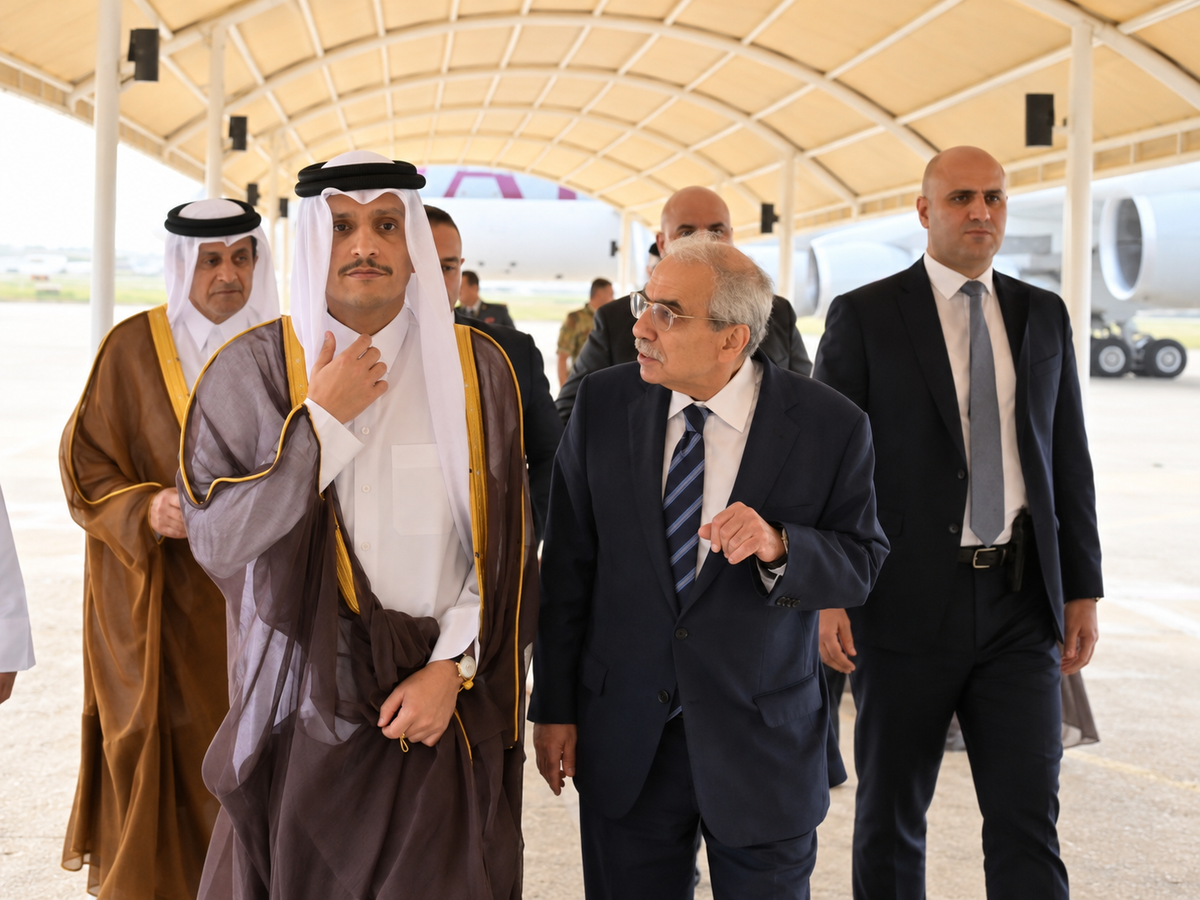
Qatar’s prime minister has arrived in Beirut carrying what Lebanese media describe as a comprehensive proposal to address one of the country’s oldest and most expensive failures: electricity.
Sheikh Mohammed bin Abdulrahman Al Thani arrived in Lebanon on October 15 for an official visit and was received at Beirut airport by Prime Minister Nawaf Salam. Lebanon’s government confirmed the visit, while diplomatic sources told Al-Jadeed that electricity would be one of its central files.
According to those reports, the Qatari proposal includes support for electricity generation and fuel supply, with broader Saudi-Qatari steps expected to support the Salam government on basic economic and living-condition issues. The precise structure, financing and timeline of the electricity plan have not yet been publicly released.
That distinction matters.
Lebanon has heard promises about solving electricity for decades.
What matters now is whether Qatar is offering another temporary lifeline or something capable of changing the structure of the sector.
The urgency is difficult to overstate.
Lebanon still cannot provide continuous state electricity after spending billions of dollars on the sector over decades. Households and businesses remain heavily dependent on private generators, solar systems and imported fuel.
Prime Minister Salam himself acknowledged in September that electricity requires billions of dollars in investment and that the Lebanese state cannot finance the necessary infrastructure alone.
The situation has worsened this year because of the regional energy shock.
Higher fuel prices have pushed up the cost of running both Electricité du Liban and private generators. Businesses have warned that diesel costs are becoming unsustainable, while households are once again paying large monthly generator bills simply to receive basic power.
The electricity crisis has also become a political crisis inside the government.
Energy Minister Joe Saddi has been absent from recent Cabinet sessions while pressing for faster action on the sector. Cabinet on October 15 again discussed how to increase electricity supply and secure the necessary resources, while Salam has been meeting Saddi separately on both immediate measures and medium-term projects.
This is where Qatar could make a difference.
It has money.
It has energy.
And unlike Lebanon, it has the capacity to finance major infrastructure without relying on an already bankrupt state.
Qatar has also been discussing Lebanese energy cooperation for some time.
When Salam met Al Thani in New York on September 21, the two governments specifically discussed cooperation in energy and electricity, alongside reconstruction and support for the Lebanese Army.
There is precedent too.
Qatar had previously offered to help finance renewable-energy projects in Lebanon, including plans for three solar power plants. Those proposals never became the transformation they might have been.
In 2024, then-Economy Minister Amin Salam said Qatar’s offer to build three renewable plants had been blocked by political interests, fuel companies and private generator operators.
That history should be remembered now.
Lebanon’s electricity problem has never been purely technical.
The country knows how to generate electricity.
It knows what infrastructure needs to be built.
It knows that EDL requires restructuring.
It knows private investment must enter generation.
It knows collection has to improve.
It knows fuel dependence has to fall.
The real obstacle has been political.
Electricity has been one of the most lucrative centers of patronage, temporary contracts and institutional paralysis in the Lebanese state.
That is why any Qatari plan will succeed only if Beirut is prepared to change the system receiving the money.
Salam’s government has taken several steps in that direction.
It finally established the Electricity Regulatory Authority after a delay of more than two decades, approved a new sector policy and began work on restructuring EDL and eventually transforming it into a company operating under a more commercially sustainable model.
The government is also working on reviving regional energy links.
Salam has discussed electricity interconnection with Turkey and Syria, while the government says the Arab Gas Pipeline could eventually supply Deir Ammar and allow cheaper generation.
Those are the right kinds of reforms.
But Lebanese citizens have heard plans before.
The test is electricity arriving at the socket.
If Qatar simply provides fuel, Lebanon may receive more hours of electricity for a period of time.
That would help households and businesses immediately.
But once the fuel runs out, the old problem returns.
If instead Doha is prepared to finance generation capacity, grid improvements, gas infrastructure or renewable projects under transparent commercial arrangements, the effect could be much larger.
Lebanon needs investment, not another donation cycle.
The difference is fundamental.
Emergency fuel keeps a broken system operating.
Infrastructure changes the system.
Qatar’s involvement could also provide something Lebanon badly needs: an external investor with both capital and political leverage.
Large-scale Qatari investment would make it harder for domestic factions to quietly bury projects once they threaten entrenched interests.
But ultimately even Qatar cannot reform Lebanon’s electricity sector on Lebanon’s behalf.
Doha can provide money.
It can provide fuel.
It can finance power plants.
It can bring investors.
It cannot force Lebanese institutions to implement reforms, collect bills, eliminate political interference or dismantle the networks that have profited from dysfunction.
That remains Beirut’s responsibility.
The reported Qatari plan therefore represents an opportunity, but also another test.
Lebanon has spent decades claiming that electricity cannot be fixed because it lacks money.
Now one of the wealthiest energy-producing states in the world is arriving with a reported plan to help.
If this opportunity is wasted too, Lebanon will have a harder time blaming a lack of resources.