The U.S. Is Releasing Another 40 Million Barrels of Emergency Oil
The United States is releasing another 40 million barrels of crude from its Strategic Petroleum Reserve as the Iran war continues to reshape global energy markets.
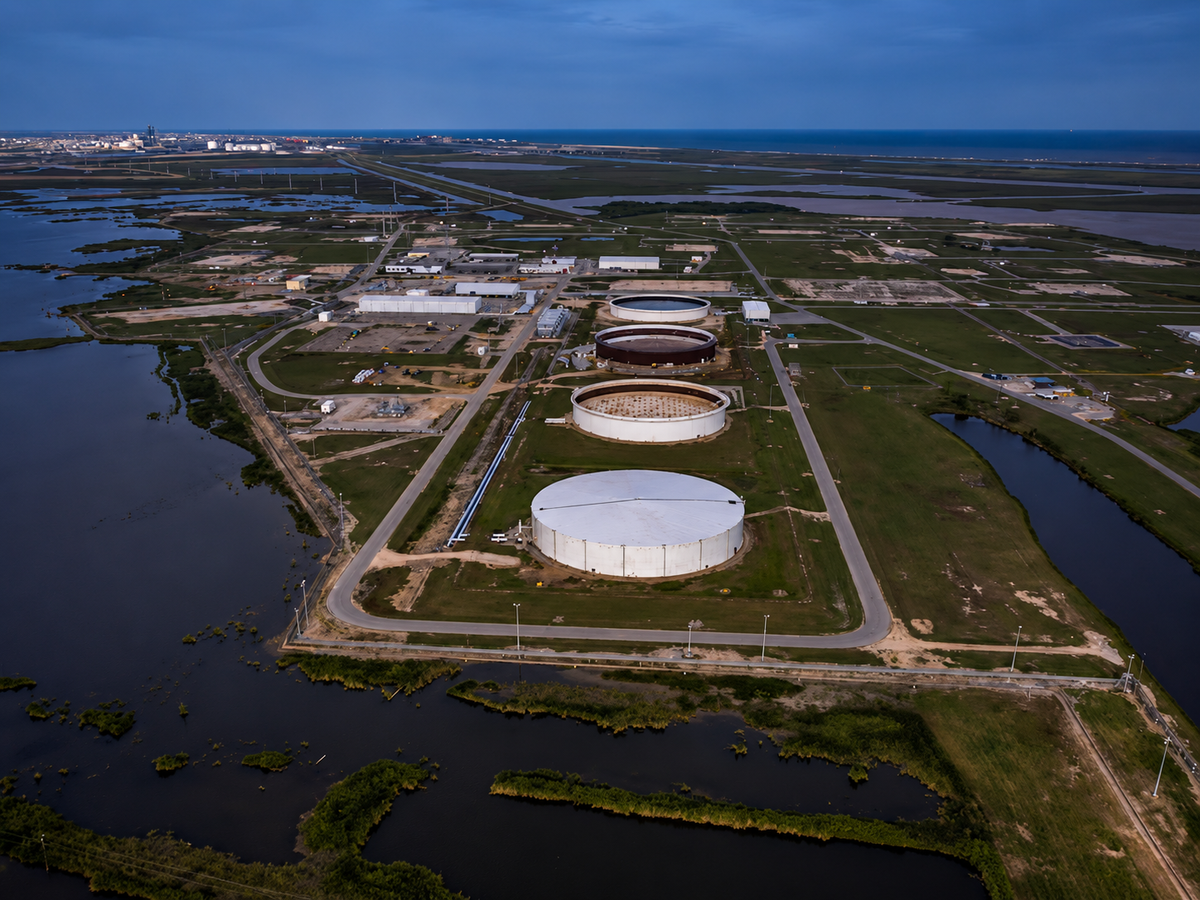
The United States is preparing to release another 40 million barrels of crude from its Strategic Petroleum Reserve as the war with Iran continues to disrupt global energy markets and keep pressure on fuel prices.
The U.S. Department of Energy announced on September 29 that companies will be able to borrow up to 40 million barrels from the reserve. The move represents the final portion of Washington’s contribution to a much larger emergency release coordinated through the International Energy Agency following the outbreak of the Iran war.
Under that agreement, roughly 30 countries committed around 400 million barrels of emergency oil to the market, with the United States responsible for 172 million barrels.
The latest release is structured as a loan rather than a permanent sale. Energy companies borrowing the crude will eventually have to return it, along with additional barrels as a premium. The oil is not expected to be fully returned until 2028.
The decision highlights how dramatically the Iran war has altered the global energy system.
Since fighting began earlier this year, disruption around the Strait of Hormuz, one of the world's most important energy corridors, has forced Gulf producers to rely on alternative pipelines, protected shipping routes and emergency stockpiles to keep oil moving.
Those measures have prevented the kind of extreme shortage initially feared, but they have come at a cost.
Tanker rates have surged, transport routes have become longer and more expensive, and governments have drawn heavily on emergency reserves to compensate for lost or delayed supply.
Oil prices remain elevated. Brent crude recently traded above $100 a barrel and is on track for a roughly 14% rise in September, while uncertainty surrounding negotiations with Iran and the future of the Strait of Hormuz continues to move markets.
The strain is particularly visible in refined fuels such as diesel, where shortages have pushed prices higher and created problems for transportation, agriculture and industry.
Washington has even urged European governments to release more of their own emergency diesel and petroleum inventories, arguing that several countries have not yet fulfilled their share of the coordinated international response.
But repeated releases are also creating another problem: the United States' emergency reserve itself is becoming increasingly depleted.
The Strategic Petroleum Reserve now contains around 284 million barrels of crude, its lowest level since 1982. It held more than twice that amount less than a decade ago.
The reserve was created after the energy crises of the 1970s to protect the United States against major disruptions to oil supplies.
Today, it is being used to cushion one of the largest disruptions to global oil markets in decades.
The latest 40 million barrels may provide another layer of short-term supply.
But the longer the Iran war continues, the more difficult the underlying calculation becomes: governments can use emergency reserves to soften an energy shock, but those reserves are not unlimited.