The World’s Oil Cushion Is Becoming “Scarily Thin”
Saudi Aramco has warned that the world’s oil inventories are becoming “scarily thin” after the Iran war removed billions of barrels of expected supply and forced governments and companies to draw heavily from emergency stocks.
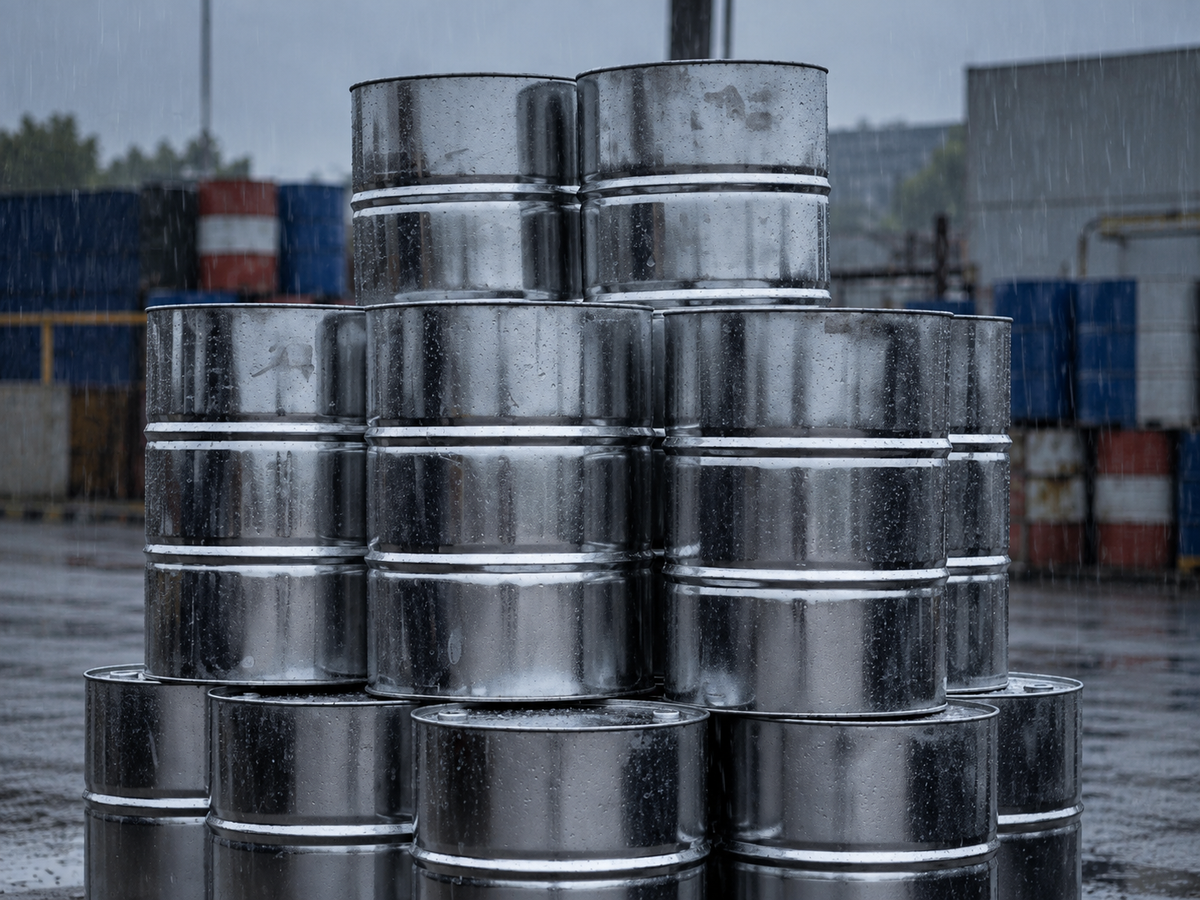
The world is not running out of oil underground.
It is running dangerously low on the oil already sitting in storage and available to absorb the next crisis.
Saudi Aramco chief executive Amin Nasser warned this week that global oil inventories have become “scarily thin” after months of war, disrupted shipping and repeated releases from emergency reserves.
His warning comes only days after G7 countries agreed to release another 100 million barrels of crude oil and diesel in an attempt to bring fuel prices down.
The problem is that those emergency releases are increasingly being drawn from a shrinking cushion.
Nasser estimates that disruptions linked to the Iran war have removed roughly 3 billion barrels of expected oil supply from the market, while more than 1 billion barrels have already been withdrawn from inventories to compensate.
Only around 6 billion barrels remain in commercial inventories globally, and much of that oil is effectively unavailable because it must remain inside pipelines, refineries and storage systems simply to keep them operating.
That leaves the amount of oil that can actually be released into the market considerably smaller than the headline number suggests.
And it explains why another disruption could now have a much larger impact on prices.
For decades, oil inventories have acted as the global energy system’s shock absorber.
When production temporarily falls, companies can draw crude from commercial storage.
When the disruption becomes severe enough, governments can release strategic petroleum reserves.
Those barrels buy time while production or shipping recovers.
But the system works best when inventories are full before the crisis begins.
Today, they are being depleted while the crisis is still continuing.
The central problem remains the Strait of Hormuz.
The narrow waterway at the entrance to the Persian Gulf normally carries an enormous share of global oil and liquefied natural gas exports.
The Iran war disrupted that flow and forced Gulf producers to redirect as much supply as possible through pipelines and alternative export terminals.
Saudi Arabia’s East-West pipeline has become particularly important.
It allows crude from fields in the kingdom’s east to travel across the country and reach the Red Sea without passing through Hormuz.
Nasser said Brent crude could have reached $200 a barrel without that infrastructure. The pipeline is currently operating at roughly 80% of capacity after recovering from an earlier attack.
Gulf exports have begun recovering.
Shipments recently reached around 15.5 million barrels per day.
But the recovery has not been enough to rebuild stocks because consumption continues at the same time.
The world is therefore replenishing the flow while still drawing down the buffer.
The situation is even more serious for refined fuels.
Kuwait Petroleum chief executive Shaikh Nawaf Al-Sabah said the global market is currently short roughly 6 million barrels per day of refined petroleum products.
That includes diesel, jet fuel and other products that cannot simply be replaced by increasing crude production.
Oil has to be refined first.
And global refining capacity cannot immediately compensate for the facilities and supply routes disrupted across the Middle East and Russia.
This is why diesel prices have risen more sharply than crude itself.
Diesel powers trucks, agricultural machinery, construction equipment and large sections of industry.
When it becomes scarce, the impact travels through the economy.
Transportation becomes more expensive.
Farmers pay more to operate machinery.
Businesses pay more to move goods.
Eventually consumers see the cost in food, deliveries and manufactured products.
The latest emergency release is intended to slow that process.
G7 governments agreed on October 2 to release 100 million barrels of crude and diesel from emergency reserves over four months.
Markets responded almost immediately.
IEA Executive Director Fatih Birol said oil prices fell by about $5 following the announcement, while European gasoil and U.S. diesel prices also dropped.
That demonstrates why strategic reserves exist.
But it also reveals their limitation.
One hundred million barrels sounds enormous.
The world consumes roughly that amount of oil every day.
Emergency reserves can smooth shortages and calm markets.
They cannot replace sustained production losses.
And every barrel released today must eventually be replaced.
Nasser estimates that rebuilding global crude and fuel inventories could take as long as two years even after the Strait of Hormuz fully reopens.
That means the consequences of the current crisis could outlast the fighting itself.
Governments may eventually find themselves rebuilding reserves at the same time that consumers still face elevated energy prices.
And if another major supply disruption occurs before inventories recover, policymakers will have fewer barrels available to respond.
This is why the current situation is different from an ordinary oil-price spike.
The world still has enormous petroleum resources.
Saudi Arabia alone says it can bring its full sustainable production capacity of around 12 million barrels per day online within days.
Other producers also retain additional capacity.
The vulnerability lies in the margin between normal supply and what the world can access immediately during an emergency.
That margin is shrinking.
Years of geopolitical instability, attacks on energy infrastructure, sanctions, refinery constraints and now the disruption of Hormuz have gradually consumed the inventories designed to protect the world from precisely this situation.
Governments are trying to keep prices under control by releasing more oil.
For now, it is working.
But each intervention reduces the cushion available for the next one.
The world's oil problem is therefore no longer simply the price of a barrel.
It is how many spare barrels remain when something else goes wrong.