Twenty-Five Years After 9/11, America Remembers an Attack That Reshaped the World
Twenty-five years after 9/11, America is commemorating the nearly 3,000 people killed in an attack that transformed U.S. foreign policy, national security and everyday life.
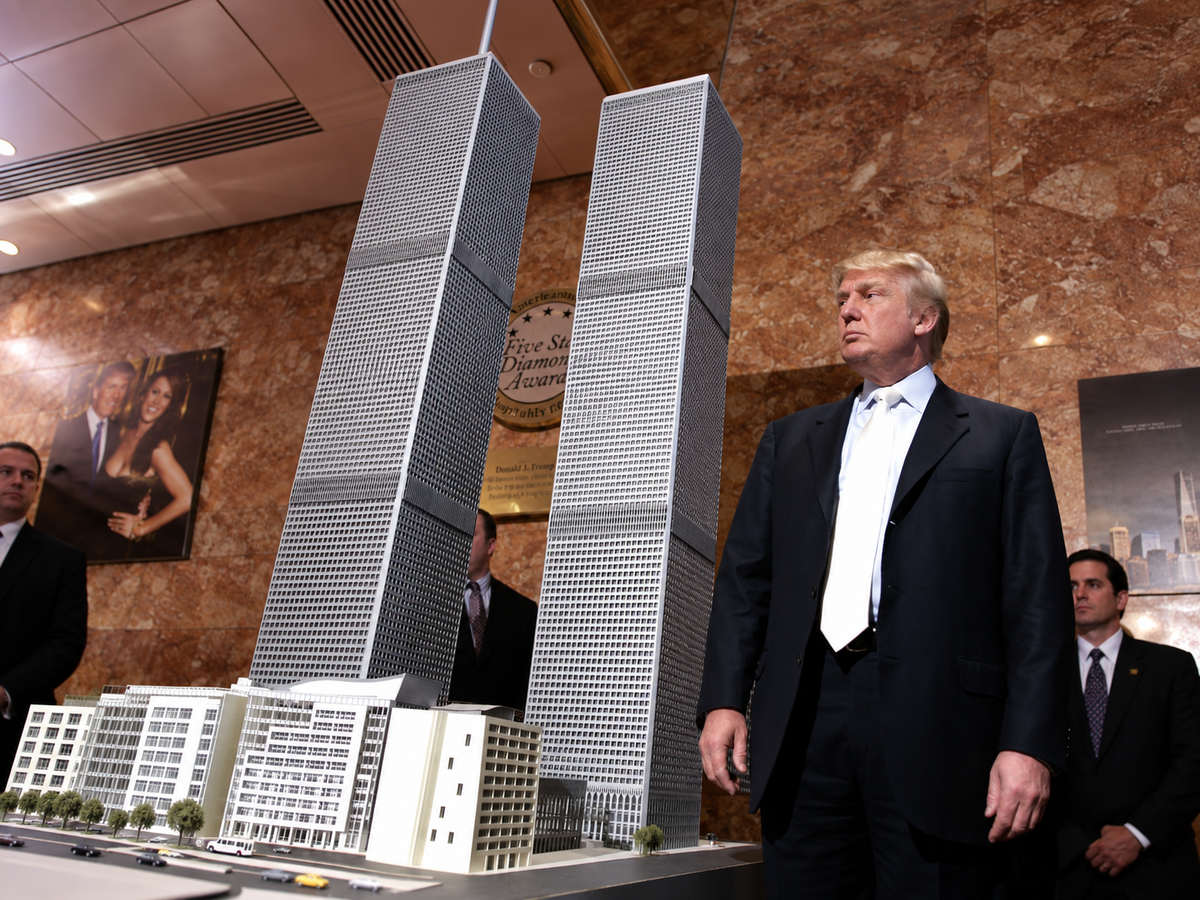
Twenty-five years ago, the United States suffered the deadliest terrorist attack in its history. On September 11, 2001, al-Qaeda hijackers crashed two passenger planes into the World Trade Center in New York, another into the Pentagon, while a fourth went down in Pennsylvania after passengers fought back. Nearly 3,000 people were killed.
The consequences extended far beyond that morning.
9/11 transformed American foreign policy, national security and everyday life. It led to the creation of the Department of Homeland Security, sweeping changes in airport screening and intelligence coordination, expanded surveillance powers and the beginning of wars in Afghanistan and Iraq that would define U.S. policy for much of the next two decades.
The human toll also never really ended. More than 600 New York firefighters have now died from illnesses linked to toxic exposure after the attacks, and the federal World Trade Center Health Program serves more than 150,000 people affected by 9/11-related conditions. More than 9,000 people enrolled in the program have died.
This year’s 25th anniversary was marked across the country. At Ground Zero, families again read the names of the dead. Vice President JD Vance and four former U.S. presidents attended the New York ceremony, while President Donald Trump marked the anniversary at the Pentagon. A new seventh moment of silence was added to honor those who later died from illnesses caused by toxic exposure.
And yet, a quarter century later, the memory of 9/11 is changing.
For millions of Americans old enough to remember the attacks, September 11 remains one of the defining moments of their lives. A new Ipsos poll found that roughly half of American adults still identify 9/11 as the most pivotal historical event of their lifetime. But among younger generations, many of whom were born after 2001, it is increasingly something learned through school, documentaries and family stories rather than lived experience.
Nowhere is that generational and political transformation more visible than in New York itself.
The city that bore the brunt of the attacks elected Zohran Mamdani mayor last year, part of a broader leftward political shift in New York. Mamdani is a democratic socialist who rose to power on affordability and economic issues while also becoming one of the country’s most prominent critics of Israel and U.S. Middle East policy. His election marked a substantial departure from the political culture that dominated New York in the years immediately after 9/11.
It would be inaccurate, however, to say Mamdani himself has ignored the anniversary. His administration declared September 11 a citywide Day of Remembrance and Service, opened around 170,000 pages of previously inaccessible city records relating to the attacks and their health consequences, unveiled a new NYPD memorial and participated in commemorations throughout the week. Mamdani described 9/11 as the darkest day in New York’s history.
The more interesting question is what his election says about the city around him.
The political consensus forged after September 11 — emphasizing counterterrorism, American power abroad, aggressive security policies and an unusually strong attachment to Israel — has weakened considerably. New York is younger, more politically polarized and more skeptical of many of the policies produced by the post-9/11 era.
That evolution is inevitable to some extent. Cities change, generations change and political priorities move on.
But anniversaries like this one also serve as a warning against allowing distance to turn into amnesia.
The lesson of September 11 was not simply that America was attacked. It was that open societies remain vulnerable, intelligence failures have enormous consequences, and ideological extremism can turn seemingly distant conflicts into threats at home.
There is also another lesson worth preserving: the unity that briefly followed the attacks. New Yorkers who disagreed politically, culturally and religiously rushed into burning buildings, searched through rubble and supported strangers because the city had suffered a common tragedy.
That spirit has become much harder to find in modern American politics.
Twenty-five years later, the skyline has been rebuilt, the military campaigns launched after 9/11 have largely ended, and an entire generation has grown up without remembering the Twin Towers falling.
But history does not become less important simply because fewer people remember experiencing it firsthand.
New York has every right to change. Its politics will inevitably evolve. Yet the city that became the symbol of September 11 also carries a particular responsibility to ensure that “Never Forget” does not gradually become just another phrase attached to an anniversary.