A Rafale Fighter Jet Has Flown With AI Algorithms Onboard for the First Time
Dassault Aviation has flight-tested two AI algorithms onboard a Rafale fighter jet for the first time, one developed internally and another with Thales.
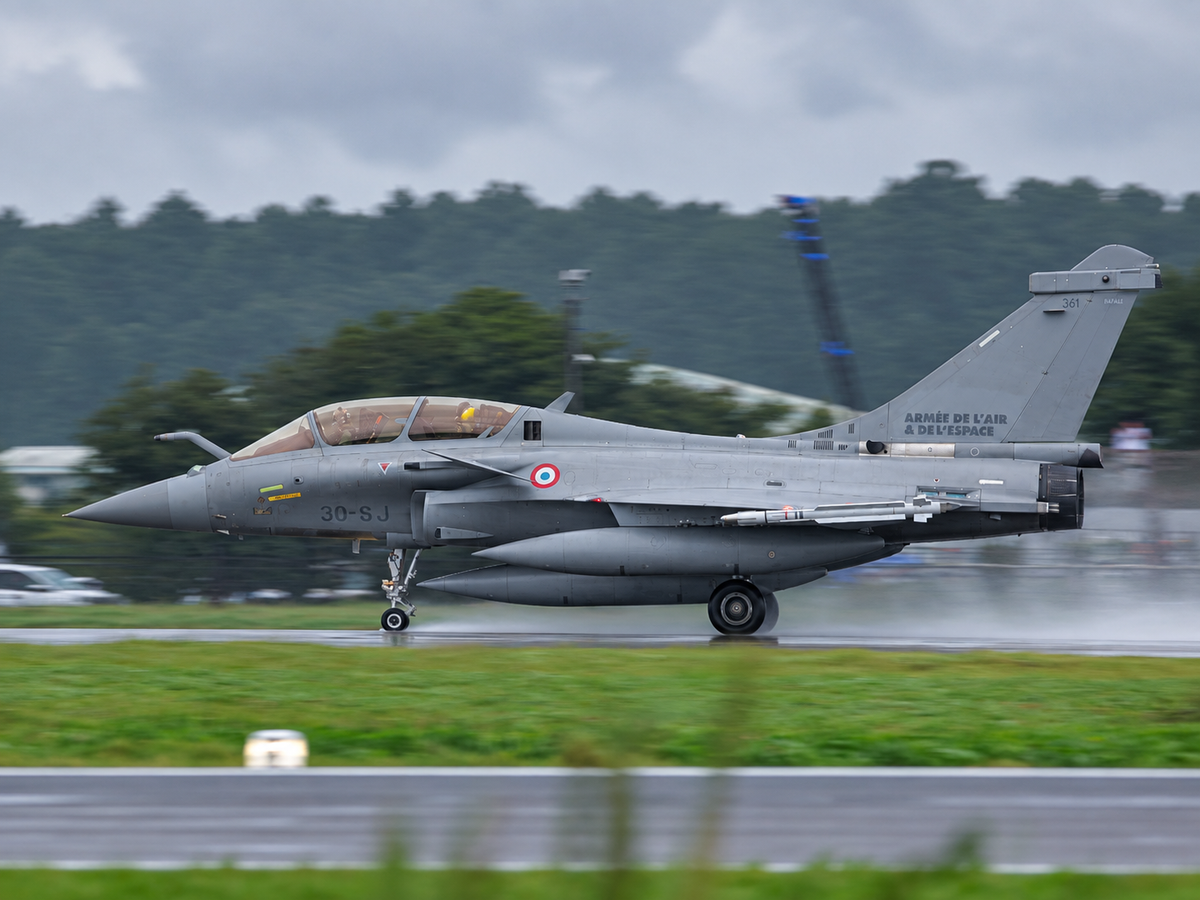
Dassault Aviation has successfully flight-tested artificial intelligence onboard a Rafale fighter jet for the first time, marking a significant step toward integrating AI directly into one of Europe’s most advanced combat aircraft.
The French manufacturer said two “sovereign” AI algorithms were tested during the flight. One was developed internally by Dassault engineers, while the second was developed with Thales through its cortAIx artificial intelligence unit.
Dassault has not disclosed exactly what the algorithms did during the test.
What it has said is that both systems are intended to operate as controlled and supervised AI inside the cockpit, assisting rather than replacing the human crew. The company says the algorithms have now reached a level of maturity that makes them candidates for future Rafale upgrades.
That distinction matters.
This was not an autonomous Rafale flying itself through a combat mission.
It was a test of AI functions embedded directly into a manned fighter aircraft, with the broader objective of helping pilots manage increasingly complex amounts of information and make decisions faster while retaining human control.
Modern fighter pilots already operate in extraordinarily information-heavy environments.
A Rafale pilot can be receiving information simultaneously from radar, infrared sensors, electronic-warfare systems, other aircraft, drones, satellites and ground forces. Future air combat is expected to add even more data as fighters increasingly operate alongside autonomous or semi-autonomous unmanned aircraft.
AI could help filter that information, identify the most important threats and reduce the pilot’s cognitive workload.
Dassault itself says AI will become increasingly important as the Rafale evolves. The company has previously said future versions of the aircraft will use more powerful algorithms to help pilots manage “collaborative combat” involving multiple aircraft, sensors and unmanned systems.
The latest test therefore fits into a much larger transformation of the Rafale.
France is already developing the F5 standard, a major future upgrade expected to keep the aircraft relevant well beyond 2040 and potentially into the 2060s. The F5 will feature more powerful computing, new sensors, improved electronic warfare and the ability to operate alongside a new unmanned combat aircraft being developed by Dassault.
That drone component may be particularly important.
In July, Dassault and French defense technology company Harmattan AI completed a collaborative flight involving a Rafale F4 and an unmanned aircraft carrying the NAMIB electronic-warfare payload.
During that test, the drone detected and geolocated a radar dozens of kilometers away, transmitted the coordinates to the Rafale and allowed the fighter to simulate a strike on the target.
Taken together, the developments point toward a very different model of air combat.
Instead of a fighter pilot operating a single aircraft largely independently, future pilots may increasingly command a network.
A Rafale could operate alongside several drones, receive information from dozens of sensors and use AI to decide which threats matter most, which platform should respond and how weapons and electronic-warfare systems should be coordinated.
The pilot would remain responsible for the mission, but AI could function increasingly like a digital tactical assistant.
France is not alone in moving in this direction.
Sweden’s Saab has already tested artificial intelligence aboard its Gripen E fighter in simulated combat scenarios, while the U.S. Air Force has demonstrated AI-controlled flight using a modified F-16 known as the X-62A VISTA.
The broader objective across advanced militaries is similar: combine the judgment and accountability of human pilots with the speed at which AI can process enormous amounts of battlefield information.
But that also raises important questions.
Military AI has to operate differently from consumer AI.
A chatbot can occasionally make an incorrect prediction with limited consequences. An algorithm assisting a fighter pilot may be processing information about missiles, aircraft and weapons in an environment where mistakes can become lethal within seconds.
Dassault says that is why its approach emphasizes supervised AI and why integrating algorithms into combat aircraft requires unusually strict controls over operational data, computational resources and reliability.
There is also the question of autonomy.
For now, Dassault is explicitly positioning the AI as a tool serving the human crew.
But military aviation globally is moving toward systems capable of independently navigating, identifying threats and coordinating with other aircraft. The debate will increasingly center on where human control must remain mandatory, particularly when weapons are involved.
France appears determined to keep humans inside the decision-making chain.
Dassault’s future unmanned combat aircraft is planned with autonomous capabilities but a “man-in-the-loop” architecture, meaning humans would continue supervising critical decisions.
The latest Rafale test is therefore not the arrival of an autonomous fighter jet.
But it is an important milestone.
AI has moved from simulation and research laboratories into the cockpit of an operational European fighter aircraft.
And as the Rafale evolves toward its F5 generation, the role of the pilot may increasingly shift from controlling every element of an aircraft to supervising an intelligent network of machines fighting alongside them.