An Emirati Woman Could Lead the United Nations: Who Is Lana Nusseibeh?
The UAE has nominated Lana Nusseibeh, a 48-year-old diplomat and former ambassador to the United Nations, to succeed António Guterres. If selected, she would become the first woman to lead the organization.
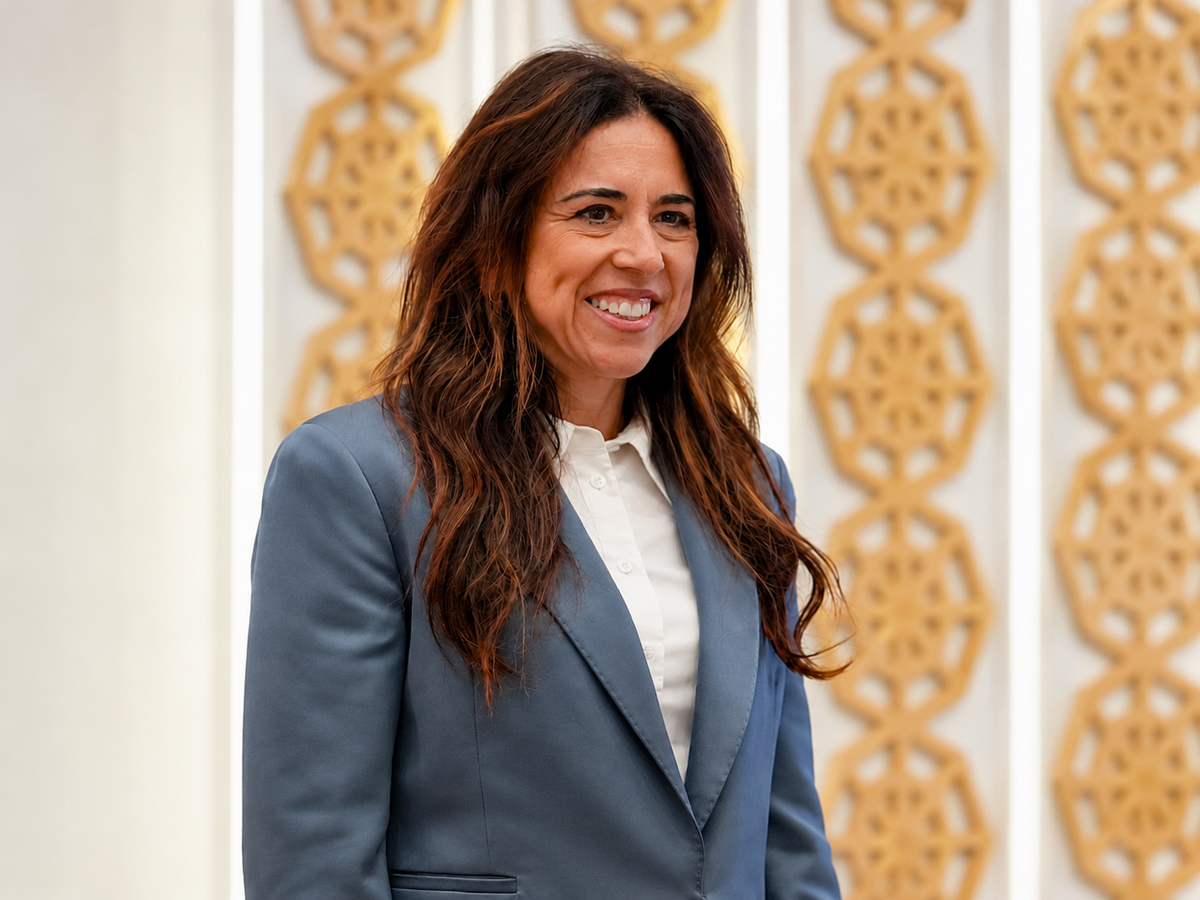
The United Arab Emirates has nominated one of its most experienced diplomats to become the next Secretary-General of the United Nations, potentially placing an Arab woman at the head of the world's most important international organization for the first time.
Her name is Lana Nusseibeh.
And unlike many candidates seeking the position, she has spent more than a decade working inside the institution she hopes to lead.
The 48-year-old Emirati diplomat announced her candidacy on October 21, entering the race to succeed António Guterres, whose second term ends on December 31.
If selected, she would become the first woman to lead the United Nations and the second Secretary-General from the Middle East, following Egypt's Boutros Boutros-Ghali.
Her nomination has already received unanimous support from the six members of the Gulf Cooperation Council.
But who exactly is Lana Nusseibeh, and why is her candidacy attracting international attention?
Nusseibeh comes from one of the region's most prominent diplomatic and intellectual families.
Her father, Zaki Nusseibeh, is a distinguished Emirati cultural and political figure who served as an adviser and interpreter to the UAE's founding president, Sheikh Zayed bin Sultan Al Nahyan.
Her family has deep historical roots in Jerusalem, where the Nusseibeh name has been associated with the city for centuries.
Educated in Britain, including at Wycombe Abbey, and a graduate of the University of Cambridge, Nusseibeh developed a career spanning diplomacy, international institutions and foreign-policy planning.
She joined the UAE's diplomatic service and helped establish its Foreign Ministry's Policy Planning Department.
She subsequently worked on international affairs involving Afghanistan, Pakistan, sustainable development and multilateral institutions.
But her most important appointment came in 2013.
That year, Nusseibeh became the UAE's first female Permanent Representative to the United Nations.
She held the position until 2024.
During those eleven years, she became one of the UAE's most recognizable diplomatic figures, representing a country whose international influence was expanding rapidly.
Her responsibilities included peace and security, humanitarian diplomacy, sustainable development, women's rights and institutional reform.
She also served as President of the Executive Board of UN Women, Vice-President of the UN General Assembly and twice as President of the Security Council during the UAE's 2022–2023 term.
That experience matters.
The UN Secretary-General does not possess the military or legislative authority of a national leader.
The office depends heavily on negotiation, consensus-building and the ability to influence governments that often disagree fundamentally.
Nusseibeh has spent much of her career doing precisely that.
One of her most important diplomatic achievements came during the Gaza war in December 2023.
Representing the UAE, she played a central role in negotiations surrounding Security Council Resolution 2720, which sought to improve humanitarian assistance to Gaza.
She helped arrange a visit by Security Council ambassadors to the Rafah border crossing, giving diplomats a firsthand understanding of the humanitarian situation.
The resolution ultimately passed after difficult negotiations involving the United States and other Council members.
It demonstrated Nusseibeh's ability to negotiate with competing powers and secure an agreement in circumstances where diplomatic progress was exceptionally difficult.
Her broader foreign-policy experience also reflects the UAE's distinctive international strategy.
The Emirates maintains close partnerships with Western countries while cultivating relationships across Asia, Africa and the Middle East.
It has pursued economic diversification, international investment and diplomatic engagement with states that do not always share the same political priorities.
The Abraham Accords are an important example.
The UAE's decision to normalize relations with Israel in 2020 represented a major departure from the traditional Arab approach of making normalization conditional on a final Israeli-Palestinian settlement.
Nusseibeh has defended the agreement as a framework for engagement and regional cooperation.
But she has also publicly warned Israel against annexing territory in the West Bank, calling such a move a red line that would undermine the possibility of regional integration.
That balance reflects a diplomatic approach based on maintaining relationships while expressing disagreements through official channels.
It is also one reason her candidacy is encountering opposition.
Some progressive activists and left-wing commentators object to the UAE's relationship with Israel and its broader regional policies.
For these so called activists who oppose normalization, the Abraham Accords remain controversial regardless of their potential diplomatic or economic benefits.
Nusseibeh's association with the UAE's foreign policy therefore makes her an uncomfortable candidate for parts of the left.
But the bigger controversy concerns Sudan.
The UAE has faced allegations of providing military assistance to Sudan's Rapid Support Forces, a paramilitary organization accused of atrocities during the country's devastating civil war.
Abu Dhabi denies supporting the RSF.
Some have questioned whether a senior representative of the UAE can lead the United Nations while these allegations remain unresolved.
Those are substantive questions concerning foreign policy and accountability, not merely ideological objections.
Nusseibeh has said Sudan's humanitarian catastrophe would be among the issues requiring urgent international attention.
Her candidacy should therefore be assessed on both her diplomatic record and her ability to exercise independence from the government that nominated her.
That independence is central to her campaign.
Nusseibeh has taken leave from her UAE government responsibilities and pledged to serve the United Nations rather than any individual state.
Her proposed program is focused on restoring the organization's effectiveness.
She argues that the UN must become better at preventing conflicts before they escalate, maintaining diplomatic channels and translating international agreements into measurable results.
She also wants clearer institutional priorities, less duplication, stronger accountability and more authority for personnel working directly in crisis zones.
These proposals arrive at a difficult moment for the organization.
The United Nations is facing a financial crisis, growing skepticism over its effectiveness and repeated paralysis in the Security Council.
Wars in Ukraine, the Middle East and Sudan have demonstrated how difficult it is for the UN to act when major powers or their allies disagree.
The organization is also struggling to adapt to emerging issues involving artificial intelligence, biotechnology and increasingly complex geopolitical competition.
Nusseibeh argues that the UN should play a more active role in establishing practical international cooperation on those technologies before disagreements become entrenched.
Her central argument is that the organization needs to become a problem-solver rather than an institution that merely documents international crises.
That message reflects a broader frustration with the UN.
For all its enormous bureaucracy, diplomatic infrastructure and international legitimacy, the organization has repeatedly struggled to prevent wars or enforce its own resolutions.
The next Secretary-General will inherit an institution under pressure to demonstrate that multilateral diplomacy can still produce meaningful results.
But Nusseibeh's experience does not guarantee her appointment.
The selection process ultimately depends on the Security Council, where any of the five permanent members can block a candidate.
The Council's latest informal vote revealed substantial divisions, with existing candidates facing opposition from veto-wielding powers.
The General Assembly formally appoints the Secretary-General only after receiving the Security Council's recommendation.
Nusseibeh is therefore entering a difficult diplomatic contest.
Still, her nomination is significant.
She represents a generation of Gulf diplomats whose countries have become increasingly influential in international politics, finance and diplomacy.
Her career also challenges the assumption that meaningful leadership experience at the United Nations must come primarily from Western powers or the organization's traditional diplomatic establishment.
An Emirati woman who spent eleven years representing her country at the UN is now seeking to lead it.
Her qualifications, diplomatic record and proposed reforms deserve examination on their merits.
And her candidacy raises a broader question about the institution itself.
At a time when the United Nations is struggling to maintain credibility, should its next leader be judged primarily by geography and political symbolism, or by the capacity to negotiate and deliver results?
Nusseibeh is making the case for the latter.
Whether Security Council members agree will become clear as the selection process advances.