Another Sovereignty Scandal: Mihrac Ural Taken From Lebanon Into Syrian Custody
Mihrac Ural, a former pro-Assad militia commander accused of involvement in massacres in Syria, reportedly disappeared from his home in Mansourieh before surfacing in Syrian custody.
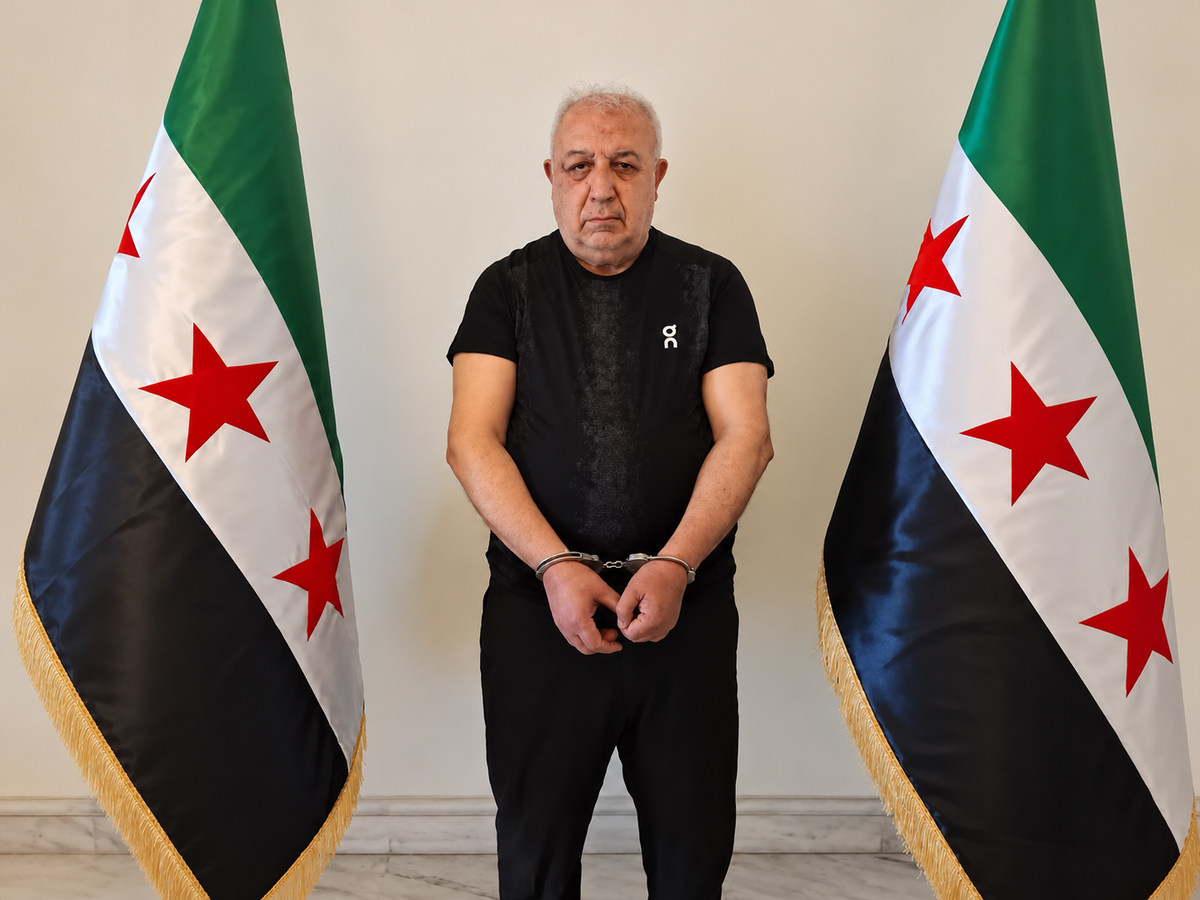
A man was reportedly seized from his home in Mansourieh, inside Lebanese territory, after armed men tied up his wife and son.
Hours later, he appeared in Syrian custody.
The man is Mihrac Ural, also known as Ali Kayali, a former pro-Assad militia commander accused of involvement in the 2013 massacres in Bayda and Baniyas. Syrian authorities say he was arrested by their intelligence services while attempting to flee across the border. Lebanese media and the Syrian Observatory for Human Rights report something very different: that he was taken from his home in Mansourieh and transported into Syria.
Now Damascus has added another claim.
A Syrian security source told AFP that Ural was apprehended in Lebanon in an operation coordinated with Lebanese authorities. Beirut has so far offered no public explanation confirming or denying that account.
That leaves Lebanon facing two possibilities.
Neither is acceptable.
Either Syrian operatives entered Lebanon, seized a man from his home and removed him across the border without Lebanese authorization.
Or Lebanese authorities secretly cooperated in an extrajudicial rendition while keeping the Lebanese public in the dark.
What kind of sovereignty is that?
If Damascus wanted Ural, there were legal mechanisms available.
Syria could have formally requested his arrest.
It could have submitted evidence to Lebanese authorities.
It could have sought extradition through an official judicial process.
Lebanon has already demonstrated that it is willing to cooperate on such cases. Lebanese authorities have arrested former Assad-era officials and in August extradited a former Syrian general accused of serious crimes.
That is how relations between sovereign states are supposed to work.
What reportedly happened in Mansourieh looks very different.
According to Lebanese reporting, unidentified men entered Ural’s residence, restrained his family and removed him by force. The Internal Security Forces’ Information Branch opened an investigation. Syrian authorities then announced that Ural was in their custody.
If Syrian intelligence carried this out independently, it is a blatant violation of Lebanese sovereignty.
It would mean foreign security services can enter Mount Lebanon, conduct an operation in a residential area, kidnap someone and transport him across the border while Lebanese institutions discover what happened afterward.
That should trigger a diplomatic crisis.
The Lebanese government should demand an explanation from Damascus, identify everyone involved, establish how they entered and exited the country, and determine whether Lebanese personnel facilitated the operation.
But the alternative may be even more troubling.
If the Syrian claim of coordination with Lebanese authorities is true, then the government owes the country an immediate explanation.
Which Lebanese authority approved the operation?
Was there a judicial warrant?
Was the public prosecutor informed?
Was Ural formally arrested under Lebanese law?
Was an extradition request submitted?
Which institution authorized Syrian personnel to participate?
And why was a man allegedly removed from a Lebanese home instead of being arrested openly by Lebanese security forces and processed through Lebanon’s courts?
Secret cooperation does not make the sovereignty issue disappear.
It simply changes its form.
A sovereign state does not quietly outsource law enforcement on its own territory to the intelligence services of another country.
If Lebanon believed Ural should be transferred to Syria, it should have arrested him itself, brought him before Lebanese judicial authorities and handled extradition transparently.
That is called the rule of law.
Anything else creates an extremely dangerous precedent.
Today it is Mihrac Ural, a man accused of atrocities.
Tomorrow it could be a political dissident, journalist, former official or refugee whom another government wants returned.
The principle cannot depend on whether the person being taken is sympathetic.
Lebanon either controls who can arrest people on Lebanese soil or it does not.
The episode is particularly embarrassing because the government constantly speaks about sovereignty.
President Joseph Aoun and Prime Minister Nawaf Salam say Lebanon must regain exclusive control over weapons and territory.
The government is confronting Hezbollah over illegal military activity.
Washington and Europe are pouring resources into strengthening the Lebanese Army and security institutions.
Yet Lebanon now has to explain how a wanted Syrian figure could apparently be removed from a home less than 15 kilometers from central Beirut and end up in the hands of Syrian intelligence.
This is not some remote smuggling route in the mountains.
This happened in Mansourieh.
And the Syrian government’s attitude raises its own questions.
The fall of Bashar al-Assad was supposed to open a new chapter in Lebanese-Syrian relations.
For decades, Syrians remember the Assad regime as a dictatorship.
Lebanese remember something else as well: Syrian intelligence operating inside Lebanon, political interference, arbitrary arrests and a security relationship in which Damascus often behaved as though Lebanon were not fully sovereign.
The new Syrian state should be especially careful not to reproduce even the appearance of that behavior.
Pursuing alleged war criminals is legitimate.
Sending intelligence operatives into Lebanon, is not.
Damascus cannot claim to be building a new state based on law and accountability while disregarding the sovereignty and legal procedures of its neighbor.
And Beirut cannot speak endlessly about restoring sovereignty while allowing foreign governments to conduct security operations on Lebanese soil without public accountability.
The most important fact here is not whether one sympathizes with Mihrac Ural.
He faces grave allegations and deserves a fair trial if sufficient evidence exists.
The issue is who has jurisdiction inside Lebanon.
Lebanese security forces do.
Lebanese courts do.
The Lebanese government does.
Syrian intelligence does not.
And if the Lebanese government secretly authorized Syrian agents to carry out the operation, then Beirut must explain why it surrendered its own responsibility rather than enforcing the law itself.
Either Syrian forces violated Lebanese sovereignty.
Or Lebanon helped bypass its own judicial system.
There is no version of this story in which silence from the Lebanese state is acceptable.