Lebanon Prepares for Military Talks With Israel
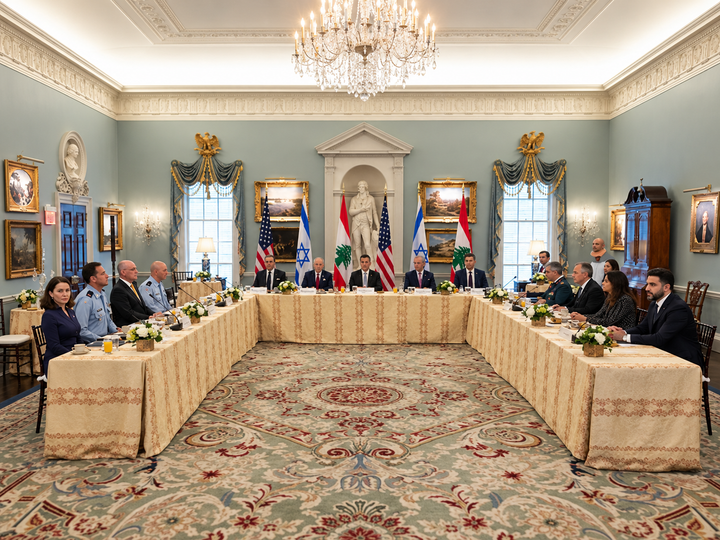
Lebanon is preparing to send a military delegation to Tampa on October 20 for U.S.-mediated talks with Israel, with Beirut expected to demand an end to Israeli attacks and further withdrawal from Lebanese territory.
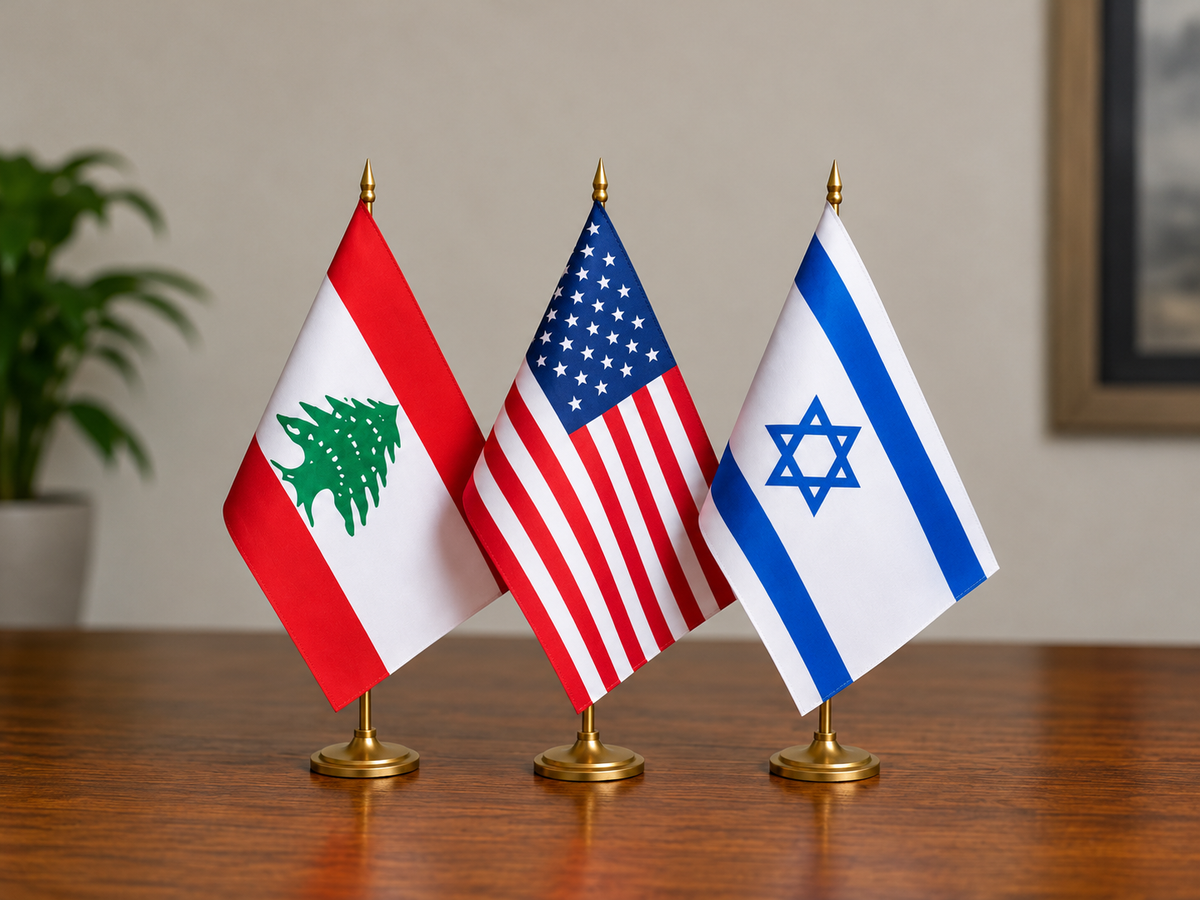
Lebanon is preparing to send a military delegation to the United States for another round of direct talks with Israel, as Beirut tries to secure an end to Israeli attacks and move the stalled security arrangement forward.
The meeting is scheduled for October 20 in Tampa, Florida, according to the Lebanese presidency. It will bring together Lebanese and Israeli military representatives under U.S. mediation.
For Lebanon, the immediate objective is clear.
The delegation is expected to demand an end to ongoing Israeli strikes, press for further Israeli withdrawal from Lebanese territory and push for implementation of the U.S.-brokered framework negotiated earlier this year.
The talks are significant because they show how far the relationship between Lebanon and Israel has already changed.
These are not peace negotiations.
Lebanon and Israel remain technically at war.
But military and security officials from both countries are now meeting directly, repeatedly and under American sponsorship to negotiate concrete arrangements on the ground.
Rounds of talks have already taken place in Rome, including discussions over so-called pilot zones in southern Lebanon where Israeli forces would withdraw and the Lebanese Army would assume control. Reuters
The broader bargain remains the same.
Israel wants Hezbollah disarmed.
Lebanon wants Israeli forces out.
Washington has tried to link both processes together.
Under the U.S.-backed framework, Hezbollah’s disarmament would be verified while Israeli forces gradually withdraw from occupied Lebanese territory. Reuters
The problem is that the process has barely moved.
Hezbollah continues to reject disarmament while Israeli troops remain inside Lebanon.
Israel continues to strike targets in the south and says it will not fully withdraw until Hezbollah’s military capabilities are dismantled.
Lebanon is therefore caught in a circular argument.
Israel says it cannot leave because Hezbollah remains armed.
Hezbollah says it cannot disarm because Israel has not left.
The Lebanese state is supposed to break that cycle.
So far, it has not.
That is what makes the upcoming military talks so important.
For years, Lebanese governments treated direct contact with Israel as politically toxic even when the country’s security depended on indirect negotiations.
Now military representatives are sitting across from one another because the reality on the ground has made ideological theater increasingly difficult to sustain.
The Lebanese Army needs mechanisms to prevent clashes with Israeli troops.
Israel wants assurances that areas it leaves will not simply be reoccupied militarily by Hezbollah.
Residents of southern Lebanon need a process that allows them to return home without another war beginning six months later.
None of those problems can be solved through slogans.
They require negotiation.
Secretary of State Marco Rubio has also recently pushed for direct military communication between Lebanon and Israel specifically to reduce the risk of accidental escalation. Reuters
That is sensible.
The absurdity is that it took decades of war for Lebanon to reach this point.
A direct military communication channel does not mean normalization.
It means acknowledging geography.
Israel is next door.
Its forces are operating inside and around Lebanese territory.
The Lebanese Army is deploying nearby.
If those forces cannot communicate, every misunderstanding creates the possibility of another confrontation.
The greater challenge is what Lebanon brings to the table.
Beirut is demanding Israeli withdrawal and an end to strikes.
Those are legitimate state objectives.
But Lebanon’s bargaining position remains weakened by the fact that the government still does not fully control the weapons operating from its own territory.
That contradiction has become impossible to ignore.
Only days ago, Hezbollah openly admitted that a truck carrying hundreds of kilograms of explosives seized by Lebanese security forces belonged to the organization.
It then demanded the explosives back.
Washington has since warned President Joseph Aoun that returning them should be “out of the question.” Reuters
This matters directly to the Israel talks.
Lebanon wants Israel to trust that areas vacated by Israeli troops will return exclusively to Lebanese state control.
But Hezbollah is simultaneously asserting the right to move explosives across the country independently of that same state.
That destroys credibility.
A negotiated Israeli withdrawal becomes much harder if Lebanon cannot guarantee that Hezbollah will not simply rebuild military infrastructure behind the Army.
This is why disarmament is no longer an abstract internal Lebanese debate.
It is now directly connected to territorial recovery.
The stronger and more independent the Lebanese Army becomes, the easier it is for Beirut to argue that Israeli forces have no justification for remaining.
The weaker the government appears in confronting Hezbollah, the easier it becomes for Israel to argue the opposite.
That is the uncomfortable reality facing President Aoun and Prime Minister Nawaf Salam.
They cannot demand full sovereignty only from Israel.
Sovereignty has to apply inward as well.
That means Israeli troops should leave Lebanese territory.
It also means Hezbollah cannot maintain an independent military structure inside it.
Anything less simply replaces one violation of sovereignty with another.
The upcoming Tampa meeting will therefore be about much more than stopping individual airstrikes.
It is part of an attempt to create a completely different security order in southern Lebanon.
One in which Israel withdraws.
The Lebanese Army deploys.
Unauthorized weapons are removed.
And future incidents are handled through military communication rather than immediate escalation.
Whether Lebanon can actually reach that point remains uncertain.
Previous talks in Rome produced some progress but no decisive breakthrough. Reuters
This round may not produce one either.
But the existence of the talks is itself significant.
Lebanon and Israel have spent decades communicating through artillery, airstrikes, militias and international intermediaries.
Now their militaries are preparing to sit down under American mediation and negotiate directly.
That is not peace.
But compared with the alternative, it is progress.