Anthropic Files for IPO: Potential $1.5 Trillion Valuation
Anthropic has officially filed for an IPO, revealing $16.3 billion in revenue during the first half of 2026 and an $80.7 billion net loss, largely driven by a non-operating accounting adjustment. Investors are discussing a potential valuation of approximately $1.5 trillion.

Anthropic, the artificial intelligence company behind Claude, has officially filed to go public, opening its financial records to investors for the first time and setting the stage for what could become one of the largest stock market debuts in history.
The company submitted its public registration statement to the U.S. Securities and Exchange Commission on October 26, seeking to list on the Nasdaq under the ticker symbol ANT.
The filing reveals extraordinary revenue growth, enormous financial commitments and the increasingly expensive economics of building advanced artificial intelligence.
It also exposes a central question facing the entire technology industry.
Can AI companies generate enough money to justify the hundreds of billions of dollars being invested in their development?
A Company Growing at Extraordinary Speed
Anthropic reported $16.3 billion in revenue during the first six months of 2026, compared with approximately $1.2 billion during the same period last year.
That represents an increase of roughly fourteenfold.
The company's quarterly revenue growth has been equally impressive, with second-quarter sales rising more than 1,300% compared with the previous year.
Founded in 2021 by former OpenAI researchers, Anthropic has become one of the world's most prominent artificial intelligence developers in just five years.
Its Claude models compete directly with OpenAI's ChatGPT and Google's Gemini.
But Anthropic has established a particularly strong position in enterprise AI, software development and automated coding.
Its Claude Code product has become an important tool for developers, allowing AI agents to write, analyze, modify and test software.
Anthropic says more than half of Fortune 500 companies and over 30% of the Global 2000 have become customers generating at least $100,000 each in revenue over the twelve months ending September 30.
That matters because business adoption may prove more financially sustainable than relying exclusively on consumer subscriptions.
Companies are increasingly willing to pay for AI tools that reduce operating costs, accelerate software development and improve employee productivity.
Anthropic's revenue growth suggests that demand is translating into substantial commercial activity.
But revenue tells only half the story.
The $80 Billion Loss That Requires Explanation
The most striking figure in Anthropic's filing is its net loss.
The company reported losing approximately $80.7 billion during the first half of 2026.
At first glance, that would appear to indicate an extraordinarily unprofitable business.
However, the figure requires important context.
Most of the reported loss resulted from a non-operating accounting adjustment related to convertible debt instruments whose values increased alongside Anthropic's valuation.
These financial instruments create accounting expenses as the value of the company's equity rises.
They do not necessarily represent equivalent cash leaving the business during the reporting period.
Anthropic's operating figures present a considerably different picture.
Its operating loss narrowed to approximately $693 million in the first half of 2026.
On an adjusted basis, the company reported operating income of $1.62 billion, compared with an adjusted operating loss of $1.85 billion one year earlier.
That is a substantial improvement.
It suggests Anthropic's underlying business is moving toward profitability as revenue expands.
However, adjusted operating income is not the same as net profit, and the company's enormous infrastructure requirements remain a major financial consideration.
Investors will need to look beyond the headline $80.7 billion loss while also avoiding the opposite mistake of treating adjusted profitability as evidence that Anthropic's financial challenges have disappeared.
More Than $600 Billion in Computing Commitments
The filing reveals another extraordinary number.
Anthropic has committed more than $600 billion to computing and infrastructure arrangements with technology partners.
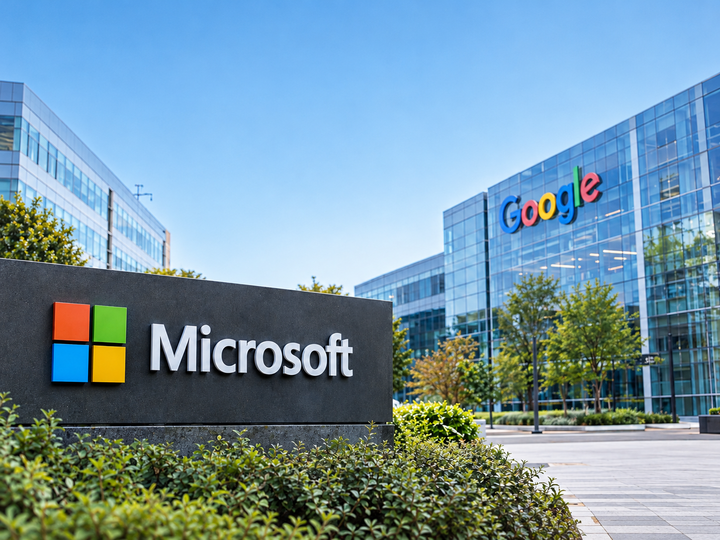
These include Amazon, Google, Microsoft, Broadcom and other major providers of cloud services, semiconductors and computing infrastructure.
Artificial intelligence requires enormous computing resources.
Training advanced models involves operating vast networks of specialized processors.
Serving millions of users requires additional infrastructure capable of processing requests continuously.
And increasingly sophisticated AI agents consume substantial computing power as they perform tasks involving research, reasoning, software development and automation.
Those requirements help explain why the AI industry is investing so heavily in data centers.
But they also introduce significant financial risks.
Many infrastructure commitments involve agreements extending over several years.
Anthropic will need sustained revenue growth to support those obligations.
The company also depends heavily on technology partners that control essential components of its infrastructure.
Amazon and Google, for example, are both major investors in Anthropic and important suppliers of computing services.
Broadcom provides specialized semiconductor technology.
This arrangement gives Anthropic access to enormous resources without building every component itself.
But it also creates dependencies on a relatively small number of companies.
If computing costs rise faster than expected, demand weakens or infrastructure requirements change, those commitments could become more difficult to manage.
That is one of the central questions investors will need to consider.
Could Anthropic Be Worth $1.5 Trillion?
Anthropic has not disclosed the number of shares it intends to sell or the proposed IPO price range.
However, investors and analysts have discussed a valuation of approximately $1.5 trillion.
Earlier expectations reportedly approached $2 trillion.
The company was valued at approximately $965 billion during a private financing round in May.
A $1.5 trillion valuation would place Anthropic among the world's most valuable technology businesses.
It would also represent a remarkable increase for a company founded only five years ago.
But such a valuation would require investors to make substantial assumptions about future growth.
Based on its first-half revenue, Anthropic generated approximately $32.6 billion at an annualized pace.
A valuation of $1.5 trillion would therefore represent roughly 46 times that annualized revenue figure.
That is an unusually demanding multiple for a business with continuing infrastructure requirements and rapidly evolving competition.
Supporters of such valuations would argue that artificial intelligence is still in the early stages of adoption.
If AI agents become embedded across software development, finance, healthcare, administration and scientific research, leading providers could eventually generate revenues far exceeding current levels.
More skeptical investors will question how much of that future opportunity has already been reflected in valuations.
There are also concerns that the cost of providing AI services may remain high as models become more capable and computationally demanding.
Revenue growth alone will not determine the value of these businesses.
Their ability to generate sustainable profits and cash flow will matter just as much.
Why the IPO Matters Beyond Anthropic
Anthropic's public listing could become a defining moment for the artificial intelligence investment boom.
For several years, investors have poured enormous amounts of capital into AI developers, semiconductor manufacturers, cloud providers and data-center operators.
Much of that investment has been justified by expectations that AI will fundamentally transform productivity and economic activity.
Yet many of the most prominent developers have remained privately held, limiting public investors' access to their detailed financial performance.
Anthropic's IPO changes that.
Its public prospectus provides investors with a clearer view of how quickly an advanced AI company can grow, how much infrastructure it requires and what financial risks accompany that expansion.
It could also establish an important valuation benchmark for other AI developers.
OpenAI, in particular, is watching a rapidly changing market in which investors are becoming more demanding about revenue, profitability and infrastructure spending.
The performance of Anthropic's shares after listing could influence expectations for future AI offerings.
The implications extend to companies supplying the infrastructure behind artificial intelligence.
Nvidia, AMD, Broadcom and major cloud providers benefit from spending by AI developers.
But those businesses ultimately depend on customers generating enough economic value to sustain investment.
If investors become less willing to finance large AI infrastructure commitments, the consequences could spread throughout the semiconductor and data-center industries.
Alternatively, a successful public offering could reinforce confidence in the long-term commercial potential of AI.
When Will Anthropic Begin Trading?
Anthropic is reportedly targeting a public listing during the week of November 16.
Goldman Sachs and Morgan Stanley are leading the offering, alongside approximately 20 additional underwriting banks.
The final timetable, number of shares and offering price remain subject to market conditions and regulatory requirements.
The registration statement has been filed but has not yet become effective.
That means Anthropic has not completed its IPO, and its shares are not yet trading on Nasdaq.
Investors will be watching closely as the company moves toward setting a final valuation.
A Major Test for the AI Economy
Anthropic's filing reveals both the extraordinary promise and the enormous cost of artificial intelligence.
A company founded five years ago is generating billions of dollars in quarterly revenue and attracting some of the world's largest corporations as customers.
At the same time, it has accumulated vast infrastructure commitments and continues facing substantial financial and technological risks.
Those two realities are not contradictory.
They are the defining characteristics of the current AI investment boom.
Artificial intelligence is producing genuine commercial growth.
The unanswered question is whether that growth can eventually generate returns sufficient to justify the capital being committed.
Anthropic's IPO will provide one of the first major public-market tests of that proposition.
Investors are no longer being asked merely to believe that AI will transform the economy.
They are being asked to put a price on the companies attempting to make that transformation happen.
And for the first time, they have detailed financial statements against which to test the promise.