Aoun Defends Lebanese Army Commander as Political Dispute Over Haykal Intensifies
President Joseph Aoun has defended Army Commander Rodolphe Haykal amid growing political criticism following remarks suggesting that citizens who speak against the military have no place in Lebanon.
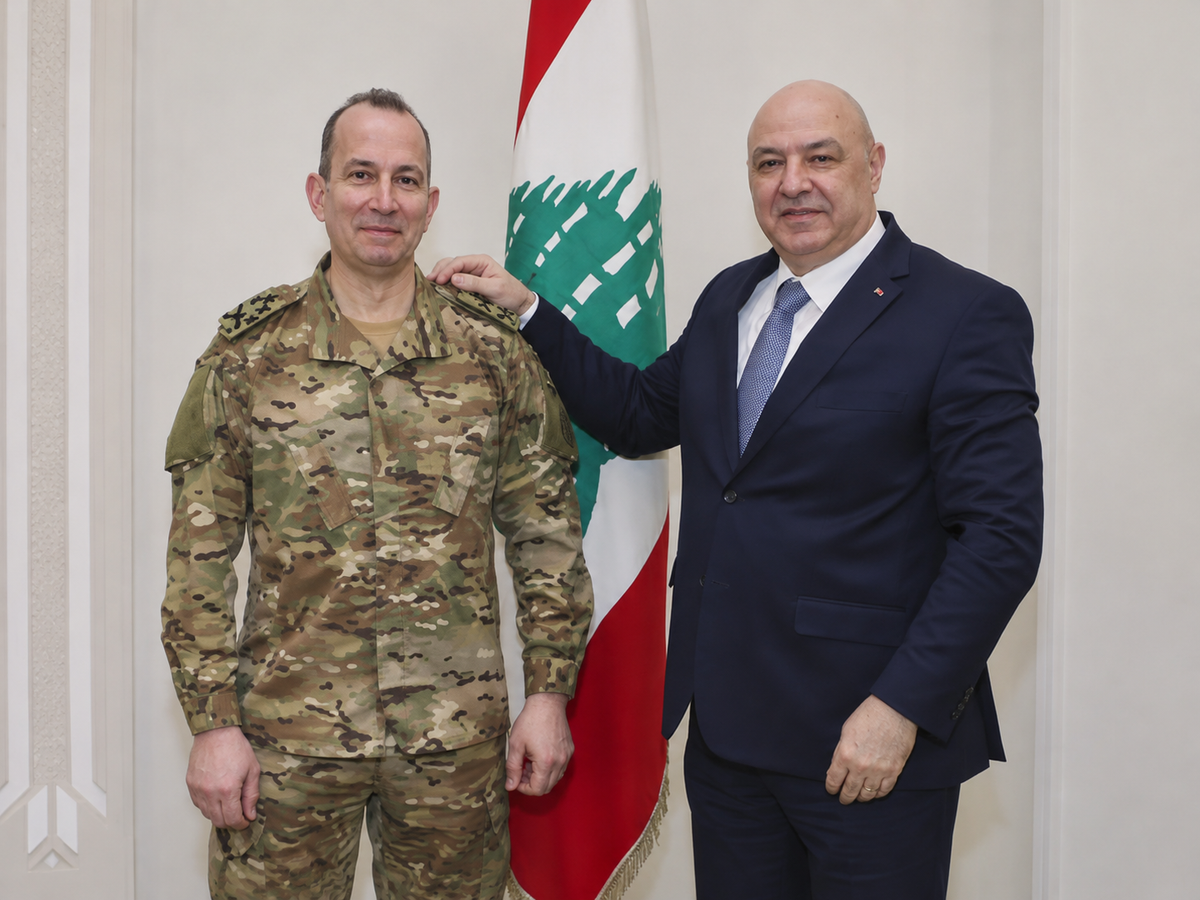
President Joseph Aoun has publicly defended Lebanon's military leadership amid growing criticism of Army Commander Rodolphe Haykal, escalating a political dispute over the armed forces' constitutional role, accountability and progress toward Hezbollah's disarmament.
Speaking on Wednesday, November 11, Aoun argued that politicians cannot claim to defend Lebanon's sovereignty while criticizing the army and security forces responsible for maintaining stability and extending state authority.
His remarks followed controversial statements by Haykal suggesting that those who disagree with the army's policy stand on the opposing side, and that citizens who speak negatively about the military have no place in Lebanon.
The controversy began following Haykal's November 7 address to officers at the army headquarters in Yarzeh.
During the speech, the commander declared that the army's policy represented national policy and suggested that those who opposed it were effectively aligned with the other side.
He also questioned the place of citizens who criticize their country's armed forces, triggering accusations that he had overstepped his military responsibilities.
The remarks drew criticism from Lebanese Forces, Kataeb and independent lawmakers, who argued that the commander was attempting to define political loyalty rather than concentrating on military duties.
Critics emphasized that Lebanon's national defense policy is determined by constitutional institutions, while the army is responsible for implementing lawful government decisions.
The controversy is particularly sensitive because the army faces increasing scrutiny over its handling of Hezbollah's military infrastructure and the implementation of government disarmament directives.
Aoun has repeatedly defended Haykal against calls for greater accountability.
Following discussions with Defense Minister Michel Menassa, the president urged political figures not to target the army, its leadership or its personnel in ways that could undermine Lebanon's national interests.
On Wednesday, he reinforced that position, questioning how politicians could claim to support sovereignty while attacking the military institution.
Aoun nevertheless reaffirmed that extending state authority requires establishing a monopoly over weapons, preserving security and addressing the economic and social needs of southern Lebanese communities.
Parliament Speaker Nabih Berri also defended Haykal, describing attacks against the army and its commander as a serious mistake.
Menassa, meanwhile, argued that military decisions must account for the army's capabilities, internal stability and the risk of civil conflict.
Supporters of Haykal maintain that the army cannot be expected to dismantle Hezbollah's military infrastructure without considering the potentially devastating consequences of direct confrontation.
The dispute raises a fundamental question about the distinction between protecting a national institution and shielding its leadership from legitimate scrutiny.
The Lebanese Army operates under civilian authority. Its commander is responsible for military operations and discipline, not determining which political opinions qualify as patriotic.
While the army's difficult security responsibilities deserve recognition, criticism of its leadership cannot automatically be equated with hostility toward the institution.
Indeed, demanding accountability from senior officers is entirely consistent with supporting a professional military.
The controversy also highlights a contradiction in the government's position.
Aoun and Prime Minister Nawaf Salam have repeatedly committed to establishing exclusive state control over weapons. Yet Hezbollah retains significant military capabilities, and the army's progress toward implementing that objective remains contested.
Haykal's defenders cite limited resources and the danger of internal conflict. His critics argue that these concerns cannot justify indefinite delays or the absence of clear benchmarks.
Both issues require serious institutional scrutiny rather than arguments about patriotism.
The dispute comes as Lebanon faces renewed Israeli military pressure, stalled negotiations over southern Lebanon and growing international demands for progress on disarmament.
The army must manage these challenges without becoming an independent political actor.
For Aoun, the decision to defend Haykal may help preserve military cohesion, but it also risks reinforcing perceptions that the commander enjoys political protection regardless of his performance.
Protecting the Lebanese Army should never mean protecting its commander from accountability.
If Lebanon intends to restore the authority of its institutions, its military leadership must remain answerable to the civilian government and ultimately to the Lebanese people.
The army's credibility will be determined by its professionalism, respect for constitutional authority and ability to fulfill its assigned responsibilities—not by attempts to silence its critics.