Eisenkot Receives Mandate to Form Israeli Government, Raising Questions for Lebanon's Security Talks
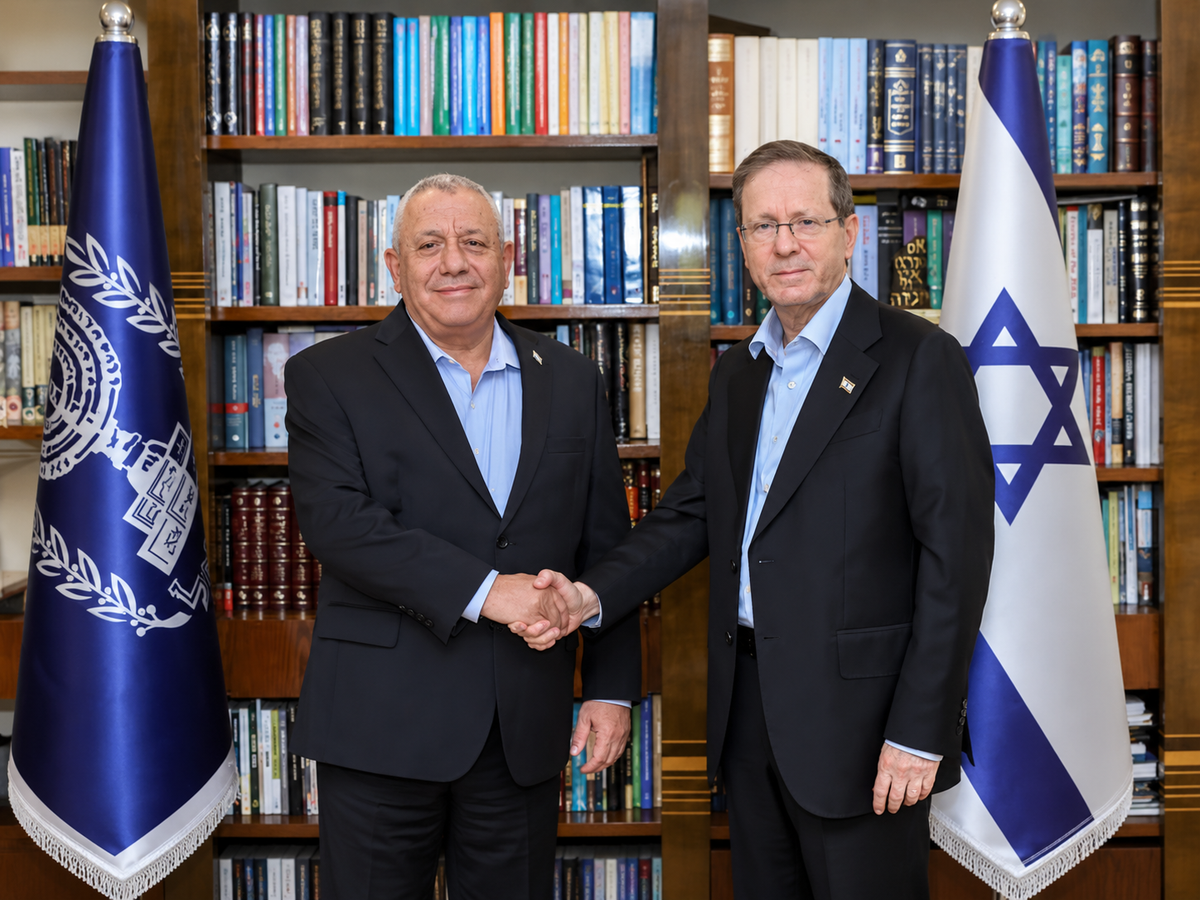
Israeli President Isaac Herzog has tasked former military chief Gadi Eisenkot with forming a government after the October 27 election left both Eisenkot and Benjamin Netanyahu without a majority.
Israel's former military chief has been given the first opportunity to replace Benjamin Netanyahu, but forming a governing coalition remains difficult. For Lebanon, the potential leadership change could reshape negotiations without necessarily reducing Israeli military pressure on Hezbollah.
Israeli President Isaac Herzog formally tasked former military chief Gadi Eisenkot with forming a government on Sunday, November 8, following an inconclusive parliamentary election that left both Eisenkot and Prime Minister Benjamin Netanyahu without a governing majority.
Eisenkot, leader of the centrist Yashar party, has 28 days to assemble a coalition, with a possible 14-day extension. His appointment represents a significant political setback for Netanyahu, although it does not guarantee that the incumbent prime minister will be replaced.
The former general pledged to pursue a broad national emergency government, warning that Israel faces serious political, security and diplomatic challenges.
Eisenkot's Yashar party won 21 seats in the October 27 election, while his broader four-party bloc secured 48 of the Knesset's 120 seats.
Netanyahu's Likud won 27 seats, with his wider political camp controlling 53.
Although 67 lawmakers recommended Eisenkot during presidential consultations, those endorsements do not amount to a governing coalition. He must secure the support of at least 61 lawmakers to command a parliamentary majority.
His options include reaching an agreement with Arab-led parties, negotiating with ultra-Orthodox factions or forming a unity government involving Netanyahu's Likud.
Each presents serious political obstacles. Avigdor Lieberman's Yisrael Beiteinu opposes relying on Arab parties, while disagreements over military conscription complicate potential cooperation with ultra-Orthodox factions.
If Eisenkot fails, Netanyahu could receive an opportunity to form a government, potentially sending Israel toward another election.
The prospect of an Eisenkot government comes as US-mediated security negotiations between Lebanon and Israel remain deadlocked.
The June 26 framework agreement envisaged a phased Israeli withdrawal from southern Lebanon alongside the deployment of the Lebanese Armed Forces and measures addressing Hezbollah's military presence.
However, negotiations have stalled over the sequence of implementation.
Israel insists on demonstrable progress toward Hezbollah's disarmament before withdrawing, while Hezbollah conditions discussions about surrendering its weapons on an end to Israeli military operations and occupation.
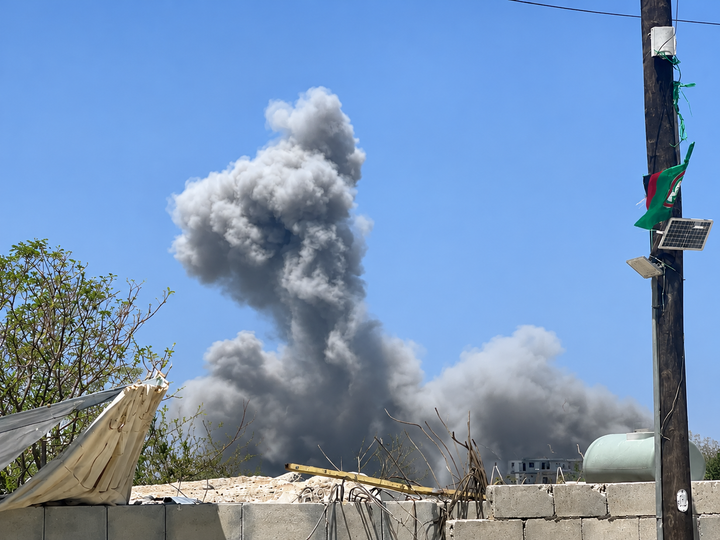
The latest negotiations, held in Florida on October 20 and 21, ended without a breakthrough. Israeli forces continue operating in parts of southern Lebanon despite the agreement.
A change in Israeli leadership could create an opportunity to restart negotiations, particularly if Eisenkot prioritizes cooperation with American diplomatic initiatives.
However, there is little indication that he would abandon Israel's core security demands concerning Hezbollah.
Although Eisenkot presents himself as a more pragmatic alternative to Netanyahu, his military background suggests that Lebanon should not expect a fundamentally softer Israeli security policy.
As commander of Israel's Northern Command, Eisenkot became closely associated with the Dahiya Doctrine, an approach advocating overwhelming military force against areas from which attacks against Israel originate.
In 2008, he warned that Israel would respond to rocket attacks with disproportionate force, invoking the destruction inflicted on Beirut's southern suburbs during the 2006 war.
More recently, on June 6, 2026, Eisenkot criticized restrictions on Israeli operations against Hezbollah, arguing that the military should retain freedom to target the organization in Beirut's southern suburbs rather than confining operations to southern Lebanon.
He nevertheless distinguished such operations from attacks against Lebanon's national infrastructure.
These positions suggest that an Eisenkot government could pursue diplomacy while maintaining a willingness to use substantial military force.
The change may therefore concern the management of Israel's confrontation with Hezbollah more than its underlying objectives.
Eisenkot has emphasized restoring Israel's relationships with international partners and pursuing more disciplined national security decision-making.
That approach could make his government more receptive to a US-backed arrangement involving Israeli withdrawal, Lebanese Army deployments and internationally monitored security guarantees.
However, successful negotiations would still require Lebanon to demonstrate meaningful progress toward establishing exclusive state authority over weapons.
An Eisenkot government would also face domestic pressure to prevent Hezbollah from rebuilding its military capabilities, particularly after successive rounds of conflict.
The impending expiration of UNIFIL's mandate in December adds urgency to discussions over alternative monitoring arrangements and the future security structure of southern Lebanon.
For Beirut, the central question is whether a new Israeli government would offer greater flexibility on the timing and verification of withdrawal, or insist on the same disarmament conditions while continuing military operations.
Eisenkot's potential rise to power may create a new diplomatic opportunity, but it should not be mistaken for a retreat from Israel's military objectives in Lebanon.
Until a governing coalition is established and its policies become clear, Lebanon's security negotiations remain exposed to the same political uncertainty that followed Israel's election.