End of an Era: The U.S. Military Has Formally Withdrawn From Iraq
The United States has formally completed its military withdrawal from Iraq, ending a presence that began with the 2003 invasion and later continued through the fight against ISIS.
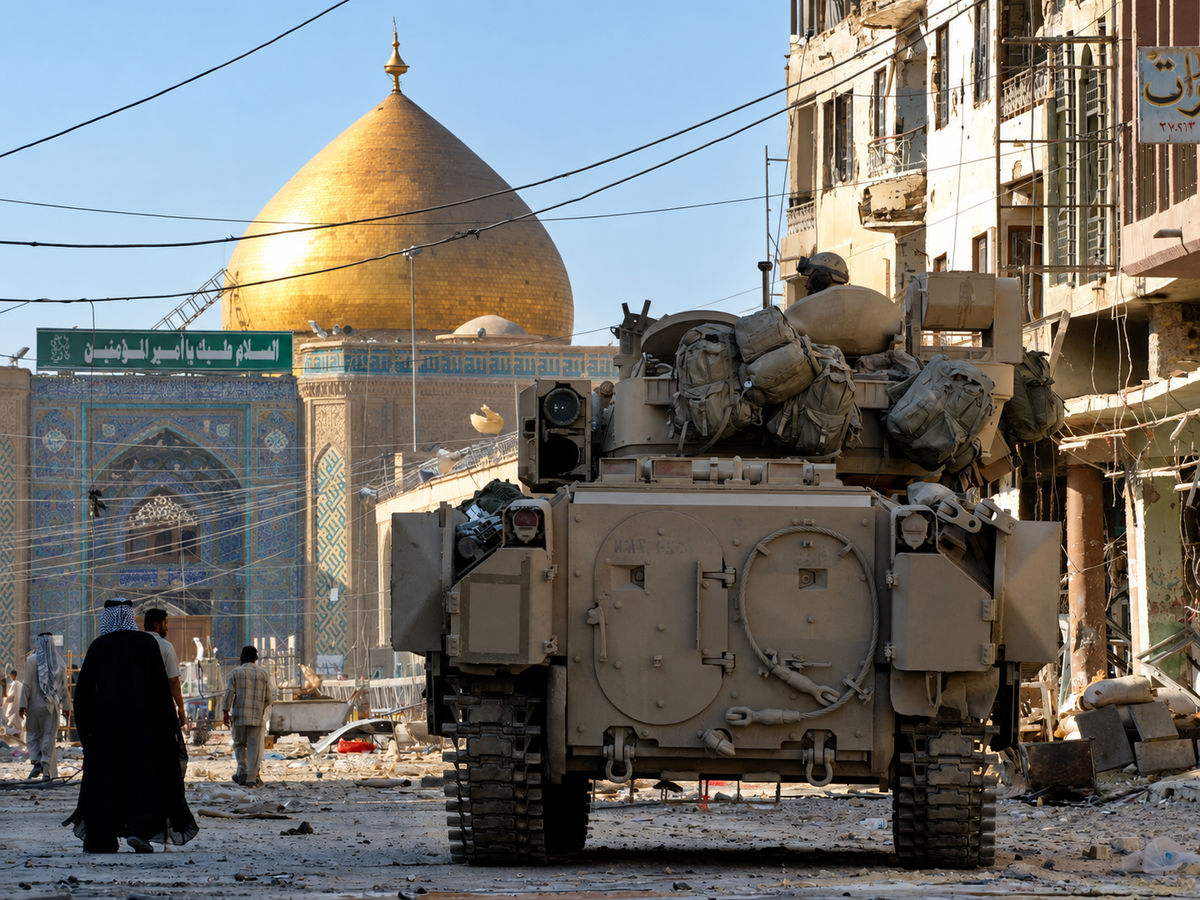
The United States has formally completed its military withdrawal from Iraq, ending a presence that began with the 2003 invasion and shaped more than two decades of Iraqi and regional politics.
The Pentagon confirmed on September 30 that the final American forces had left the country, concluding the U.S.-led coalition mission against ISIS inside Iraq. The last troops were withdrawn primarily from an airbase in Erbil, in the Kurdistan Region.
For Iraq, the moment closes one of the defining chapters of its modern history.
American forces first entered the country in March 2003 as part of the U.S.-led invasion that overthrew Saddam Hussein. What followed was a prolonged occupation, insurgency, sectarian violence and the reconstruction of Iraq’s political and security institutions.
More than 4,500 U.S. service members were killed during the conflict. Estimates of Iraqi civilian deaths vary depending on methodology, but the human cost extended into the hundreds of thousands.
The withdrawal also brings an unusual historical circle to a close.
The United States formally ended its earlier combat mission in Iraq in December 2011, when the final troops crossed into Kuwait under President Barack Obama.
But American forces returned in 2014 after ISIS seized Mosul and large parts of northern and western Iraq.
At the request of the Iraqi government, the United States then became the largest contributor to an international coalition supporting Iraqi and Kurdish forces against the group.
ISIS lost the territorial caliphate it had established across Iraq and Syria, and Iraq declared military victory over the organization in 2017.
American troops remained afterward, however, providing intelligence, training and support while conducting counterterrorism operations.
The final departure stems from an agreement reached by Washington and Baghdad in 2024 to wind down the coalition mission in stages. The process began under the Biden administration and was completed under President Donald Trump.
Trump celebrated the withdrawal, describing it as the end of a long and costly American involvement in Iraq.
But the end of the military presence does not mean the end of the U.S.-Iraqi relationship.
Washington is expected to continue providing training, intelligence assistance and other forms of security cooperation to Baghdad without maintaining permanent forces inside the country. U.S. forces elsewhere in the region also remain capable of conducting operations against ISIS when necessary.
The withdrawal is nevertheless a major geopolitical change.
For years, Iraq has existed at the center of competition between Washington and Tehran.
Iran developed extensive political, economic and military influence following the removal of Saddam Hussein, while several powerful Iraqi armed groups developed close relationships with Tehran.
Many of those groups repeatedly demanded the removal of U.S. troops, particularly after the January 2020 American drone strike in Baghdad that killed Iranian commander Qassem Soleimani and Iraqi militia leader Abu Mahdi al-Muhandis.
Iran and its allies have therefore portrayed the American departure as a strategic victory.
But within Iraq, the reaction is more complicated.
Many Iraqis see the departure of foreign troops as the restoration of full national sovereignty after more than two decades of outside military presence.
Others worry about what happens next.
ISIS no longer controls cities or large territories, but sleeper cells continue to operate in parts of Iraq and neighboring Syria. Iraqi and Kurdish security officials have reported continued militant activity, raising questions over whether Iraqi forces can contain the organization without the intelligence, surveillance and logistical capabilities previously supplied directly by U.S. forces.
There are also concerns that the withdrawal could shift the internal balance of power toward Iran-aligned armed groups.
Those groups remain deeply embedded in Iraq’s political and security landscape, and some analysts argue that the absence of American forces could provide them with greater room to expand their influence.
At the same time, Washington retains considerable influence through other channels.
Iraq’s oil revenues continue to pass through an account held at the Federal Reserve Bank of New York, a system established after the 2003 invasion. Because oil provides the overwhelming majority of Iraqi government revenue, access to the international dollar system remains an important source of U.S. economic leverage even after the military departure.
The withdrawal therefore does not represent a complete American disengagement from Iraq.
What it ends is something more specific, and historically significant: the continuous cycle of invasion, occupation, withdrawal, return and counterterrorism deployment that defined U.S. military involvement in the country for much of the past 23 years.
American troops are gone.
The consequences of their presence, and of the war that brought them there, will remain part of Iraq’s political landscape for much longer.