Hezbollah Begins Paying Displaced Families as Questions Mount Over Source of Funding
Eight months after Hezbollah entered another war with Israel, the group has begun compensating displaced Lebanese families, offering up to $14,000 per household. The payments come despite mounting sanctions and restrictions on its financial networks.
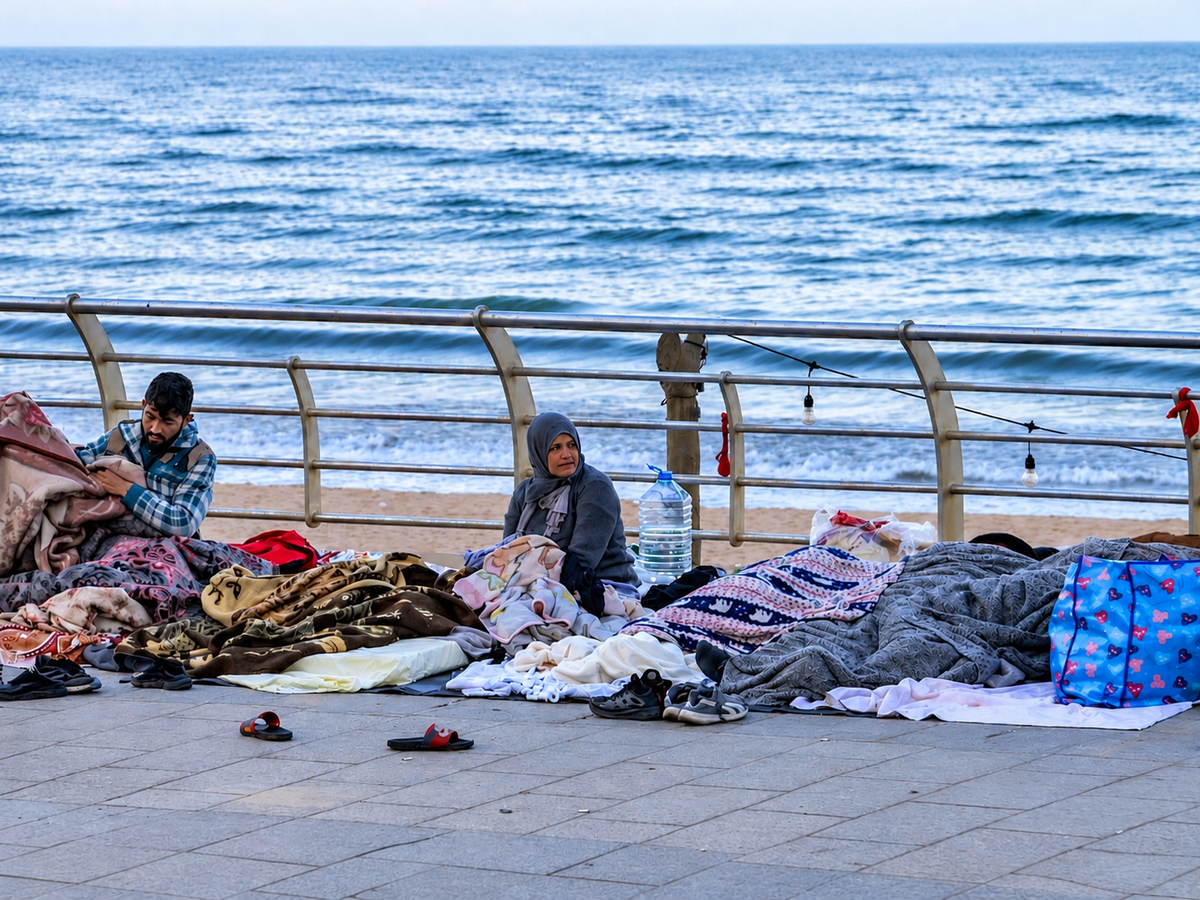
Hezbollah has begun distributing financial assistance to Lebanese families displaced by its latest war with Israel, eight months after the conflict resumed in March, raising questions about how the Iran-backed group continues to finance its operations despite international sanctions and increasing restrictions on its financial networks.
The first payments were distributed on Monday, November 2, in the Nabatieh region of southern Lebanon, where beneficiaries whose homes were destroyed or rendered uninhabitable began receiving payment orders under a compensation program titled "A Promise and a Commitment."
The initiative marks Hezbollah's first major distribution of financial assistance to displaced families since it entered the regional conflict on March 2 in support of Iran, following US and Israeli strikes against Tehran.
Under the program announced by Hezbollah Executive Council chairman Ali Damoush on October 13, eligible families in Beirut and its southern suburbs are entitled to receive up to $14,000, while those elsewhere in Lebanon can receive $12,000.
The assistance is intended to cover rental expenses and replacement furniture for families whose primary residences were destroyed, severely damaged or rendered uninhabitable.
Payments will be distributed in four installments over one year, beginning with $3,500 for eligible families in Beirut and its southern suburbs and $3,000 for those in other regions.
Hezbollah has said it intends to process 90% of beneficiaries' applications within 40 days, although it has not publicly disclosed the total number of eligible households or the program's overall budget.
Where Is the Money Coming From?
The central question surrounding the initiative is how Hezbollah has secured sufficient funds to compensate displaced families while facing significant financial pressure.
On October 7, Reuters reported that Hezbollah had received approximately $200 million from Iran during September, citing two individuals with direct knowledge of the transfer.
According to those sources, the funds were intended to support displaced Lebanese families affected by the conflict.
The reported transfer occurred despite increasingly restrictive US sanctions targeting Iran and Hezbollah's financial networks, as well as efforts by Lebanese authorities to strengthen oversight of money transfers into the country.
Intermediaries involved in moving the money reportedly charged fees equivalent to 20% of the transferred amount, approximately four times the normal rate, reflecting the heightened risks associated with facilitating transactions for the sanctioned organization.
However, neither the precise transfer mechanism nor the ultimate source of the money currently being distributed has been independently established.
The United States disputed the Reuters account, with State Department spokesperson Tommy Pigott rejecting claims that the reported Iranian funds were available. Hezbollah officials acknowledged securing financial resources but declined to identify their origin, while Iranian authorities did not publicly confirm the reported transfer.
Iran has historically served as Hezbollah's principal financial and military sponsor. According to the US Treasury Department, Tehran transferred approximately $1 billion to Hezbollah during the first ten months of 2025, despite existing international sanctions.
Nevertheless, the group's ability to receive and distribute financial assistance has become increasingly complicated by pressure on regional intermediaries and tighter controls over financial channels previously used to move money into Lebanon.
Sources cited by Reuters indicated that financial companies in countries including Iraq and the United Arab Emirates had become increasingly difficult to use, while intermediaries operating through Turkey were facing additional scrutiny.
These restrictions have increased the cost of moving money, even as Hezbollah seeks to maintain financial support for its fighters, their families and civilians affected by the conflict.
The Financial Burden of Another War
The renewed assistance comes amid extensive destruction caused by successive rounds of fighting between Hezbollah and Israel since October 2023.
According to provisional Lebanese government figures cited by AFP, more than 290,000 homes have been damaged or destroyed during the conflicts, particularly across southern Lebanon and Beirut's southern suburbs.
Prime Minister Nawaf Salam has estimated that reconstruction costs associated with the wars since 2024 could exceed $27 billion, highlighting the scale of the financial challenge facing Lebanon.
Hezbollah previously announced approximately $77 million in assistance following the 2024 war, describing those payments as a contribution from Iran and the organization.
However, the latest compensation initiative follows months of limited financial assistance to displaced households, many of whom have remained unable to return to their homes.
The prolonged delay has placed additional pressure on Hezbollah, whose political influence has historically depended in part on its ability to provide financial assistance, social services and reconstruction funding to its support base.
A Broader Question of Financial Accountability
The resumption of payments also raises questions about financial transparency and the continued operation of Hezbollah's financial structures outside Lebanon's formal state institutions.
While Lebanese authorities have intensified efforts to regulate illicit financial transfers and implement commitments involving the disarmament of non-state armed groups, Hezbollah's apparent access to substantial financial resources illustrates the continuing challenges of enforcing such restrictions.
For displaced families, the payments provide long-awaited assistance after months of uncertainty. For Lebanon's government and international partners, however, the initiative raises broader questions about how Hezbollah continues to acquire, transfer and distribute funds while facing sanctions and growing political pressure.
The reported $200 million Iranian transfer offers one possible explanation for the renewed payments, but without transparent accounting or independent confirmation of the funds' origins, the precise financing of Hezbollah's latest compensation program remains unresolved.