Hezbollah MP Admits the Explosives Were Theirs, and Threatens the State for Confiscating Them
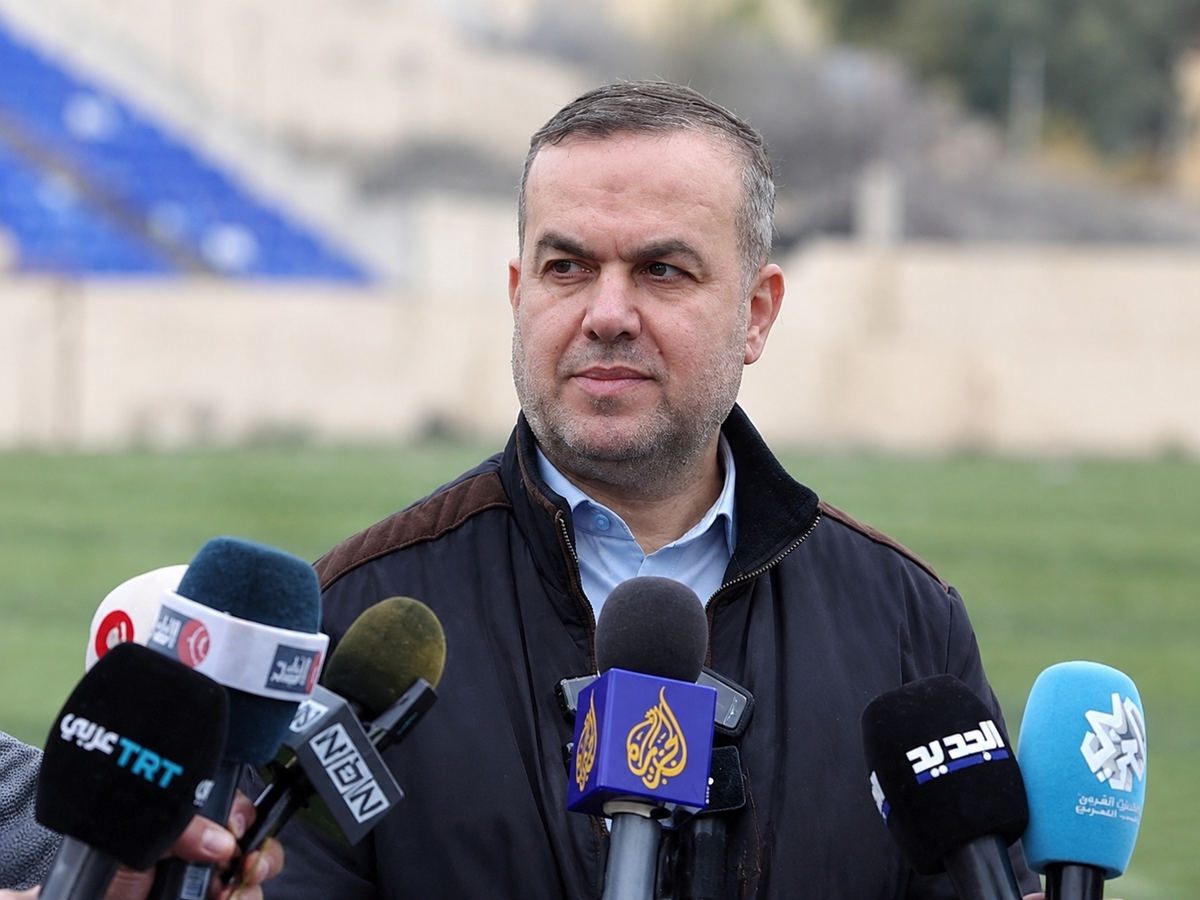
Hezbollah MP Hassan Fadlallah has admitted that the vehicle and hundreds of kilograms of explosives seized at Dahr al-Baidar belonged to Hezbollah. He demanded the release of the detainees, the return of the vehicle and the return of the explosives.
The Dahr al-Baidar explosives case is no longer about suspicions.
Hezbollah has admitted the shipment was its own.
MP Hassan Fadlallah said Thursday that the vehicle stopped by Lebanese security forces belonged to Hezbollah and that the explosives inside were part of the group’s military capabilities. He also demanded the immediate release of the detainees and the return of the vehicle and its contents.
Then came the threat.
Fadlallah cautioned the Lebanese authorities against continuing measures targeting what he called the “resistance,” urged the government to “reverse” those measures and warned that such actions could threaten stability in Lebanon.
That is the story.
An armed organization operating outside the state was caught transporting hundreds of kilograms of explosives.
The state confiscated them.
Hezbollah then publicly admitted ownership, demanded them back and warned the government against enforcing its own laws.
A judicial source said the seized cargo contained roughly 500 kilograms of explosives, including TNT and C4. Security reporting also said the shipment included metal balls and nails, while the investigation is examining who sent it, who was supposed to receive it and what it was intended for.
Hezbollah says the explosives were intended exclusively for use against Israel.
That claim has not yet been independently established by the investigation.
But even accepting Hezbollah’s explanation does not solve the central problem.
It makes it clearer.
Hezbollah is openly asserting that it has the right to move military explosives through Lebanese territory without authorization from the Lebanese state.
And when Lebanese security forces intervene, Hezbollah believes the state should return the weapons and free the men transporting them.
That is not a monopoly of arms.
It is the opposite.
Lebanon’s government has spent months telling Washington, Europe and its own citizens that decisions of war and peace must return to the state and that weapons outside state control will be addressed.
Now Hezbollah has provided the clearest possible test of whether those promises mean anything.
There is no ambiguity about ownership anymore.
Hezbollah itself removed it.
Fadlallah said the organization contacted security and judicial authorities immediately after the vehicle was seized and informed them that both the car and the materials belonged to the group.
That means this is no longer a debate over whether two rogue individuals were moving explosives on their own.
A sitting Hezbollah MP has publicly taken institutional responsibility for the shipment.
The demand that follows is extraordinary.
Return the explosives.
Return the vehicle.
Release the detainees.
Back down.
And if the state does not?
Fadlallah warns of “risks” to stability.
That is precisely why Lebanon has remained trapped for decades between the existence of formal institutions and the reality of parallel power.
A functioning state does not negotiate with an armed organization over whether confiscated military explosives should be returned to it.
Police do not seize half a ton of C4 and TNT and then wait to see whether a political party grants permission to keep it.
Courts do not release suspects because the armed group they allegedly work for demands it.
And governments do not claim sovereignty while accepting that another organization can maintain its own military logistics chain through the country.
The timing makes the challenge even more serious.
Prime Minister Nawaf Salam had promised a full investigation and accountability.
Washington is demanding measurable progress on Hezbollah’s disarmament.
The Lebanese Army is supposed to be expanding state authority.
International partners are tying reconstruction and security assistance increasingly closely to the question of exclusive state control.
Hezbollah has now effectively responded:
These weapons are ours.
These men are ours.
Give them back.
That is not a misunderstanding between state institutions and a political party.
It is a direct challenge to the authority of the Lebanese state.
Fadlallah also said Hezbollah had initially tried to resolve the case quietly “out of concern for calm internally.”
That statement may be the most revealing of all.
Why should the seizure of illegal military explosives be “resolved quietly”?
Why should there be a private accommodation at all?
If the weapons are outside state authority, confiscation should be automatic.
If the men transporting them broke Lebanese law, the judiciary should decide their fate.
If Hezbollah disagrees, it can challenge the decision politically and legally like any other party.
What it cannot credibly claim is a separate military privilege that overrides the state.
The Lebanese government now faces a simple choice.
Either the explosives remain confiscated, the investigation continues and those responsible are held accountable under Lebanese law.
Or the state folds.
Returning the shipment would send a devastating message: Hezbollah’s weapons are untouchable, its operatives enjoy a separate status, and state authority ends wherever the group decides it does.
That would make every speech about sovereignty meaningless.
Hezbollah has done Lebanon one favor in this case.
It has removed the excuses.
The explosives are theirs.
They said so themselves.
Now the state has to decide whether it is actually a state.