Hezbollah Reportedly Receives $200 Million From Iran Despite U.S. Sanctions
Hezbollah reportedly received $200 million from Iran in September to compensate families displaced by the war, despite U.S. efforts to restrict Tehran’s financial links to the group.
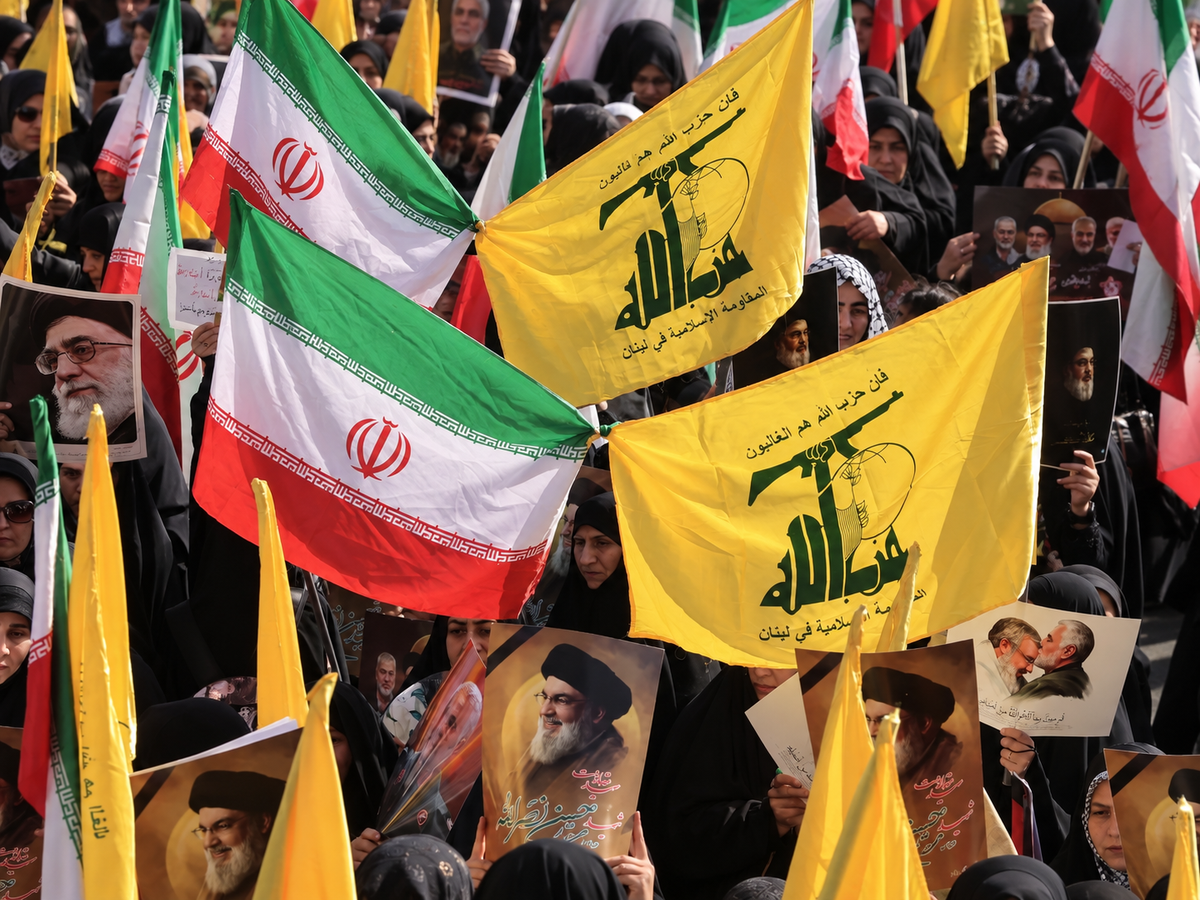
Hezbollah has reportedly received $200 million from Iran despite an increasingly aggressive American campaign to cut Tehran’s financial links to the group.
Reuters reported on October 7 that two people with direct knowledge of the transfer said the money arrived in September and was intended to support Lebanese families displaced by this year’s war with Israel. The plan reportedly involves payments of roughly $3,000 to around 50,000 families, particularly those from heavily damaged or inaccessible villages.
A Hezbollah official confirmed that funding had been secured and that a distribution mechanism would be announced, but did not identify the source of the money. Tehran has not publicly confirmed the transfer.
The most revealing detail may be the cost of moving it.
According to Reuters, intermediaries charged commissions of roughly 20%, around four times normal rates. If accurate, that would mean as much as $40 million was spent simply to move the funds.
That suggests sanctions are making Hezbollah’s financial network more expensive and difficult to operate, but not necessarily shutting it down.
Washington has spent much of the past year targeting exactly these channels.
In August, the U.S. Treasury sanctioned a network it said used couriers travelling between Iran, Turkey, the UAE and Lebanon to move large quantities of cash outside the formal banking system. Treasury said the network was capable of transporting hundreds of millions of dollars to Hezbollah.
Other sanctions have targeted exchange companies, financiers and entities connected to Al-Qard Al-Hassan, Hezbollah’s financial institution.
Lebanon’s cash-heavy economy makes enforcement particularly difficult.
Since the banking collapse of 2019, large portions of the economy have shifted outside conventional financial channels. That environment makes it easier to move money through couriers, exchange houses and informal networks without relying on banks exposed directly to U.S. oversight.
The reported payment comes at a particularly sensitive time.
Washington has recently intensified its warnings toward both Iran and Lebanon.
The U.S. Treasury said this week that foreign financial institutions dealing with Iran could face sanctions without prior notice. U.S. sources also told MTV that Washington is increasingly focused on measurable Lebanese action rather than political commitments alone, and warned that future pressure could involve direct Treasury measures.
The $200 million therefore matters beyond Hezbollah’s immediate finances.
If the money did reach Lebanon, it would demonstrate that Iran can still sustain parts of Hezbollah’s political and social infrastructure despite war, sanctions and tighter surveillance.
That infrastructure has always been central to Hezbollah’s power.
The organization does not operate only as an armed group. It also runs schools, healthcare networks, welfare programs, financial services and compensation systems that reinforce its influence across its support base.
After the 2006 war, Hezbollah moved quickly to provide cash payments to families whose homes had been destroyed.
The same model is now being tested on a much larger scale.
This year’s war caused extensive destruction across southern Lebanon and other Hezbollah strongholds. Prime Minister Nawaf Salam has estimated total damage at more than $27 billion.
Against losses of that magnitude, $200 million is limited.
But politically, even partial compensation matters when the Lebanese state lacks the resources to rebuild quickly.
That creates a sovereignty problem as much as a financial one.
A state cannot fully replace a parallel armed organization while that organization continues to finance its own supporters, maintain independent institutions and receive direct foreign backing.
This is why Washington increasingly treats Hezbollah’s financial network as inseparable from the question of disarmament.
The U.S. strategy is not simply to restrict weapons procurement.
It is to weaken Hezbollah’s ability to pay salaries, compensate supporters, rebuild damaged infrastructure and preserve the institutions that allow it to function independently of the Lebanese state.
There is still an important factual dispute.
The Trump administration has questioned whether the reported transfer occurred at all.
State Department spokesperson Tommy Pigott argued that Hezbollah has an incentive to exaggerate its financial strength and said Iran’s ability to fund the group has been weakened by sanctions, war and falling oil revenues.
A Treasury spokesperson similarly said Tehran is running out of both money and ways to move it.
The reported payment therefore remains unverified independently.
But Iran’s long-term financing of Hezbollah is not in dispute.
U.S. Treasury officials have said Tehran transferred roughly $1 billion to Hezbollah during the first ten months of 2025 alone.
If the latest $200 million transfer is confirmed, the important takeaway is not that sanctions have failed.
It is that the financial contest is becoming more expensive and more covert.
Hezbollah may now be paying far higher commissions, relying on narrower channels and accepting greater risk to obtain the same money.
For Lebanon, that raises the stakes.
Any company, exchange house, financial intermediary or institution involved in moving sanctioned Iranian funds risks becoming a target of U.S. Treasury action.
And as Washington shifts from demanding promises to demanding results, Beirut may have less room to ignore networks operating inside its own financial system.