Houthis Launch Another Wave of Attacks on Saudi Arabia as the Fight for the Red Sea Escalates
The Houthis have launched another wave of missile and drone attacks on Saudi Arabia, targeting the Khamis Mushait airbase and wounding 13 civilians as fighting across Yemen intensifies.
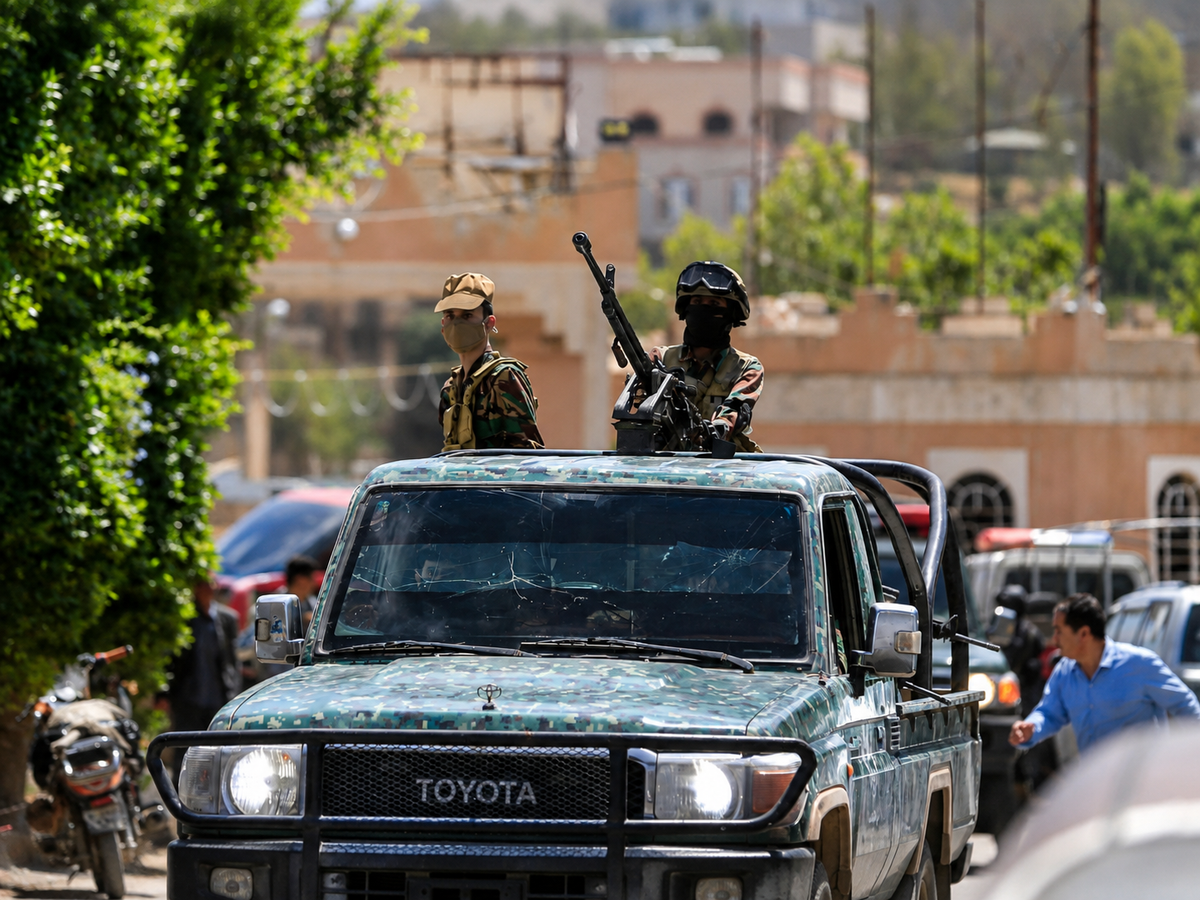
Yemen’s Iran-aligned Houthis have launched another wave of missile and drone attacks against Saudi Arabia, escalating a conflict that is increasingly centered on control of the Red Sea and the region’s most important energy routes.
The Houthis said they fired dozens of missiles and drones at the military airbase in Khamis Mushait in southern Saudi Arabia, targeting aircraft hangars, radar systems, runways and ammunition depots. Saudi authorities issued emergency alerts in Khamis Mushait and several other southern cities, while the Saudi-led coalition said 13 civilians were wounded.
The latest strikes follow a much larger Houthi barrage last week against Abha, Khamis Mushait, Jazan and Najran that wounded 73 people, including women and children. Saudi authorities said some energy facilities were forced to halt operations after the attacks, while the Houthis claimed to have targeted Aramco installations and military sites with ballistic missiles and drones.
The escalation is no longer limited to cross-border strikes.
Over the past several days, Houthi forces have made major territorial gains along Yemen’s western coast, including the seizure of Perim Island at the entrance to the Bab el-Mandeb Strait. Yemeni government officials say the group now effectively controls almost the entire western coastline along the Red Sea despite intensified Saudi and Yemeni airstrikes.
That gives the Houthis a stronger position around one of the world’s most important maritime chokepoints.
Bab el-Mandeb connects the Red Sea with the Gulf of Aden and is a critical route for commercial shipping between Europe and Asia. Control of territory and islands around the strait does not automatically give the Houthis the ability to close it completely, but it gives them more options to threaten vessels, deploy missiles and drones, and raise the cost of using the route.
Saudi Arabia is especially vulnerable because its other major oil-export route is also under pressure.
The kingdom’s 1,200-kilometer East-West pipeline, built specifically to bypass the Strait of Hormuz, remains offline following an aerial attack that Riyadh blamed on Iranian-backed militias in Iraq. Traders have warned that a prolonged shutdown could disrupt as much as 4% of global oil supply while Hormuz remains heavily restricted.
Saudi Arabia therefore finds itself squeezed from two directions.
To the east, tanker traffic through Hormuz remains severely disrupted by the wider confrontation with Iran. To the west, the Houthis are consolidating their position along the Red Sea coast and increasing attacks on Saudi territory.
The Houthis themselves have explicitly linked their campaign to Saudi military action in Yemen. Their spokesman Yahya Saree said the latest strikes were retaliation for Saudi airstrikes and warned that further escalation would bring larger attacks deeper inside the kingdom.
Saudi Arabia has responded by stepping up airstrikes against Houthi positions around Mocha and other parts of western Yemen, but so far those strikes have not reversed the group’s territorial gains.
The renewed fighting marks a dramatic reversal from the relative calm that had prevailed in Yemen in recent years. Saudi Arabia entered the war against the Houthis in 2015, but the conflict had largely quietened under an informal truce before fighting reignited this year.
The broader regional war has now given the Yemen conflict a new strategic importance.
The Houthis declared a naval blockade against Saudi Arabia in July and have increasingly targeted Saudi vessels in the Red Sea. At the same time, Iran’s pressure on the Strait of Hormuz has made Saudi Arabia more dependent on its western export infrastructure, precisely as the Houthis strengthen their position around Bab el-Mandeb.
Washington has so far shown little appetite for being dragged directly back into Yemen.
Three sources told Reuters that the Trump administration has resisted Saudi requests for military intervention beyond intelligence support. Trump said he had spoken with Crown Prince Mohammed bin Salman, while also saying the Houthis had contacted Washington urging the United States to stay out of the conflict.
That leaves Riyadh facing an increasingly difficult choice.
It can intensify its military campaign in Yemen and risk further missile and drone attacks against Saudi cities and energy infrastructure, or it can attempt to negotiate another accommodation with the Houthis from a weaker strategic position.
Either way, the balance around the Red Sea is changing quickly.
What began as another flare-up in Yemen’s civil war is increasingly becoming a struggle over the arteries of global trade and energy. With Hormuz restricted, Saudi oil infrastructure under attack and the Houthis entrenched near Bab el-Mandeb, two of the world’s most important maritime chokepoints are now under simultaneous pressure.