How Did Lebanese Villages Get Their Names?
Why are Lebanese villages called Bsharri, Beit Mery, Kfardebian or Deir el Qamar? Many of these familiar names preserve traces of languages spoken across the region centuries ago, including Aramaic, Syriac, Phoenician, Greek and Arabic.
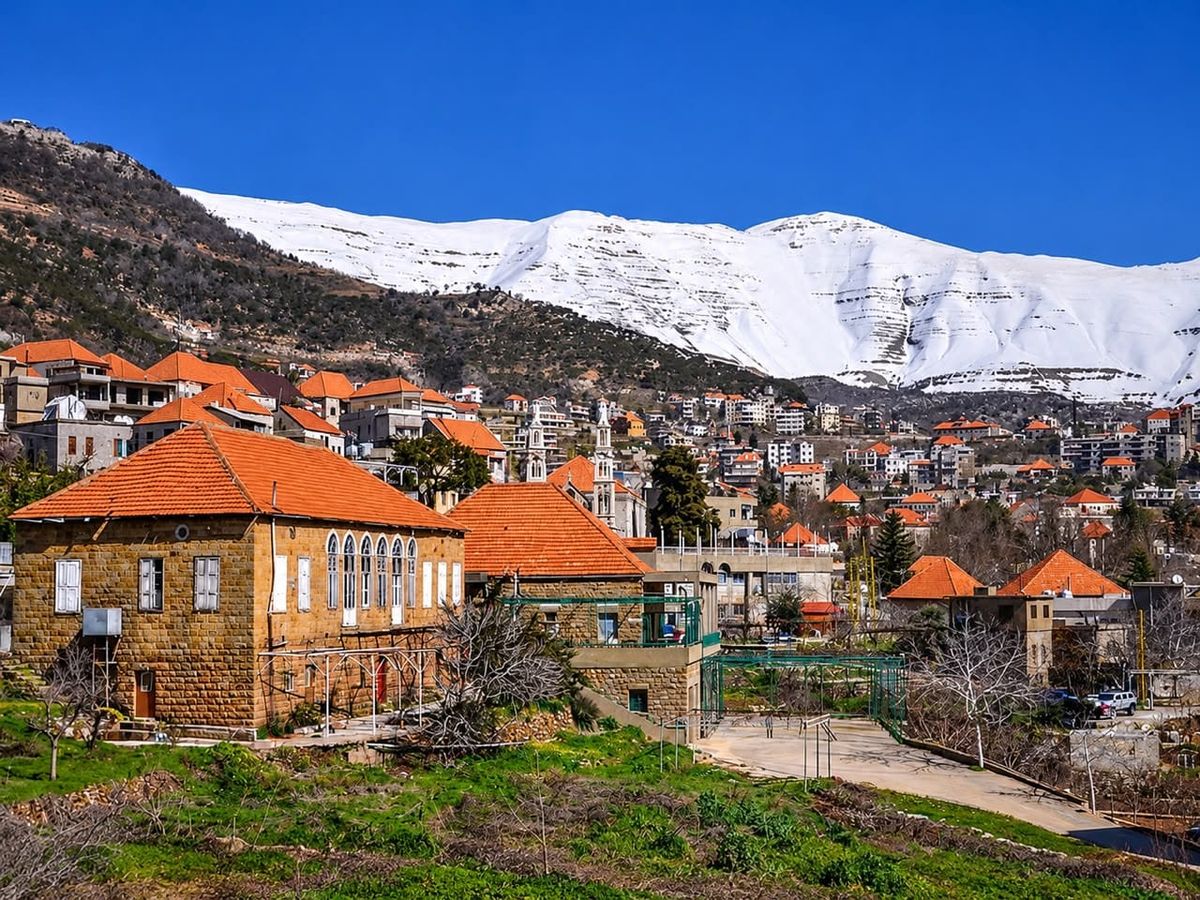
Bsharri. Baabda. Beit Mery. Jounieh. Zahle. Deir el Qamar.
These names are so familiar to Lebanese people that few stop to consider what they mean or where they came from.
Yet many preserve traces of languages spoken centuries before modern Lebanon existed.
Some originated in Aramaic, others in Phoenician, Greek or Arabic. Many changed pronunciation as different populations settled in the same places, while others survived long after their original meanings were forgotten.
The result is a remarkable linguistic record hidden in Lebanon's geography.
In fact, research suggests that more than a third of the place names in parts of Mount Lebanon and North Lebanon have Aramaic origins.
To understand why, we must look at the languages that once shaped the country.
Before Arabic, There Was Aramaic
Arabic is Lebanon's dominant language today, but the region has a much longer linguistic history.
In antiquity, Phoenician was spoken along the coast, particularly in cities such as Byblos, Sidon and Tyre.
Aramaic subsequently spread across the Levant during the first millennium BC, becoming an important language of communication under successive empires.
For centuries, different forms of Aramaic remained widespread in the region.
Syriac, a literary and religious variety of Aramaic, became especially important among Christian communities, including the Maronites.
Greek also played a major role during the Hellenistic and Byzantine periods.
Following the Arab conquests of the seventh century, Arabic gradually expanded throughout the region.
But the adoption of Arabic did not mean that older geographical names disappeared.
Villages retained names inherited from earlier generations, even when their inhabitants no longer understood the original language.
What a Study of 1,724 Lebanese Names Revealed
Linguist Elie Wardini examined 1,724 place names across Mount Lebanon and North Lebanon in his 2002 book Lebanese Place-Names: Mount Lebanon and North Lebanon, A Typology of Regional Variation and Continuity.
His research identified approximately 49% of the linguistic elements in the names as Arabic, 36% as Aramaic and 6% as Canaanite, including Phoenician. The remainder included uncertain origins and smaller contributions from Greek and other languages.
These figures concern the areas studied, not every place name in Lebanon.
Wardini's findings also suggest that changes in language and religion occurred gradually rather than through sudden, complete population replacements.
The names of villages therefore preserve evidence of continuity across centuries of political and cultural transformation.
Why So Many Villages Begin With Beit
One of the most recognizable elements in Lebanese place names is Beit, meaning house.
It appears in Beit Mery, Beit Chabab and numerous other settlements.
The word has equivalents in several Semitic languages, including Arabic, Aramaic and Hebrew.
Historically, such names could refer to a household, family settlement, estate or place associated with a particular person.
However, the presence of Beit does not automatically prove that a village name is Aramaic.
Because these languages share linguistic roots, identifying the origin of a particular name requires more than translating its individual components.
The same principle applies to other recurring elements.
Ain, Deir and Kfar: Names That Describe a Place
Many Lebanese villages were named after features that made them recognizable.
Ain, meaning spring, appears in Ain Saadeh, Ain Zhalta and Ain el Remmaneh.
In mountainous communities, reliable access to water was essential for agriculture and settlement.
Deir, meaning monastery, appears in Deir el Qamar, Deir Mimas and Deir el Ahmar.
Such names often reflect the importance of religious institutions in the development of local communities, although the precise history of each name may differ.
Kfar, found in names such as Kfarshima and Kfardebian, is associated with an older Semitic term for village or settlement.
Its persistence reflects the region's Aramaic linguistic heritage, although individual place names require separate examination.
These recurring elements reveal how people historically understood their surroundings.
A village might be identified by its spring, monastery, agricultural land or the family associated with it.
Baalbek: A Name From the Ancient World
Baalbek offers one of Lebanon's most striking examples of linguistic continuity.
Its name is generally associated with Baal, a deity worshipped in the ancient Levant, although the precise interpretation and historical development of the full name remain debated.
During the Hellenistic and Roman periods, the city was also known as Heliopolis, meaning City of the Sun in Greek.
The two names reflect different religious and cultural traditions attached to the same place.
The Semitic name nevertheless survived alongside the city's Greek and Roman identity and eventually became its established name again.
Today, Baalbek preserves a connection to the region's ancient religious history, even though the beliefs associated with its original name disappeared long ago.
Tripoli: The City of Three Cities
Tripoli provides a clearer example of Greek influence.
Its name comes from Tripolis, meaning three cities.
Classical accounts associate the name with three Phoenician communities connected to Tyre, Sidon and Arwad.
The name eventually entered Arabic as Tarabulus.
It remains one of the clearest examples of a Greek geographical term surviving within Lebanon's Arabic vocabulary.
The city's name has outlived the political arrangements that originally gave it meaning.
Why Some Village Names Remain a Mystery
Not every Lebanese place name has an established origin.
Bsharri, Zahle, Jounieh and other names have attracted different explanations, some more firmly supported than others.
Some interpretations connect them to Aramaic or Syriac words. Others propose geographical descriptions, ancient roots or later linguistic changes.
The difficulty lies in reconstructing how a name sounded hundreds of years ago.
Pronunciation changes. Written records may be scarce. Languages borrow words from one another.
Sometimes, later generations invent explanations based on familiar words that merely resemble the original name.
Linguists call this folk etymology.
A convincing story about a village's name is therefore not necessarily a historically accurate one.
Scholars compare old spellings, linguistic patterns, geographical features and historical documents before proposing an explanation.
Even then, some origins remain uncertain.
What Lebanon's Map Tells Us
The importance of these names extends beyond language.
They offer clues about how communities lived, where they settled and what they considered important.
Names associated with water reveal the importance of springs and rivers.
Names connected to monasteries reflect religious institutions.
Others preserve memories of families, agricultural activities or older settlements.
Most importantly, Lebanon's geographical vocabulary demonstrates that cultural change did not always involve erasing what came before.
Phoenician, Aramaic, Greek and Arabic influences accumulated over centuries.
The people living in a village might change their spoken language while continuing to use a name inherited from earlier generations.
This is why Lebanon's map cannot be understood through a single linguistic or religious identity.
Its names belong to different periods, communities and historical circumstances.
A person driving from Beirut to the mountains may pass through dozens of villages without realizing that their names preserve words spoken centuries before Arabic became dominant.
Some have clear meanings.
Others remain unresolved mysteries.
But together they form one of Lebanon's most accessible historical archives.
Not written on parchment or carved into monuments, but preserved in the names people use every day.