Lebanon Launches National Digital Heritage Archive to Preserve Its Forgotten History
Lebanon has launched a national digital heritage archive inviting residents and the diaspora to contribute historical photographs, family letters, oral histories, traditional songs and other records of the country's past.
Somewhere in a Lebanese family's home, an old photograph shows a village street that no longer exists.
In another household, a letter sent from Brazil a century ago remains folded inside a drawer. Elsewhere, an elderly relative remembers a traditional song, a forgotten expression or a story that has never been written down.
These fragments of Lebanon's past rarely appear in history books.
Now, a new heritage initiative wants to preserve them before they disappear.
On October 15, 2026, Lebanon launched Archiving Lebanon's Heritage, a digital platform designed to collect and safeguard historical photographs, family documents, oral histories, traditional music and other records of the country's cultural identity.
Presented at the National Library in Beirut, the initiative brings together Lebanon's Ministry of Culture, through its Directorate General of Antiquities, and the Italy-based Heritage International Institute.
Its central idea is simple: Lebanon's history does not belong exclusively to museums, historians or government institutions.
Much of it remains in the possession of ordinary families.
A National Archive Built by the Lebanese Themselves
Unlike traditional archives, which generally depend on institutional collections, the new platform invites contributions directly from individuals.
Lebanese residents, members of the diaspora, researchers, collectors and anyone possessing material related to the country's history can submit digital copies of their records.
These may include old family photographs, personal letters, diaries, recordings, maps, videos and historical documents.
Providing details about a contribution's date, location, origin and historical significance can make it considerably more useful to researchers.
A photograph without context may reveal little beyond the appearance of its subjects. But identifying the people, location and approximate date can turn an ordinary family picture into a valuable historical record.
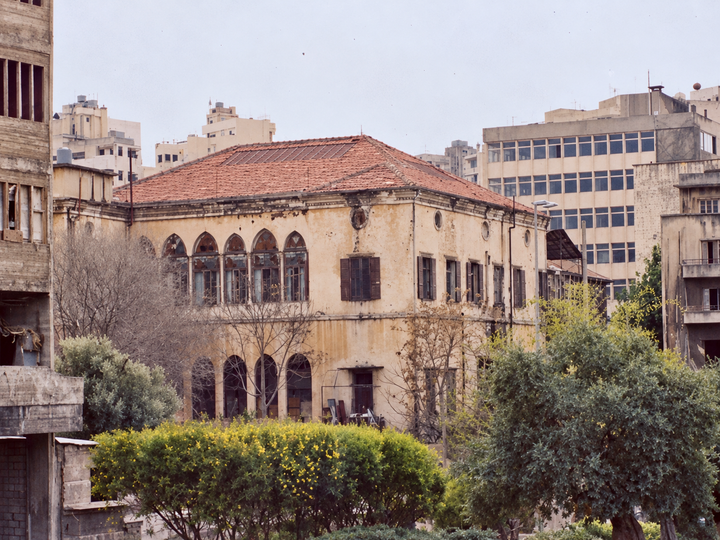
A photograph of a Beirut street in the 1930s, for example, might document buildings that have since been demolished.
A letter from a Lebanese emigrant in Argentina could reveal how families communicated across continents.
An interview with an elderly villager might preserve a local tradition that has never been formally documented.
The initiative seeks to bring these scattered records into a shared digital collection.
Three Types of Lebanese Heritage
The archive is organized around three principal categories.
The first is tangible cultural heritage.
This includes historical buildings, monuments, archaeological sites, traditional architecture, old maps, photographs and documents.
The second is intangible cultural heritage.
This category covers practices and knowledge transmitted between generations, including traditional songs, dabke, local dialects, oral histories, religious customs, festivals and artisanal skills.
The third is natural heritage.
Contributions may document Lebanon's landscapes, cedar forests, valleys and other environments that form part of the country's historical identity.
This broader approach recognizes that heritage is not limited to ancient temples or famous monuments.
A traditional agricultural technique, a village wedding song or an old family recipe can also reveal important aspects of Lebanon's past.
Why Lebanon's Family Archives Matter
Lebanon's history has been shaped by repeated periods of emigration, war, displacement and economic crisis.
Each has affected the preservation of historical records.
During the Civil War, libraries, private collections and institutional archives suffered damage, destruction or dispersal.
The Beirut port explosion of August 4, 2020, caused further destruction across neighborhoods containing historic buildings, cultural institutions and private collections.
Meanwhile, generations of emigration have scattered Lebanese family records across the world.
Photographs taken in Mount Lebanon may now be preserved in homes in São Paulo, Sydney, Montreal or Paris.
Letters written by emigrants in the early twentieth century may remain with descendants who no longer speak Arabic.
Other materials disappear when elderly relatives die, houses are sold or families discard documents whose historical importance they do not recognize.
The new archive attempts to address this problem by allowing contributions from anywhere in the world.
It also reflects a growing recognition that national history cannot be reconstructed solely through official records.
Personal documents can reveal experiences that government archives rarely capture.
What Happens to the Documents?
One important feature of the initiative concerns ownership.
According to the organizers, people who submit material retain ownership of their contributions.
They can determine whether their records remain private or are made available for public viewing. Contributors can also choose how they are credited, including remaining anonymous.
This distinction is significant because families may possess documents containing sensitive personal information or material they do not wish to publish.
The project allows contributors to submit digital files or scans without surrendering ownership of their original materials.
Submissions are reviewed by a joint scientific committee representing the Directorate General of Antiquities and the Heritage International Institute.
Approved files are intended for preservation through DARIAH-IT, a federated digital research infrastructure coordinated by Italy's National Research Council.
Organizers also describe an artificial intelligence system designed to assist with processing, cataloging and organizing submissions.
However, the project's long-term value will depend on the quality of its documentation, the reliability of its preservation systems and the ability of researchers and the public to access approved materials.
Collecting documents is only the first step.
Ensuring that future generations can understand and use them is equally important.
An Italian Partnership
The project was developed through cooperation between Lebanon's Directorate General of Antiquities and the Heritage International Institute, an Italian organization involved in cultural heritage preservation.
The initiative follows a scientific cooperation agreement reached in Parma, Italy, in May 2026.
Its official launch in Beirut was attended by Culture Minister Ghassan Salamé, Director General of Antiquities Sarkis Khoury, Italian Ambassador Fabrizio Marcelli and Heritage International Institute President Sergio Iovino.
The partnership also includes the three-dimensional documentation of the archaeological site of Faqra.
By October 17, an Italian-Lebanese mission had begun work on mapping the historic site, with the objective of producing detailed digital records of its structures.
Such documentation can support future research, conservation and restoration efforts, while providing a reference if monuments are damaged or destroyed.
Organizers also intend to develop documentation methods at Faqra that could be applied to other heritage sites across Lebanon.
An international event is planned in Rome in 2027 to recognize notable contributions to the archive, with three awards representing its tangible, intangible and natural heritage categories.
Preserving the Lebanon That History Books Overlook
Perhaps the most important aspect of the initiative is its focus on ordinary lives.
Lebanese history is frequently told through political leaders, wars, religious institutions and major historical events.
But these accounts reveal only part of the country's past.
They rarely explain how ordinary families lived, what neighborhoods looked like before redevelopment, how villages celebrated weddings or what emigrants wrote to relatives they left behind.
These details survive in photographs, letters, recordings and memories.
They also help reconstruct the histories of communities whose presence has diminished or disappeared, including former residents of historic neighborhoods and villages transformed by migration.
A national archive that collects such material could provide historians with new sources while allowing families to preserve their own records.
Its success, however, will depend on public participation and sustained institutional support.
The launch of a digital platform does not automatically guarantee that Lebanon's scattered historical memory will be preserved.
That requires people to contribute, institutions to maintain the archive and future generations to continue using it.
For a country that has lost so much of its architectural, documentary and cultural heritage, the initiative offers a different approach to preservation.
Instead of waiting for historians to discover the past, it asks Lebanese families to help document it themselves.
A photograph in a drawer may appear insignificant.
But multiplied across Lebanese households around the world, these fragments could help reconstruct parts of the country's history that have never been properly recorded.