Inside a Southern Lebanese Orphanage, Children Struggle to Build Lives Under the Shadow of War
Just hundreds of meters from Israeli-occupied territory, a girls' orphanage in Tebnin, southern Lebanon, is helping children rebuild their lives after years of war, displacement and loss.
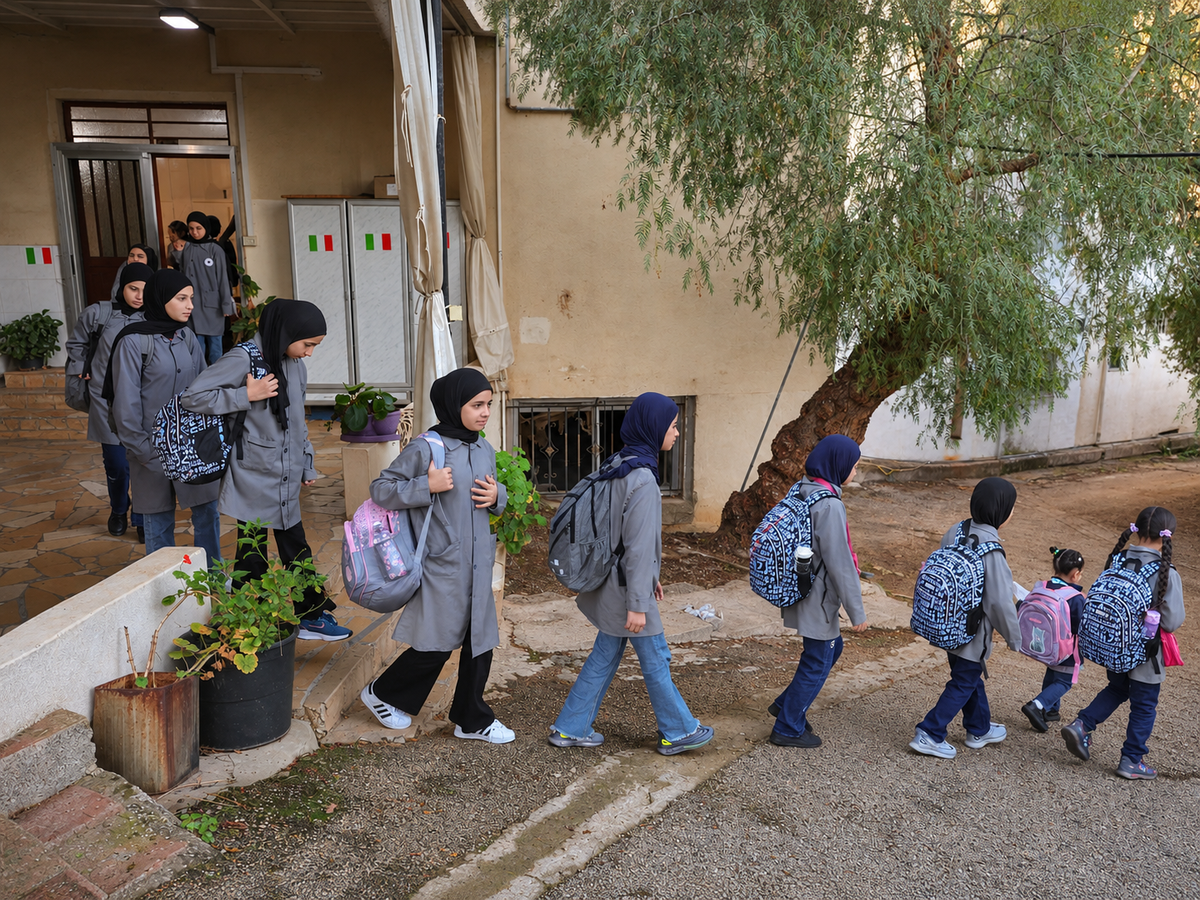
Just hundreds of meters from Israeli-occupied territory, an orphanage in Tebnin is providing shelter, education and a sense of family to girls who have lost parents, homes and stability to successive wars. But with much of the building destroyed and financial support dwindling, even this refuge faces an uncertain future.
In the southern Lebanese town of Tebnin, 13-year-old Inaya Sultan is trying to live an ordinary childhood despite growing up surrounded by war. She attends school, spends time with friends and dreams of becoming a doctor. At night, however, she assumes a responsibility far beyond her age: comforting her four-year-old half-sister, Malak, whose memories of their father remain painfully connected to the sound of Israeli airstrikes.
Their father, a paramedic, was killed in an Israeli strike on their hometown in March 2026, less than two weeks after Hezbollah entered the renewed conflict between Israel and Iran.
The two sisters now live at the Tebnin Girls' Orphanage, where approximately 40 other girls are attempting to rebuild their lives just hundreds of meters from territory occupied by Israeli troops.
According to a Reuters report published November 5, the institution has become one of the few places offering these children something resembling stability amid the destruction of southern Lebanon.
Growing Up Without Their Father
For Inaya, losing her father has meant learning to manage her own grief while protecting her younger sister from its full weight.
The teenager makes beaded bracelets for Malak, spends time with friends at the orphanage and continues her education. But the sound of explosions frequently brings back the moment that changed their lives.
Malak associates nearby strikes with the attack that killed their father. When frightened, she turns to Inaya for reassurance.
The older sister told Reuters that she sometimes cries privately but tries to remain composed in front of Malak, fearing that seeing her distressed would make her younger sister cry too.
Despite their circumstances, both children have ambitions for the future.
Inaya hopes to study medicine, while Malak has expressed an interest in becoming a firefighter or paramedic, following in their father's footsteps.
Their experience reflects the profound emotional consequences of a conflict in which children have lost family members while continuing to live near areas of active military operations.
An Orphanage That Has Survived Decades of Conflict
The Tebnin orphanage was established in 1978, during an earlier period of Israeli military intervention in southern Lebanon.
It provides accommodation and care for girls who have lost one or both parents, as well as those whose families cannot afford to support them.
Beyond shelter, the institution offers schooling, meals, uniforms and an environment in which residents can develop friendships and maintain daily routines.
However, the orphanage itself has suffered extensive damage.
During the 2024 Israel-Hezbollah war, an Israeli strike on a neighboring building severely damaged the facility. The children had been evacuated before the attack, but much of the structure was left unusable.
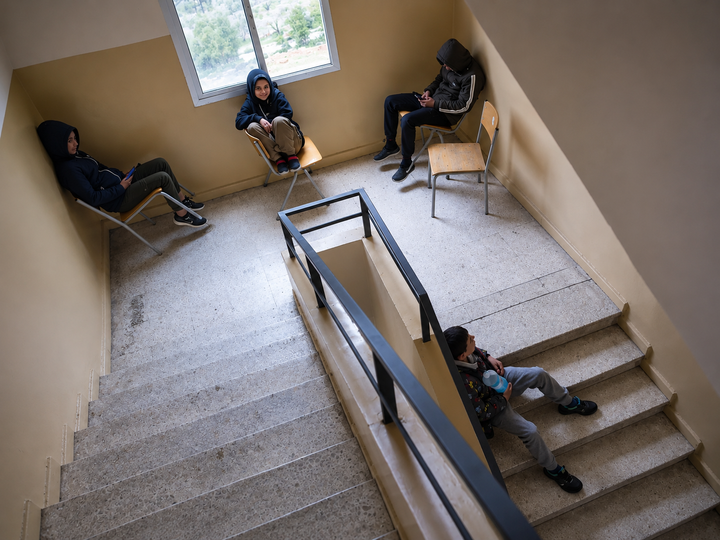
Limited funding has allowed repairs to only one floor, forcing staff to convert communal areas into sleeping quarters.
The basement, previously used as a theater for performances, choir rehearsals and gatherings, remains in ruins.
For 19-year-old Shereen Saad, who has spent most of her life at the orphanage, the destruction represents more than physical damage.
The building contains memories of her childhood, friendships and formative experiences. Seeing those familiar spaces destroyed has been particularly difficult.
Now studying interior design at a local university, Shereen hopes to pursue a graduate degree in Italy. Yet the possibility of renewed conflict makes planning for the future uncertain.
Her ambitions remain intact, but she is reluctant to make promises to herself that another war could prevent her from fulfilling.
Living Less Than a Kilometer From Israeli Troops
The orphanage's proximity to Israeli military positions has made everyday life increasingly precarious.
The girls were evacuated again during the fighting that began in March 2026. When they returned, Israeli soldiers were stationed less than a kilometer away.
Although hostilities have eased since the June ceasefire, Israeli forces continue occupying parts of southern Lebanon, where airstrikes and demolitions remain a recurring reality.
For the children, the sounds of military activity have gradually become part of their daily environment.
Fatima Jaffal, the orphanage's 30-year-old head caretaker, told Reuters that staff cannot indefinitely suspend the children's lives while waiting for the security situation to improve.
Jaffal, whose hometown of Rshaf lies within the Israeli-controlled zone, considers the orphanage her home as much as the girls do.
She believes the institution plays an essential role in protecting their education, social development and future prospects.
Financial Collapse Threatens the Orphanage's Future
Beyond the danger of renewed fighting, the orphanage faces a serious financial challenge.
Lebanon's economic collapse beginning in 2019 substantially reduced the government funding available to institutions providing social care.
The orphanage has relied partly on donations from United Nations peacekeepers stationed in southern Lebanon.
However, that support faces an uncertain future as the UNIFIL peacekeeping mission approaches the end of its mandate in December 2026.
Ali Saad, the orphanage's director, told Reuters that the institution desperately needs repairs but faces an impossible calculation: whether to invest scarce resources in rebuilding a facility that could be damaged again during another round of fighting.
The dilemma illustrates the broader challenge facing communities throughout southern Lebanon.
Reconstruction requires funding and a degree of confidence that restored buildings, schools and essential services will not be destroyed again.
Without lasting security guarantees, even the most basic investments in rebuilding remain vulnerable.
The Hidden Cost of War on Lebanon's Children
The struggles at Tebnin reflect a much larger humanitarian crisis.
According to Lebanon's Ministry of Public Health, more than 4,000 people have been killed in Israeli strikes since March 2026, including more than 700 children, women and paramedics. The reported figures do not otherwise distinguish between civilians and combatants.
In a September 2026 report, UNICEF warned that successive rounds of fighting and Lebanon's prolonged economic crisis were exposing children to psychological trauma, disrupted education, displacement and the destruction of services intended to protect them.
For children who have already experienced bereavement, repeated evacuations and exposure to military violence can make recovery particularly difficult.
Institutions such as the Tebnin orphanage therefore serve a purpose extending far beyond housing and education. They provide a stable environment in which children can rebuild trust, maintain relationships and imagine futures that are not entirely defined by conflict.
Yet the continued threat of war places even these fragile sources of stability at risk.
For Inaya, Malak, Shereen and the other residents, ambitions of becoming doctors, pursuing university degrees or simply enjoying childhood coexist with the constant possibility of another evacuation.
Their aspirations are no different from those of children elsewhere. What sets them apart is the uncertainty over whether they will be given the chance to fulfill them.