Iran and Qatar Hold Emergency Talks as Khamenei Threatens Retaliation Beyond Iran’s Borders
Iran and Qatar have held urgent talks to prevent renewed American military strikes, while Supreme Leader Mojtaba Khamenei warned that retaliation against any attack would extend beyond Iran’s borders.
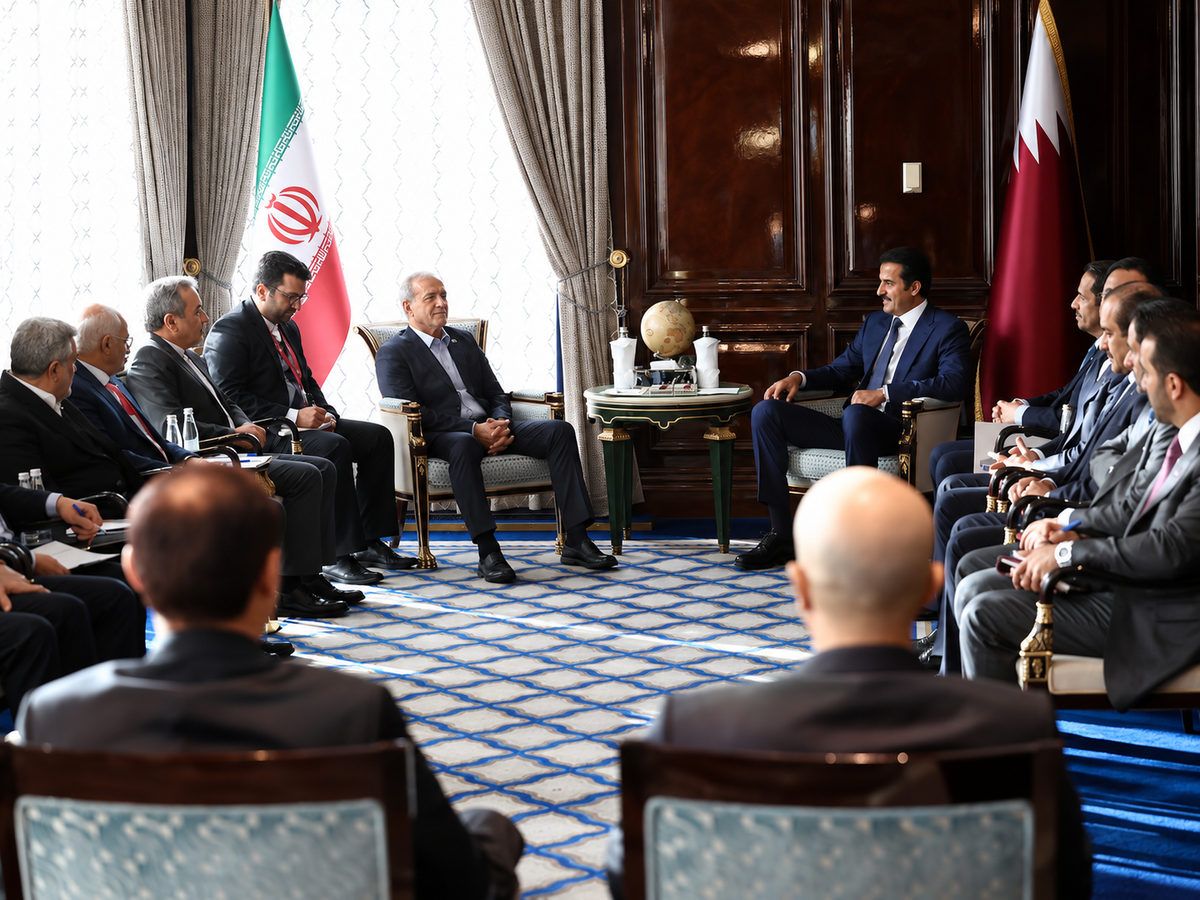
Iran and Qatar have held urgent diplomatic talks to prevent another confrontation between Tehran and Washington, as Iranian Supreme Leader Mojtaba Khamenei warned that any renewed American or Israeli attack would trigger retaliation extending beyond Iran’s borders.
The negotiations took place in Tehran on October 30 and Doha on October 31, with Qatari mediators maintaining regular contact with Washington.
The urgency comes as President Donald Trump considers renewed military operations against Iran following the November 3 U.S. midterm elections.
While diplomats attempt to negotiate a settlement, Iran is preparing for a potentially wider regional war.
Khamenei Threatens Retaliation Across the Region
On October 31, Khamenei instructed Iran’s top military commanders to prepare for what he described as an immediate and geographically unrestricted response to any future attack.
He also ordered the armed forces to expand their list of potential American and Israeli targets.
The directive followed a meeting with senior commanders from the Islamic Revolutionary Guard Corps, the regular military and Iran’s armed forces headquarters.
Iranian officials reported increased military readiness around the Persian Gulf, the Strait of Hormuz and the Gulf of Oman.
The warning is particularly significant for Gulf countries hosting American military installations.
During earlier confrontations, Tehran demonstrated its willingness to strike targets outside Iranian territory and disrupt international shipping.
A renewed conflict could therefore threaten countries that are not directly participating in attacks against Iran.
Khamenei’s message is intended to increase the potential cost of military intervention.
But threatening regional retaliation also risks drawing additional governments into a war they are attempting to prevent.
Qatar Proposes a Seven-Day Agreement
Qatar is attempting to bridge the gap between Washington and Tehran through a phased diplomatic proposal.
According to Reuters, Qatari mediators presented Iran with a seven-day plan involving daily confidence-building measures before broader peace negotiations.
The proposal was intended to establish enough trust for the two countries to address their larger disagreements.
However, a senior Iranian official said Tehran considered the initial proposal unsatisfactory.
Iran has offered its own framework, demanding the lifting of the American blockade on Iranian ports, the release of frozen assets and approval of an Iranian-backed shipping arrangement through the Strait of Hormuz.
In exchange, Tehran would reopen the strategic waterway.
The Strait of Hormuz is among the world’s most important oil and natural gas shipping routes.
Restrictions on maritime traffic have disrupted energy markets and raised costs for countries dependent on Gulf exports.
Restoring normal shipping would therefore provide economic benefits far beyond Iran.
But Washington and Tehran remain divided over the order and scope of concessions.
Washington Has Not Ruled Out Military Action
U.S. Secretary of State Marco Rubio confirmed that Trump has not decided whether to authorize additional attacks.
Speaking on October 31, Rubio emphasized that diplomatic contacts with Iran remain active and that Washington would prefer a negotiated outcome.
Nevertheless, he reiterated America’s military capabilities.
The discussions follow a letter from Vice President JD Vance to Iranian security officials, reportedly exploring whether negotiations could resume.
Iranian Foreign Minister Abbas Araghchi described the American outreach as a potentially positive development but ruled out immediate direct negotiations under existing conditions.
The nuclear dispute remains another major obstacle.
Washington wants restrictions and monitoring arrangements concerning Iran’s nuclear program.
Iran is demanding sanctions relief and security guarantees before agreeing to additional concessions.
Neither side has publicly accepted a comprehensive agreement.
Lebanon Risks Becoming Another Battlefield
The consequences of renewed fighting could extend directly to Lebanon.
Hezbollah recently reportedly assured Lebanese officials that it would not intervene in another war involving Iran.
Yet Reuters subsequently revealed that the organization had received fresh Iranian funding to rebuild its attack-drone capabilities, explosives stockpiles and military command structures.
That contradiction has intensified questions about Hezbollah’s intentions.
Rearmament does not prove that Hezbollah plans to intervene. But the organization retains an independent military capability that could expose Lebanon to another confrontation.
Israeli officials have already threatened to expand operations in southern Lebanon if Hezbollah enters another regional war.
For Lebanese civilians still recovering from displacement and destruction, the danger is substantial.
Once again, Lebanon’s security could be affected by decisions made in Tehran, Washington and Hezbollah’s military leadership rather than by the Lebanese government.
Diplomacy Under the Threat of War
Qatar’s mediation reflects the growing concern among regional governments that another American-Iranian confrontation could spread far beyond the two countries.
The Gulf faces potential attacks on energy infrastructure, shipping and military installations.
Israel faces renewed missile and drone threats.
Lebanon risks another devastating escalation involving Hezbollah.
Meanwhile, the global economy remains vulnerable to disruptions in energy supplies.
Khamenei’s threats demonstrate that Iran is prepared to raise the stakes if attacked.
But they also complicate the diplomatic efforts that could prevent those attacks.
Qatar is attempting to establish a path toward negotiations before the next military decision is made.
Whether that effort succeeds depends on concessions neither Washington nor Tehran has yet publicly committed to making.
For the Middle East, the stakes extend well beyond Iran’s nuclear program.
Another war could once again turn the entire region into a battlefield.