Iran Is Targeting Global Shipping to Influence U.S. Elections
Iran is escalating attacks on commercial shipping around the Strait of Hormuz, with senior Iranian officials telling Reuters that keeping global oil prices high and increasing pressure on Washington ahead of the U.S. midterms is part of the strategy.
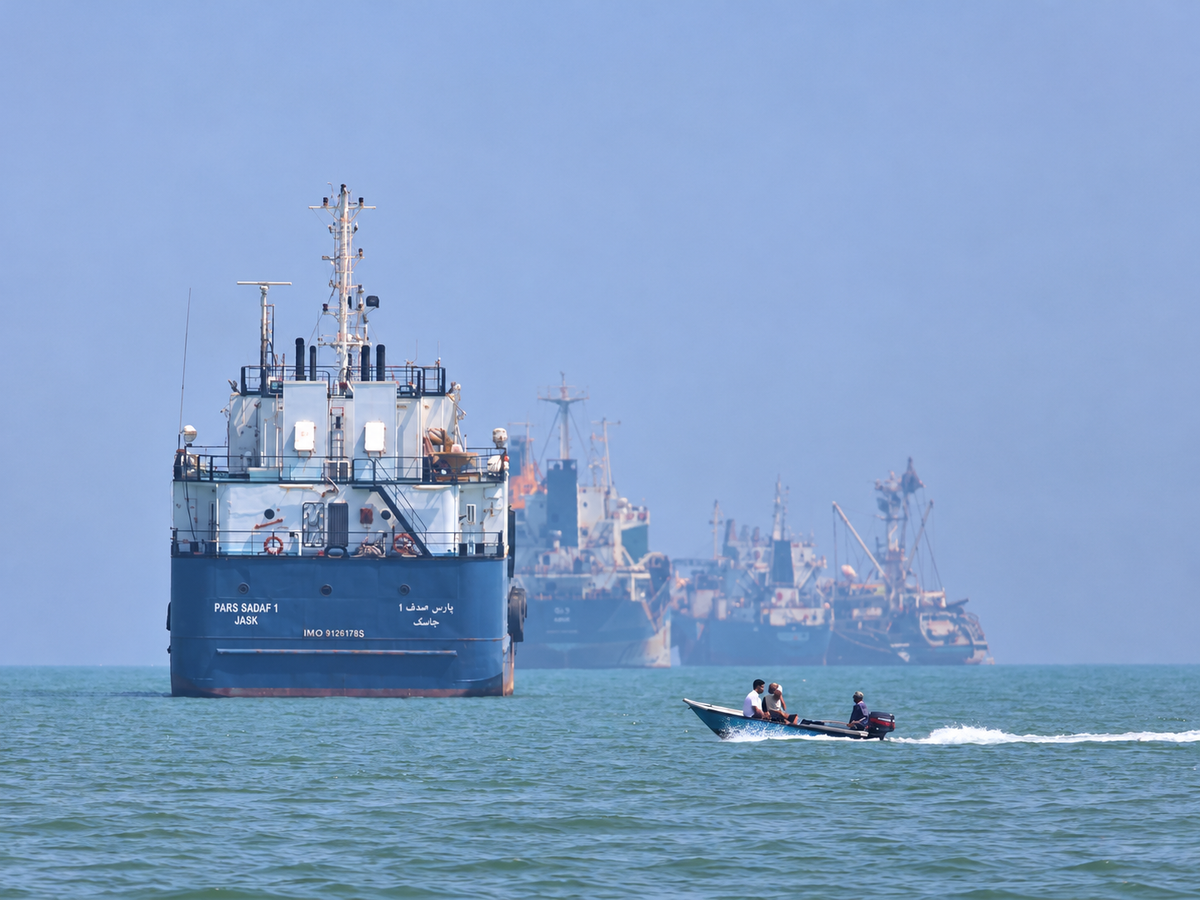
Iran is escalating attacks on commercial shipping around the Strait of Hormuz with an increasingly explicit political objective: keep global energy prices high, increase economic pressure on Washington and shape the environment surrounding the November U.S. midterm elections.
That is not simply an accusation from the Trump administration.
Senior Iranian officials told Reuters that Tehran has deliberately changed its maritime strategy in recent weeks as it seeks to prevent the United States from bringing oil prices down before Americans vote on November 3.
The strategy exploits one of the world economy’s greatest vulnerabilities.
The Strait of Hormuz is the gateway connecting the Persian Gulf with global markets. Before the current war, roughly one-fifth of the world’s petroleum liquids moved through it.
Disrupt that traffic and the consequences spread far beyond the Middle East.
Oil prices rise.
Diesel becomes more expensive.
Shipping costs increase.
Insurance premiums surge.
Airlines pay more for fuel.
Manufacturers face higher transportation costs.
Eventually, consumers see the effects in prices.
Iran appears to understand that chain perfectly.
According to Reuters, Tehran’s leadership has shifted tactics toward more frequent attacks while attempting to avoid actions severe enough to trigger another major American military escalation. Iranian officials said influencing U.S. political calculations before the midterms is part of the strategy.
Iran has also adapted militarily.
After American and Israeli strikes damaged much of its coastal radar network, Iranian forces began using unarmed small boats as spotters to identify commercial vessels before drones and other weapons are launched, Reuters reported.
Operations are also expanding beyond the Strait of Hormuz into the Gulf of Oman and surrounding waters.
The results are already significant.
The Financial Times reported that six vessels were targeted on October 11 alone, while 24 ships had been attacked during the preceding two weeks, the most intense period of attacks since the war began.
Crude exports through Hormuz reportedly fell to around 2.9 million barrels per day on October 11, compared with a September peak of approximately 15.5 million barrels per day.
Shipowners are responding exactly as Tehran would expect.
Some vessels are avoiding the region.
Others are rerouting cargoes or transferring oil between ships.
Tanker availability has tightened.
The daily cost of hiring some supertankers reportedly reached a record $805,000 this month.
The implications reach directly into American politics.
President Donald Trump entered the year promising lower energy prices.
Instead, the seven-month war with Iran has contributed to higher fuel prices and renewed inflation concerns just weeks before congressional elections.
Reuters reported in August that the conflict had become increasingly unpopular in the United States, with its economic consequences creating political pressure on the administration.
Trump himself has acknowledged the electoral dimension.
On October 8, he announced that the United States would not launch new attacks on Iran before the midterm elections, while maintaining the American naval blockade.
He has separately accused Yemen’s Iran-aligned Houthis of trying to push oil prices higher ahead of the same vote.
Iran now appears to be pursuing a similar pressure strategy directly in the Gulf.
The logic is straightforward.
Tehran cannot vote in American elections.
But it can attempt to influence the economic conditions under which Americans vote.
Higher oil prices raise gasoline and transportation costs.
Higher transportation costs feed into consumer prices.
Persistent inflation makes interest-rate cuts more difficult.
And economic dissatisfaction can affect how voters evaluate the government in power.
None of that means Iran can determine an American election result.
It cannot.
Voters respond to many issues, and it would be impossible to isolate the electoral impact of any one movement in oil prices.
But influencing economic conditions is different from controlling the outcome.
Reuters' reporting indicates Iranian officials believe maintaining pressure on energy markets can increase the political cost of the war for Trump and reduce Washington’s willingness to escalate.
That makes commercial shipping part of a wider political battlefield.
The confrontation between Washington and Tehran is no longer limited to missiles, military bases and sanctions.
It now includes the price Americans pay at the pump and the cost of moving goods across the global economy.
The United States is trying to counter that pressure.
Washington has imposed additional sanctions on Iran’s shadow fleet and maritime networks, targeting 17 vessels on October 8 as part of an effort to restrict Iranian energy revenues.
The U.S. also maintains a naval blockade of Iranian ports and has said it can sustain the operation indefinitely.
But there is an obvious difficulty.
Military pressure on Iran can itself tighten energy markets.
Iranian retaliation tightens them further.
Shipping companies become more cautious.
Insurance costs increase.
And every new incident around Hormuz can send another shock through oil markets.
That creates a situation in which Tehran does not necessarily need to close the Strait completely.
It merely needs to convince enough shipowners, insurers and traders that passing through it is dangerous.
Recent attacks suggest that strategy may already be working.
The escalation is also spreading beyond Hormuz.
Iran-aligned Houthis have renewed attacks around the Red Sea and Bab el-Mandeb, creating pressure at another critical maritime chokepoint. China has privately urged Tehran to help restrain the Houthis after Saudi Arabia sought Beijing’s assistance.
The global energy system is therefore facing disruption at both ends of the Arabian Peninsula.
That is what makes the current Iranian strategy potentially powerful.
It uses geography as leverage.
Iran sits beside one of the most important energy corridors on Earth and maintains relationships with an armed movement positioned beside another.
By disrupting shipping, Tehran can impose costs far beyond the battlefield without needing to defeat the United States militarily.
For Washington, that turns protecting maritime trade into both a security and domestic economic priority.
For Tehran, keeping those routes unstable can create leverage that sanctions and military strikes have failed to eliminate.
And with the U.S. midterms less than three weeks away, the timing is no longer incidental.
Iranian officials are saying it themselves.
The battle over the Strait of Hormuz is also becoming a battle over the economic conditions surrounding an American election.