Israel Destroys Hezbollah’s Ali al-Taher Underground Complex
Israel says it has destroyed Hezbollah’s two-kilometer underground complex beneath Ali al-Taher after taking operational control of the strategic ridge. The site contained command rooms, weapons stores and infrastructure built over roughly two decades with Iranian support.
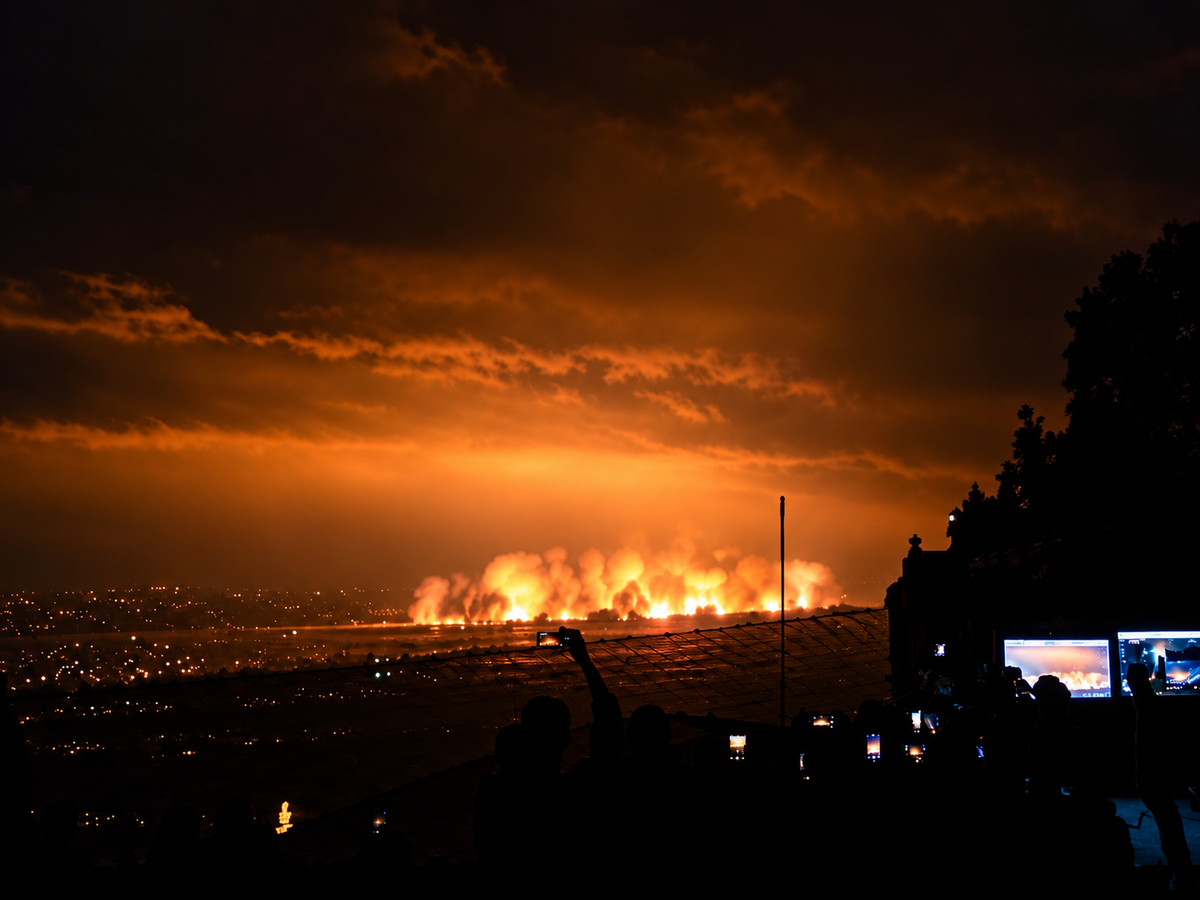
Israel says it has destroyed Hezbollah’s underground complex beneath the strategic Ali al-Taher ridge in southern Lebanon, completing an operation that Israeli leaders say has consolidated a new security zone several kilometers inside Lebanese territory. The complex stretched for roughly two kilometers and included command rooms, weapons storage, living quarters and stockpiles of rockets, missiles, drones and anti-tank weapons.
The destruction came after Israeli forces said they had achieved operational control of the ridge both above and below ground. Troops had spent weeks clearing two main tunnel routes, with the Israeli military saying some Hezbollah fighters were killed while others fled before demolition began.
The blast itself was powerful enough to register as a 4.1-magnitude seismic event in southern Lebanon, underscoring the scale of the underground infrastructure being destroyed. Israel says the site had been built over around two decades with Iranian financing and planning and served as a major command center for Hezbollah’s Badr unit.
More importantly, Israel is now making clear that the operation is not simply about destroying tunnels and withdrawing. Prime Minister Benjamin Netanyahu and Defense Minister Israel Katz said Israeli forces will remain in the area to prevent Hezbollah from returning, rebuilding its positions or restoring military capabilities on the ridge.
That makes Ali al-Taher increasingly important in the wider postwar settlement. The ridge sits around 15 kilometers from the Israeli border and has become one of the most contested positions of the conflict. Its elevation gives control over large parts of southern Lebanon and key routes around Nabatieh and Iqlim al-Tuffah.
The latest development also complicates the U.S.-brokered framework reached after the June ceasefire. That arrangement envisioned Hezbollah’s disarmament alongside an Israeli withdrawal from Lebanese territory, but implementation has stalled. Hezbollah has resisted broader disarmament, while Israel says it will not withdraw from areas it considers necessary for its security until Hezbollah’s military presence is removed.
Ali al-Taher therefore appears to be evolving from a temporary battlefield objective into part of Israel’s longer-term defensive posture in southern Lebanon.
If that position holds, the question is no longer only whether Hezbollah can rebuild the underground complex. It is whether Israel now intends to maintain a permanent or semi-permanent security belt inside Lebanon, and what that means for any future agreement over the south.