Israel Votes: Israeli Elections 101
On Tuesday, October 27, Israelis will elect a new parliament in the country's first general election since the Hamas attacks of October 7, 2023.
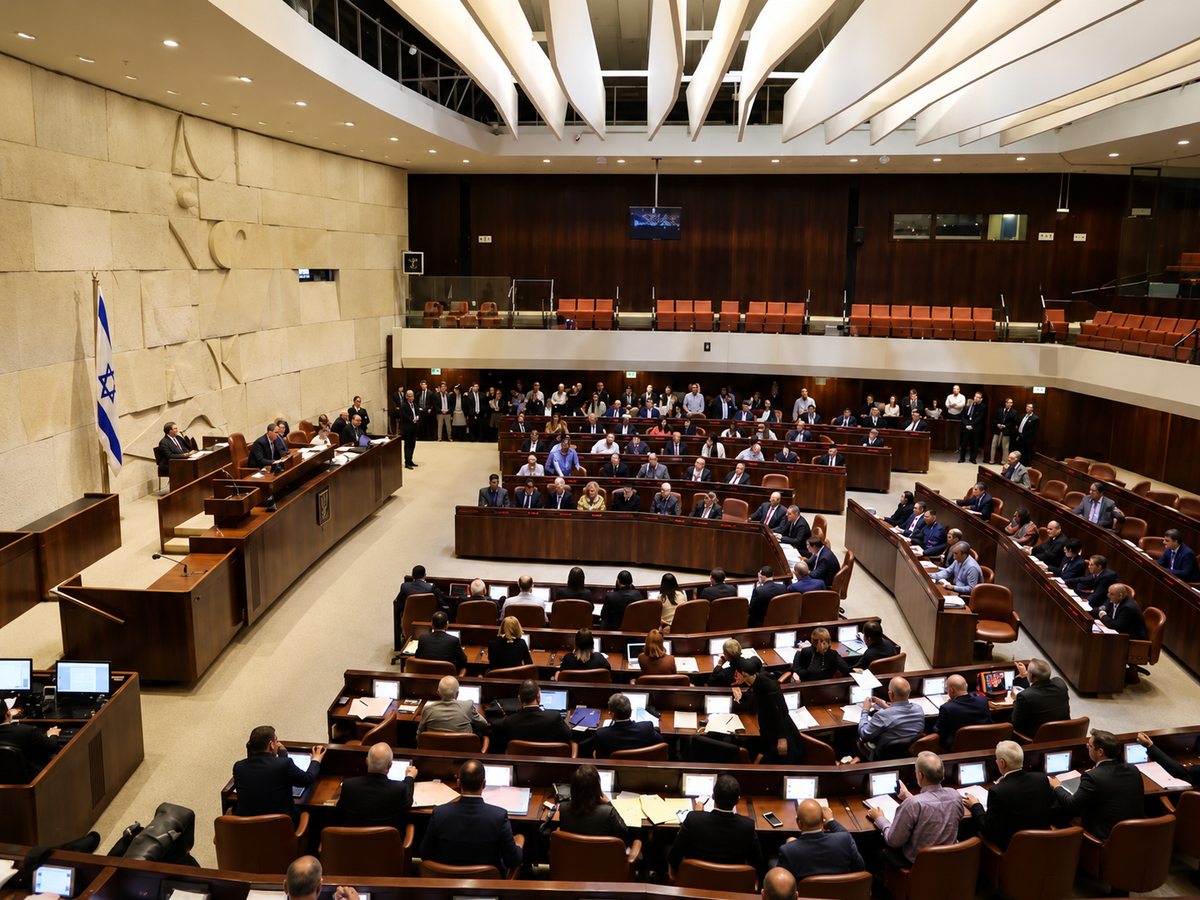
On Tuesday, October 27, Israelis will elect a new parliament in the country's first general election since the Hamas attacks of October 7, 2023.
The vote follows three years of war involving Gaza, Lebanon and Iran, profound domestic political divisions and growing international pressure.
For Prime Minister Benjamin Netanyahu, Israel's longest serving leader, the election is another test of his political leadership.
For Israel, it is an opportunity to determine who will govern after one of the most consequential periods in the country's history.
And for Lebanon, the result could influence the future of Israeli military operations, negotiations over Hezbollah's weapons and the possibility of a broader regional settlement.
How Israeli elections work
Unlike presidential systems, Israelis do not directly elect their prime minister.
They vote for political parties competing for representation in the 120-seat Knesset.
Parties must receive at least 3.25% of the national vote to enter parliament.
Following the election, Israel's president consults parliamentary factions and assigns a political leader the task of forming a government.
That leader must assemble a coalition capable of commanding at least 61 seats.
The process can take weeks, and the leader of the largest party does not automatically become prime minister.
This system gives smaller parties considerable influence, particularly when the larger political blocs are closely divided.
Who is running?
Benjamin Netanyahu: Likud
Netanyahu leads the conservative Likud party and seeks to remain prime minister after nearly two decades in office across several terms.
His political alliance includes religious and nationalist parties, notably Itamar Ben-Gvir's Otzma Yehudit, Bezalel Smotrich's Religious Zionism and ultra-Orthodox parties.
Netanyahu has emphasized Israel's military campaigns against Hamas, Hezbollah and Iran, presenting national security as a central justification for his government's policies.
However, his leadership remains controversial following the October 7 security failures, disputes over military conscription exemptions and his ongoing corruption trial.
Gadi Eisenkot: Yashar
Former Israeli military chief Gadi Eisenkot leads the centrist Yashar party.
Eisenkot served as chief of staff of the Israel Defense Forces from 2015 to 2019 and subsequently entered politics.
His campaign emphasizes security, institutional accountability and political reform.
He has criticized Netanyahu's handling of the October 7 attacks and argues that Israel requires a different approach to national leadership.
Eisenkot's military background also means that his security positions are not necessarily less assertive than those of Netanyahu.
Naftali Bennett and Yair Lapid: Together
Former prime ministers Naftali Bennett and Yair Lapid have joined forces under the Together alliance.
Bennett previously led a government that replaced Netanyahu in 2021, while Lapid subsequently served as prime minister.
Their partnership brings together different political traditions around shared opposition to Netanyahu's continued leadership.
Other significant parties include Avigdor Liberman's Yisrael Beiteinu, Yair Golan's Democrats and parties representing Israel's Arab population.
What are Israelis voting on?
Although the election follows years of regional warfare, domestic issues are also central.
October 7 and national security. The Hamas attacks raised questions about intelligence failures, military preparedness and political accountability. Parties disagree over responsibility and how Israel's security doctrine should change.
Military service. Exemptions for ultra-Orthodox men have become increasingly contentious following years of military mobilization. Secular parties have demanded broader conscription, while religious parties oppose measures they consider harmful to their communities.
The economy. Military spending, the cost of living, taxation and the economic consequences of prolonged conflict are important concerns.
The judiciary and democratic institutions. Netanyahu's earlier proposals to change the balance of power between the government and judiciary generated major protests. Institutional reform and judicial independence remain divisive questions.
These disagreements make coalition formation difficult even among parties that share opposition to Netanyahu.
What do the polls show?
Polling ahead of the election indicates a fragmented political landscape.
Reuters' October 20 polling average placed Likud approximately two percentage points ahead of Eisenkot's Yashar.
Parties opposed to Netanyahu collectively held around 62 projected seats, compared with approximately 54 for his supporting bloc.
But these figures do not represent a unified opposition coalition.
Several parties disagree on economic policy, religion, national security and whether Arab-led parties should participate in government formation.
Small parties near the electoral threshold could also significantly change the final distribution of seats.
The decisive question after Tuesday may therefore be less about which party receives the most votes and more about which political leader can assemble a functioning coalition.
What does the election mean for Lebanon?
For Lebanon, Israel's election carries direct security implications.
The next Israeli government will inherit unresolved questions concerning Hezbollah, Israeli military positions in southern Lebanon and the future of American mediated security negotiations.
Netanyahu's government has maintained that Hezbollah's military capabilities must be addressed before Israel can fully withdraw from contested positions.
Opposition leaders have criticized aspects of Netanyahu's leadership, but many also support a strong military response to threats from Hezbollah and Iran.
A change in government would therefore not automatically mean an end to Israeli military operations in Lebanon.
However, different coalitions could pursue different approaches to diplomacy, military escalation and relations with Washington.
The election also matters for the broader relationship between Israel and Arab states.
Regional normalization efforts, negotiations concerning Gaza and the confrontation with Iran will all be influenced by the composition of the next government.
What happens after October 27?
Election night will establish the distribution of seats in the new Knesset.
It will not necessarily establish who governs.
Parties must negotiate coalition agreements, determine policy priorities and agree on the allocation of government positions.
If no leader can assemble a parliamentary majority, Israel could face prolonged negotiations, a minority government arrangement or eventually another election.
Israel experienced five parliamentary elections between 2019 and 2022, demonstrating how difficult coalition formation can become in a fragmented political system.
Tuesday's vote will be the first since the October 7 attacks and the regional wars that followed.
But its most important consequences may only become clear during the coalition negotiations afterward.
For Lebanon and the wider Middle East, the question is not simply whether Netanyahu remains prime minister. It is what kind of government emerges, and whether its approach to regional security and diplomacy changes.