Israeli and Seven Arab Military Chiefs Reportedly Held Secret Meeting in Germany
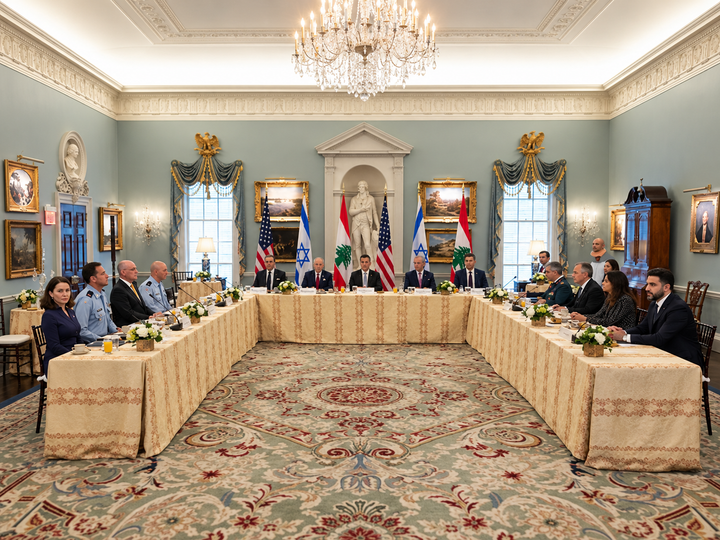
The military chiefs of Israel and seven Arab states reportedly met secretly in Germany last week for U.S.-organized talks on Iran and the escalating regional conflict. Saudi Arabia, the UAE, Bahrain, Kuwait, Qatar, Jordan and Egypt were reportedly represented alongside Israel’s military chief.
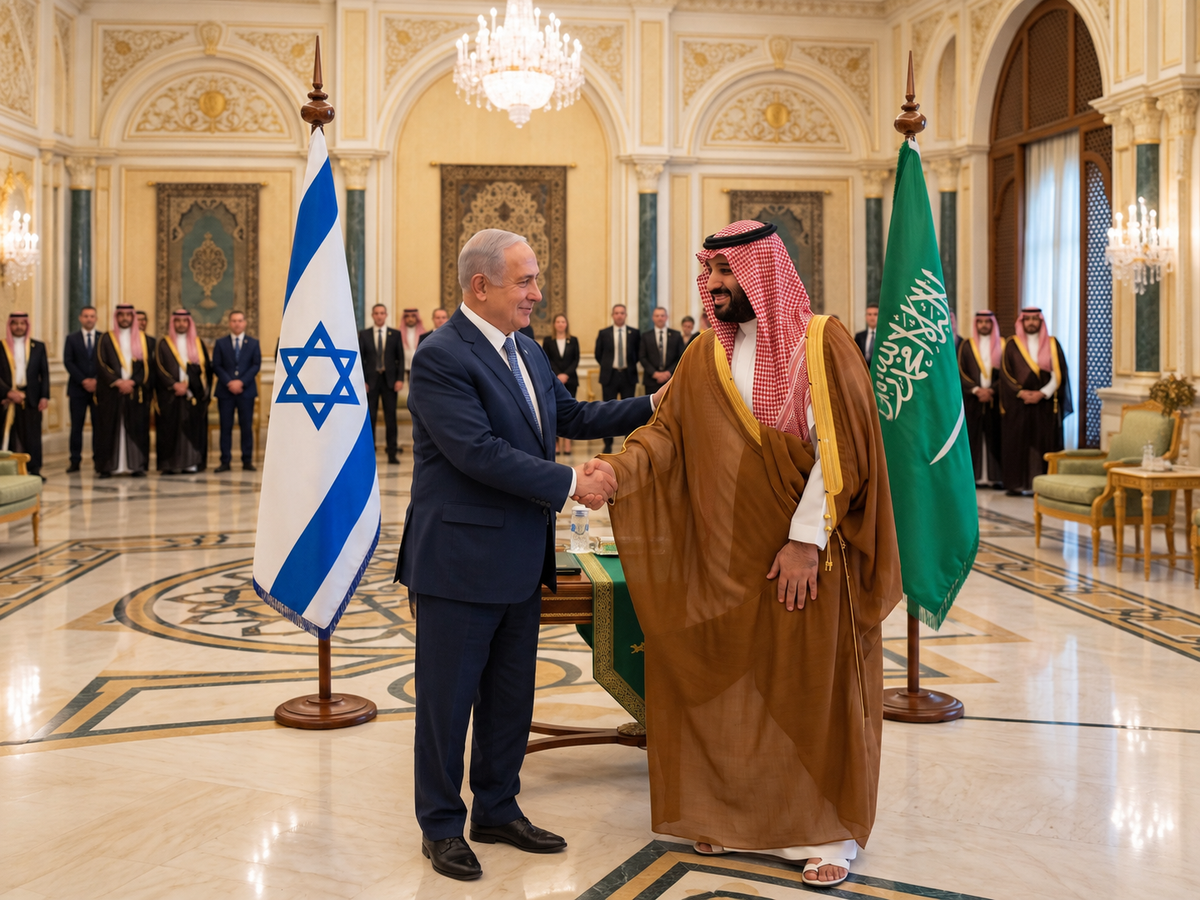
The military chiefs of Israel and seven Arab states reportedly met secretly in Germany last week for talks centered on the war with Iran and the rapidly changing security environment across the Middle East.
According to Axios, the meeting was organized by U.S. Central Command chief Admiral Brad Cooper and brought together Israeli military chief Lt. Gen. Eyal Zamir with senior commanders from Saudi Arabia, the United Arab Emirates, Bahrain, Kuwait, Qatar, Jordan and Egypt. CENTCOM confirmed that it hosted senior military officials from eight regional countries at a planned conference in Germany, although participating governments did not publicly announce the gathering.
The talks reportedly took place at a secluded resort and focused primarily on the ongoing conflict with Iran, as well as the escalating confrontation between Saudi Arabia and Yemen’s Houthis.
The composition of the meeting is particularly significant.
Egypt, Jordan, the UAE and Bahrain all maintain formal diplomatic relations with Israel. Saudi Arabia, Qatar and Kuwait do not.
That means senior military officials from countries that still have no diplomatic ties with Israel were reportedly sitting at the same table as Israel’s chief of staff to discuss a common regional security threat.
The meeting reflects a much broader transformation that has been taking place quietly across the Middle East.
For years, the United States has been working to integrate the air and missile-defense capabilities of its regional partners so that radar information and early warnings can be shared more quickly against Iranian missiles and drones.
CENTCOM publicly acknowledged that process earlier this year. In July, Cooper hosted military representatives from 12 regional countries in Bahrain, where officials discussed defense cooperation and the security of the Strait of Hormuz. CENTCOM said the United States and its regional partners were operating an increasingly integrated air and missile-defense network and had established a new coordination cell for sharing threat warnings.
The difference in Germany was Israel’s participation alongside Arab states that do not formally recognize it.
That cooperation has become easier to justify as the regional conflict with Iran expands.
Since the beginning of the U.S.-Israeli campaign against Iran earlier this year, Iranian missiles and drones have targeted American facilities and allied states throughout the Gulf. A recent Pentagon inspector general report found that Iranian strikes damaged or destroyed hundreds of structures at U.S. bases across eight Middle Eastern countries.
The Gulf states are now facing additional pressure from Yemen.
The Houthis have intensified attacks on Saudi Arabia while making major territorial gains along Yemen’s Red Sea coast. They have seized Perim Island near the Bab el-Mandeb Strait and the port of Mocha, increasing their ability to threaten one of the world’s most important maritime corridors.
Saudi Arabia’s vulnerability has been further exposed by the shutdown of its East-West oil pipeline after a drone attack. The pipeline normally carries roughly 4–5 million barrels of crude per day toward the Red Sea, giving the kingdom an alternative to the Strait of Hormuz.
Taken together, Iran, the Houthis, missile defense and maritime security are increasingly giving Israel and several Arab governments overlapping strategic interests even where political normalization remains absent.
That does not mean the countries have formed a formal military alliance.
There has been no announcement of a collective-defense organization linking Israel with the seven Arab states, and there is no public evidence that the German meeting produced commitments to conduct joint operations.
The secrecy itself illustrates the political limits.
Cooperation with Israel remains highly sensitive across much of the Arab world, particularly while the Israeli-Palestinian conflict remains unresolved and Israeli military operations continue elsewhere in the region. Saudi Arabia, Qatar and Kuwait therefore have strong domestic and diplomatic reasons to distinguish security coordination from formal normalization.
Nevertheless, direct meetings between their highest-ranking military officials and Israel’s chief of staff would have been extremely difficult to imagine publicly only a decade ago.
The Abraham Accords accelerated this process after 2020 by establishing diplomatic relations between Israel and several Arab governments, but security cooperation has extended beyond the countries that formally joined those agreements.
Iran has been one of the central drivers.
Israel and Gulf Arab governments have different relationships with Tehran and do not necessarily share identical strategies toward it. Qatar, for example, maintains significant diplomatic and economic ties with Iran, while Saudi Arabia has periodically pursued dialogue with Tehran alongside its security partnership with Washington.
But Iranian missiles, drones and regional armed groups create threats that cross national borders.
This helps explain why air defense has become one of the clearest areas for practical cooperation.
The Germany meeting therefore offers a glimpse of a regional security architecture developing largely behind closed doors: the United States at its center, Israel increasingly integrated into it, and Arab militaries cooperating where their security interests overlap even when their governments have not normalized political relations.
It is also notable who was not reported to be there.
Lebanon was absent from the German gathering despite participating in CENTCOM’s wider regional security dialogue in Bahrain in July. Syria, Oman and Yemen also participated in that earlier meeting but were not among the countries reported at the Germany talks.
The distinction suggests that the German meeting represented a narrower group focused specifically on the military confrontation with Iran and its regional consequences.
For decades, Middle Eastern geopolitics was commonly described around the Arab-Israeli divide.
The secret meeting in Germany illustrates how much that map has changed.
The political conflict between Israel and many Arab societies remains profound. But at the military level, Iran, missile defense, the Red Sea and regional instability are increasingly producing cooperation across lines that once appeared almost impossible to cross.