Jensen Huang’s Odds of Leaving Nvidia Surge as Second Affair Emerges, Elon Musk Says Hiring Him Would Be an Honor
Jensen Huang's future at Nvidia is increasingly uncertain after reports of a second extramarital affair involving a company executive prompted the board to reportedly consider his removal.
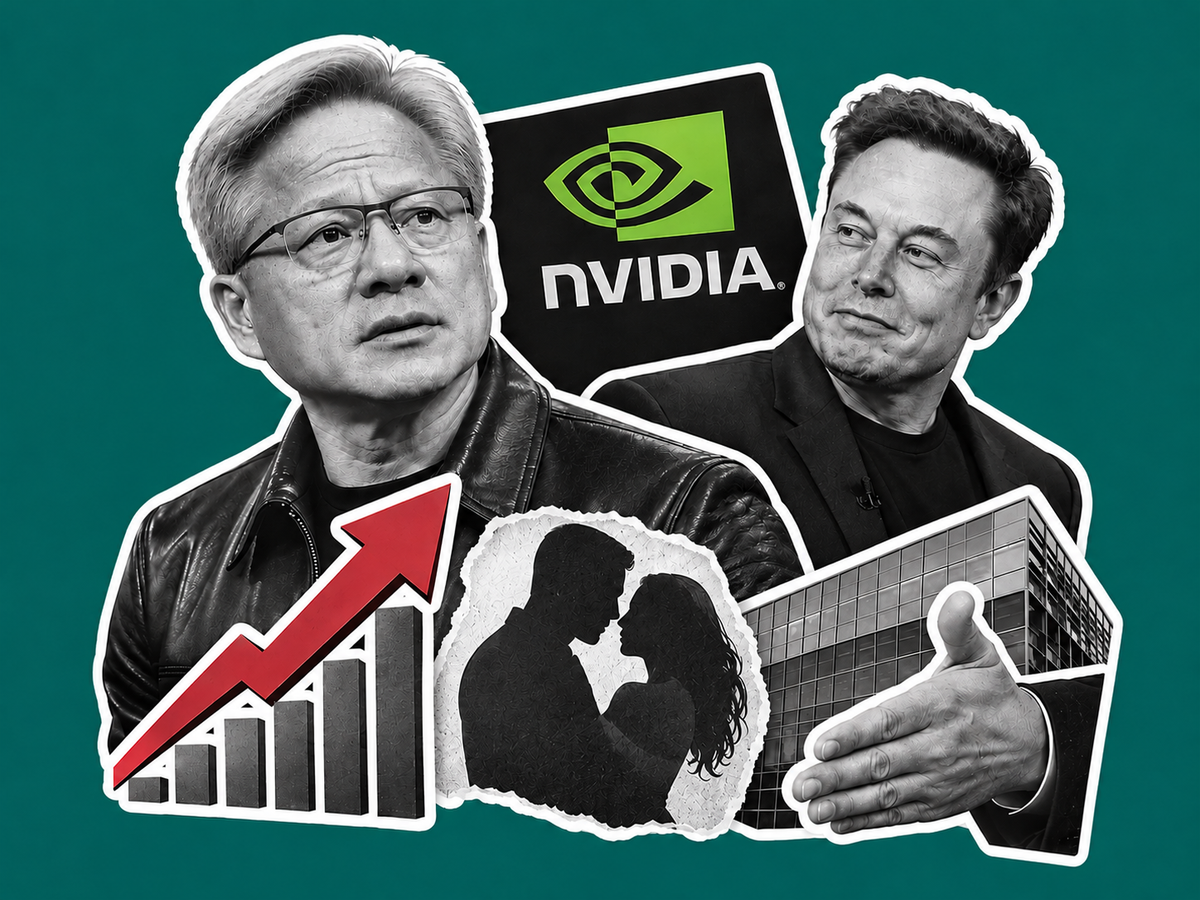
Nvidia's board is reportedly considering removing its billionaire founder after revelations of a second alleged extramarital relationship, sending shares tumbling and prompting Elon Musk to publicly express interest in hiring him.
Nvidia CEO Jensen Huang is facing mounting pressure to step down as fresh allegations of a second extramarital affair intensify an already serious controversy involving a suspected Chinese intelligence operative, prompting the company's board to reportedly consider removing one of the technology industry's most influential executives.
According to The Wall Street Journal, Nvidia's board was preparing to discuss Huang's future as early as Wednesday, November 11, following new reporting that he had maintained a relationship with an executive who reported directly to him.
The developments sent Nvidia shares down approximately 8% in after-hours trading, while prediction markets dramatically increased the likelihood of Huang leaving the company.
The latest allegations involve Kimberly Powell, identified by The New York Times as an Nvidia executive responsible for the company's healthcare business.
According to five former Nvidia employees cited by the newspaper, Huang and Powell maintained an undisclosed romantic relationship. Two former employees reportedly described seeing the pair behaving affectionately at a hotel during a company conference in March.
Neither Huang nor Powell has publicly confirmed the alleged relationship.
The revelations follow Huang's admission on November 8 that he had been unfaithful to his wife, Lori, whom he married in 1985.
That apology came amid reports linking Huang to Alice Huang, an executive associated with Singapore-based AI infrastructure company Megaspeed, who US intelligence officials reportedly suspect of working for Chinese intelligence.
Nvidia launched an independent investigation into the alleged intelligence operation, emphasizing that it had no reason to believe company secrets or US national security had been compromised.
Odds of Huang's Departure Jump to 80%
PREDICTION MARKET PROBABILITIES — NOVEMBER 11
80%
Exit before Dec. 1
86%
Exit before Jan. 1
90%
Exit before July 1
Kalshi market-implied probabilities reported November 11, 2026. These reflect trading expectations, not confirmed board decisions.
Earlier in the week, traders had viewed Huang's departure as considerably less likely.
However, reports of the second relationship and the possibility of a board vote triggered a dramatic reassessment.
The market reaction reflects concerns that Nvidia could lose the executive who co-founded the company in 1993 and led its transformation into a central supplier of artificial intelligence computing infrastructure.
Huang retains considerable influence within Nvidia, owning approximately 3.6% of its shares. His highly centralized management structure also raises questions about how easily the company could replace him.
Amid the uncertainty surrounding Huang's future, Elon Musk publicly expressed enthusiasm about the possibility of hiring the Nvidia chief executive.
Responding to a post on X from financial commentator ZeroHedge urging him to hire Huang, Musk replied:
"That would be an honor."
The remark quickly attracted attention as speculation intensified over whether Huang could leave Nvidia.
Musk's companies, including Tesla and his artificial intelligence ventures, depend heavily on advanced computing infrastructure, making Huang's expertise particularly valuable.
However, Musk's statement was an expression of interest rather than a formal employment offer, and there is no indication that Huang is negotiating a departure.
Beyond the allegations concerning Huang's personal conduct, the controversy has raised serious questions about access to sensitive American technology.
US authorities have reportedly investigated whether Alice Huang's business relationships facilitated the transfer of restricted Nvidia chips to China.
Three Republican congressional committee chairmen have requested a closed-door briefing from Huang, while lawmakers have raised concerns about the effectiveness of US export controls.
The investigation has not established that Huang knowingly provided information to Chinese intelligence or participated in illegal chip transfers.
Nevertheless, the combination of alleged foreign intelligence targeting and an undisclosed relationship involving a subordinate has intensified scrutiny of Nvidia's corporate governance.
The company's independent directors face a difficult decision.
Removing Huang could address concerns about executive accountability but create significant uncertainty over Nvidia's leadership at a time of intense competition with AMD, Google and other AI chip developers.
Retaining him, meanwhile, could expose the board to further criticism if investigators identify governance failures or undisclosed conflicts of interest.
As of November 12, Nvidia has not publicly confirmed a decision to remove Huang, and he remains chief executive.
What began as a controversy surrounding Huang's personal conduct has evolved into a potential leadership crisis at one of the world's most strategically important technology companies.