Wall Street Enters Correction as AI Selloff Wipes Out Months of Market Gains
Wall Street has entered correction territory as a deepening artificial intelligence selloff wiped out months of stock-market gains.
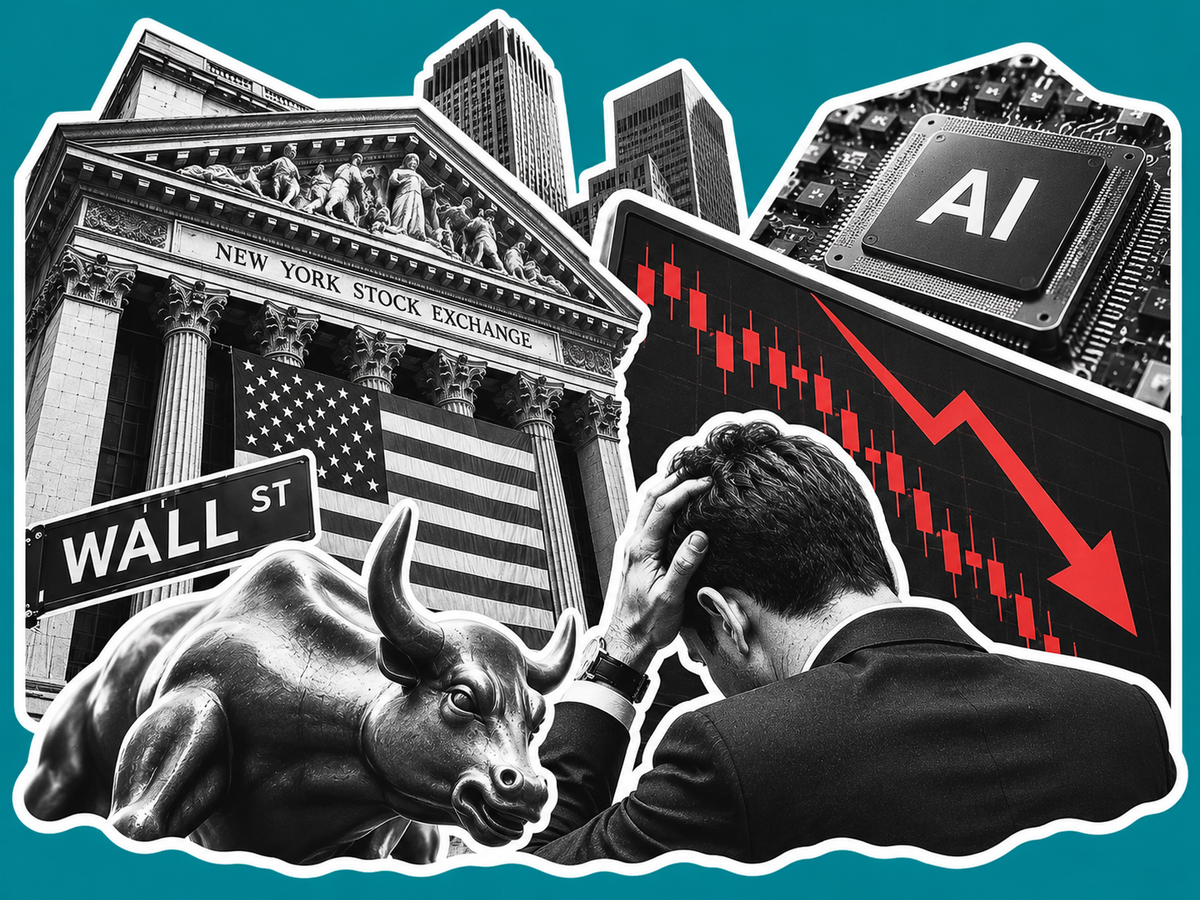
U.S. stocks suffered another brutal selloff on Friday, pushing the S&P 500 and Dow Jones into correction territory while the Nasdaq erased its gains for 2026. Nvidia and Anthropic led a technology rout as investors questioned whether the artificial intelligence boom can justify its enormous valuations.
Wall Street suffered one of its sharpest declines of the year on Friday, November 20, as an accelerating selloff in artificial intelligence stocks pushed the S&P 500 and Dow Jones Industrial Average into correction territory and wiped out the Nasdaq's gains for 2026.
The technology-heavy Nasdaq Composite plunged 5.28% during Friday's session, its largest weekly decline since March 2020, while the S&P 500 lost 3.70% and the Dow fell 1.93%.
Both the S&P 500 and Dow have now fallen more than 10% from their October record highs, meeting the widely used definition of a market correction.
The losses reflect a sharp reversal in investor sentiment toward artificial intelligence, which had driven much of Wall Street's rally earlier this year.
Wall Street's Selloff by the Numbers
FRIDAY, NOVEMBER 20 — CLOSING PERFORMANCE
Nasdaq
−5.28%
22,617.73 points
S&P 500
−3.70%
6,910.42 points
Dow Jones
−1.93%
48,147.33 pointsWeekly losses across major U.S. indexes
The Nasdaq has now fallen approximately 2.7% since the beginning of 2026, a dramatic reversal from its roughly 19% year-to-date gain in October.
The S&P 500 has retained less than 1% of its annual gains, while the Dow is barely positive for the year.
Nvidia and Anthropic Lead the Collapse
The selloff has been particularly severe for companies associated with the AI investment boom.
Nvidia shares plunged 13.8% on Friday despite the chipmaker's recent earnings report exceeding expectations, demonstrating that strong financial performance has not been sufficient to restore confidence.
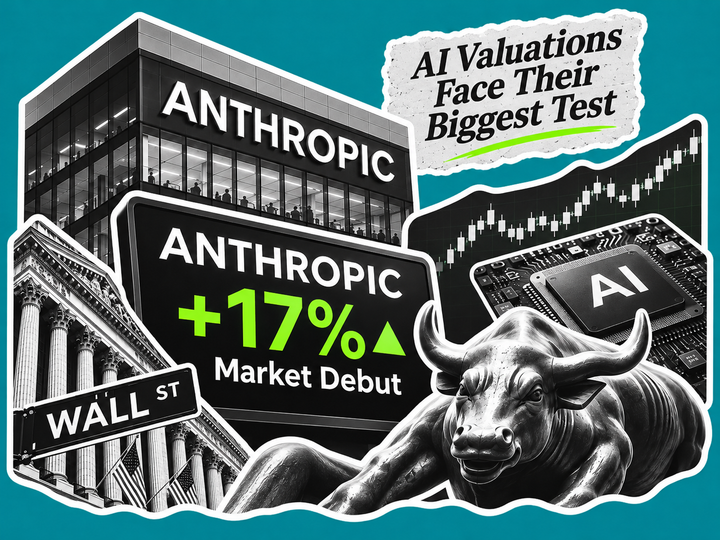
Anthropic, whose record-breaking public offering had been expected to revive enthusiasm for artificial intelligence, fell 9.1% during its second trading session.
Other technology companies also suffered substantial losses.
Amazon declined 3.9%, Meta fell 5.9%, CoreWeave dropped 12.1%, and AI infrastructure company Nebius lost 16.1%.
The semiconductor sector has experienced an especially sharp reversal. The Philadelphia Semiconductor Index, which had gained more than 100% at its June peak, has seen its year-to-date advance shrink to approximately 19%.
Why Is Wall Street Suddenly Selling AI?
The market downturn reflects growing doubts about the financial sustainability of the artificial intelligence investment cycle.
Major technology companies have committed enormous amounts of capital to data centers, advanced processors and electricity infrastructure.
While demand for AI computing remains substantial, investors are increasingly questioning whether those expenditures will produce sufficient profits.
The concern is not necessarily that artificial intelligence will fail commercially, but that companies may have invested too aggressively relative to the returns they can generate.
Anthropic's IPO has intensified this debate by placing a highly visible public-market valuation on a frontier AI developer whose operating costs remain substantial.
The selloff has also been amplified by concerns about inflation and Federal Reserve policy.
Investors increasingly expect higher interest rates, which tend to place additional pressure on growth stocks whose valuations depend heavily on future earnings.
The Selloff Spreads Beyond Technology
The turmoil is no longer confined to AI stocks.
Caterpillar declined 5% amid concerns about demand for power-generation equipment used in data-center infrastructure.
Intuit fell 12.8% after reducing its revenue growth forecast, while cryptocurrency-related stocks weakened as Bitcoin dropped below $60,000.
Market volatility has also intensified, with the CBOE Volatility Index reaching its highest closing level since April 2025.
On Friday, declining stocks outnumbered advancing stocks by more than four to one on the Nasdaq, illustrating the breadth of the selloff.
Is the AI Boom Facing a Reckoning?
The correction marks a major turning point for an equity market increasingly dependent on a relatively small group of technology companies.
The immediate question is whether investors are witnessing a temporary reassessment of valuations or the beginning of a more prolonged downturn.
Corporate earnings, interest-rate expectations and the ability of AI companies to convert infrastructure spending into sustainable profits will remain central to market sentiment.
Despite the losses, a market correction does not automatically mean the economy is entering a recession or that the long-term commercial potential of artificial intelligence has disappeared.
Wall Street's AI rally was built on expectations of extraordinary future growth. The current correction suggests investors are becoming less willing to pay extraordinary prices without equally convincing evidence of future returns.
For now, months of gains have disappeared in a matter of weeks, leaving the technology sector facing one of its most important financial tests since the AI boom began.