Joseph Aoun Says Hezbollah Must Disarm, But Is Unwilling To Do What Is Necessary
President Joseph Aoun says Lebanon remains determined to disarm Hezbollah, but has now made clear that the state will not pursue the process if it leads to internal confrontation.
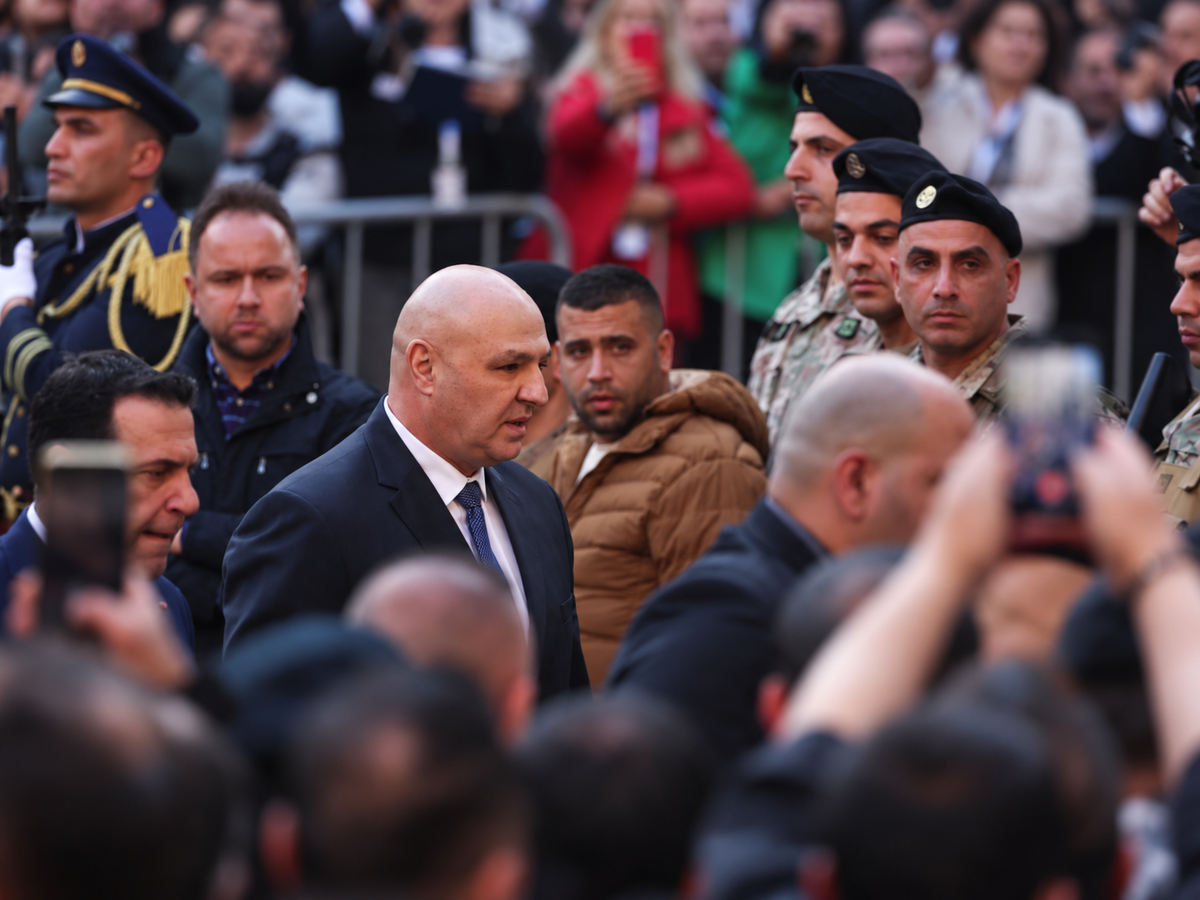
President Joseph Aoun says Lebanon remains committed to placing all weapons under state authority, including Hezbollah’s arsenal. But his latest remarks introduce a major qualification: the government will not pursue disarmament if doing so risks an internal confrontation.
In an interview with AFP, Aoun said the state remained “determined” to disarm Hezbollah, but stressed that this would have to happen without confrontation or a slide toward civil conflict. He also said Lebanon wants a security agreement with Israel after an Israeli withdrawal from the south, potentially as a first step toward a broader peace settlement.
Technically, Aoun has not abandoned the objective.
Politically, however, the distinction matters enormously.
Hezbollah has repeatedly rejected demands to surrender its weapons, particularly while Israel continues to hold positions inside Lebanon and carry out strikes. If the Lebanese state rules out coercion from the beginning, then the question becomes what happens if Hezbollah simply continues saying no.
That is the weakness in Aoun’s position.
A policy of peaceful disarmament works only if the armed group ultimately agrees to be disarmed. If Hezbollah refuses, and the state simultaneously declares that it will not risk confrontation, then the government may have committed itself to an objective without establishing any credible mechanism for achieving it.
This is particularly significant because Aoun’s earlier language was considerably more assertive.
During his July visit to Washington, he presented a written plan for dismantling Hezbollah’s arsenal and discussed implementation with President Donald Trump. At the time, Aoun argued that disarmament could proceed if Israel withdrew, the Lebanese Army assumed full control of the territory and reconstruction was managed by the state.
Those conditions already gave the process a sequential structure: Israel withdraws, the army deploys, reconstruction begins and Hezbollah’s weapons are brought under state authority.
Now another condition has effectively been added: the process must not create an internal confrontation.
That may be understandable from the perspective of a president responsible for preserving domestic stability. Lebanon’s civil war remains a powerful historical warning, and no government can treat the possibility of internal fighting lightly.
But the phrase also creates an obvious political escape route.
Hezbollah possesses weapons precisely because successive Lebanese governments have been unable or unwilling to impose a monopoly on armed force. If the possibility of resistance by Hezbollah is itself enough to prevent the state from enforcing disarmament, then the group effectively gains veto power over the process.
The dilemma can be stated simply: the state says Hezbollah cannot retain an independent military structure, while also saying it will not confront Hezbollah to remove that structure.
Both positions can coexist only if Hezbollah voluntarily cooperates.
So far, there is little indication that it intends to do so.
Hezbollah has continued rejecting direct negotiations with Israel and resisting demands for comprehensive disarmament. Recent reporting indicates that pressure is increasingly shifting north of the Litani, where Washington and Israel want the Lebanese Army to move beyond the limited dismantling already undertaken in parts of the south.
That is where Aoun’s formulation becomes more consequential.
Disarming abandoned positions or weapons depots in areas from which Hezbollah has already withdrawn is fundamentally different from confronting a functioning military organization in areas where it retains fighters, infrastructure and political influence.
The easier phase of the process was always going to be in southern zones where Israeli withdrawal could be exchanged for Lebanese Army deployment.
The harder question is what the government does when disarmament reaches Hezbollah’s core military infrastructure.
Aoun has now made clear what he does not want to do.
He does not want the Lebanese Army fighting Hezbollah.
What remains unclear is what he will do if Hezbollah refuses every non-military alternative.
The president is simultaneously asking the United States, Europe and Arab governments to strengthen the Lebanese Army as it expands its authority across the country. He is also seeking a temporary international force to prevent a vacuum after UNIFIL’s mandate ends.
Those requests make sense only if the Lebanese state intends eventually to exercise exclusive security authority.
An army can be strengthened, deployed and financed, but state sovereignty remains incomplete if another organization retains an independent arsenal and the ability to make decisions over war and peace.
This is precisely why Hezbollah’s weapons have become central to negotiations with Israel.
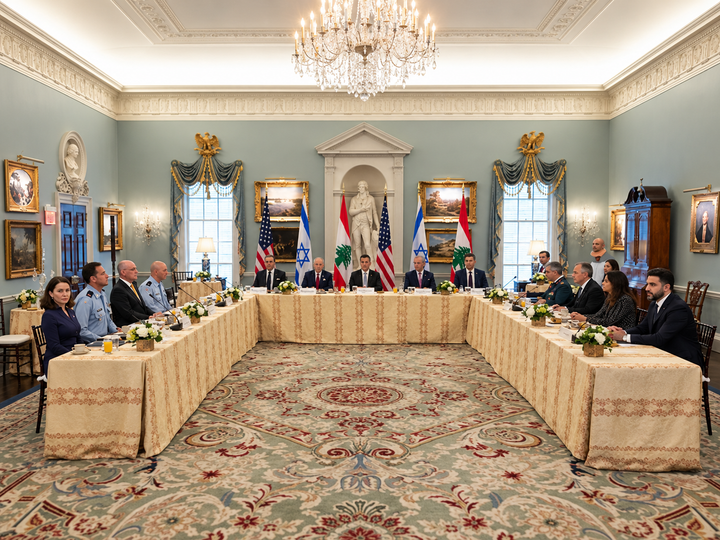
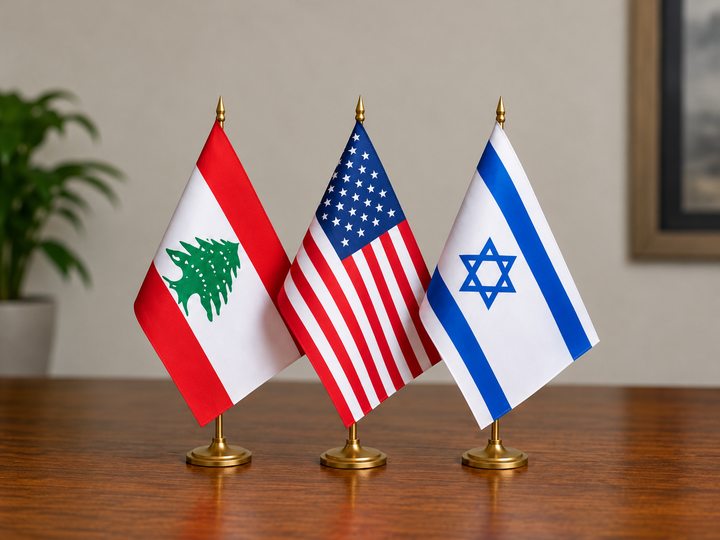
Aoun says Lebanon wants a security agreement that would end the state of hostility, facilitate army deployment along the border and potentially create a path toward eventual peace.
But a durable security agreement raises an unavoidable question: who controls Lebanon’s side of the border?
If Beirut signs commitments with another state while Hezbollah retains an independent military capability, foreign governments will continue asking whether the Lebanese government can actually guarantee the agreements it signs.
This is not merely an Israeli demand.
It goes to the basic definition of a sovereign state: one government, one army and one authority capable of deciding when the country goes to war.
Aoun’s caution about avoiding civil conflict is therefore understandable. The difficulty is that caution cannot itself become a permanent strategy.
There is an important difference between avoiding an unnecessary confrontation and allowing the threat of confrontation to prevent the state from exercising authority.
A peaceful solution would clearly be preferable. Negotiated disarmament, integration of fighters into civilian life, political guarantees for Hezbollah’s constituency and security arrangements accompanying an Israeli withdrawal could all reduce the risk of violence.
But any negotiated process still requires a final destination.
If the end result remains dependent on Hezbollah voluntarily deciding when, how and whether to give up its weapons, then Lebanon has not established state sovereignty. It has merely continued negotiating over it.
Aoun has not formally backed away from disarming Hezbollah.
But his latest comments expose the central contradiction facing his presidency: Lebanon says Hezbollah’s weapons must ultimately come under state control, while simultaneously signaling that it will not use force if Hezbollah refuses.
The success or failure of Aoun’s policy will therefore depend on what exists between those two positions.
If diplomacy produces an actual transfer of weapons and military authority to the state, his cautious approach may prove justified.
If it does not, “without confrontation” risks becoming the phrase through which another Lebanese government postpones a problem that every government before it was also unable to solve.