Lebanon Has a Food Safety Crisis
Lebanon is facing renewed scrutiny over food safety following a series of poisoning incidents, including confirmed parasitic contamination at a Beirut restaurant and the hospitalization of at least 17 people in Akkar.
A series of food poisoning incidents across Lebanon has renewed concerns about the safety of the country's food supply, exposing persistent weaknesses in inspections, licensing, refrigeration and regulatory enforcement. From contaminated meat served in Beirut restaurants to improperly stored poultry and unlicensed food-processing facilities, the latest incidents suggest a problem that extends well beyond isolated businesses.
The growing concern prompted Prime Minister Nawaf Salam to convene an emergency meeting on November 2, bringing together officials responsible for public health and food safety following reports of suspected parasitic infections and hospitalizations.
The government has announced additional measures to strengthen inspections and combat food fraud, but the incidents raise a more fundamental question: why does Lebanon continue to face such serious food safety violations more than a decade after passing legislation intended to prevent them?
A Series of Incidents Raises the Alarm
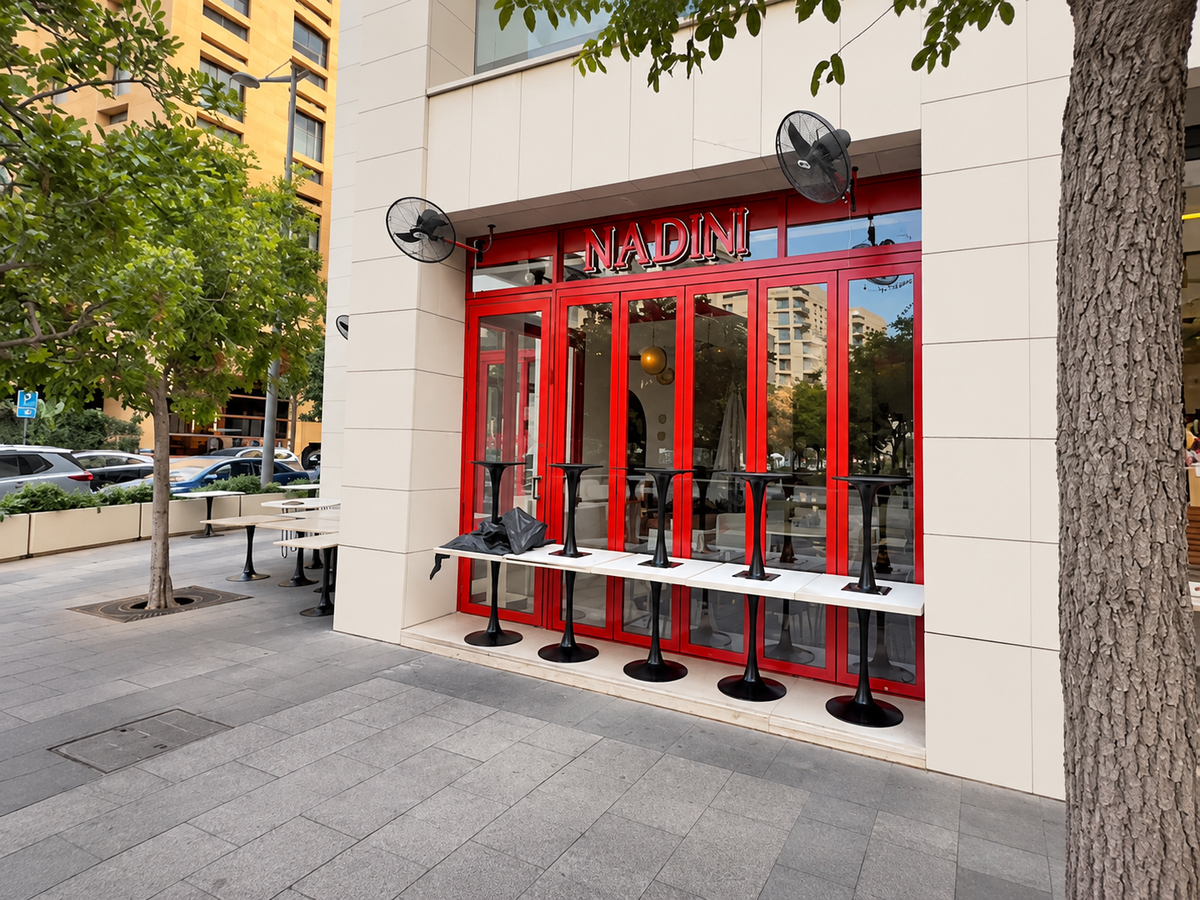
The latest controversy began after several customers became ill following meals at Nadini, a restaurant in downtown Beirut.
Laboratory tests confirmed the presence of Trichinella spiralis, a parasite responsible for trichinosis, in a meat sample collected from the establishment. Authorities temporarily closed the restaurant and investigated its meat supplier, Rahamco, in the Raouche neighborhood.
The supplier was also shut down after inspectors reportedly discovered that it lacked the required license and had failed to meet basic food safety standards. Investigators were examining where the contamination originated.
Meanwhile, in Akkar, at least 17 people, many of them children, were hospitalized after reportedly consuming contaminated pastries, with some also having eaten meat.
The cases came as the Ministry of Public Health warned of suspected trichinosis infections and urged consumers to avoid raw or insufficiently cooked meat.
Although investigations had not established that the separate incidents shared a source, their occurrence within days of one another intensified scrutiny of Lebanon's food supply chains.
The Problem Extends Beyond Restaurants
The latest incidents follow a broader pattern of food safety violations uncovered throughout 2026.
In January, security forces closed two chicken warehouses in Saadnayel after discovering serious breaches of hygiene and refrigeration requirements. Inspectors found poultry showing abnormal discoloration and chicken that had been left unrefrigerated for extended periods.
More than three tonnes of poultry were seized and destroyed, while ten people were arrested.
In February, authorities closed an unlicensed food-processing facility in Qab Elias that had been preparing peeled potatoes and garlic using water of unknown origin and inadequate sanitation practices.
During May, five unlicensed dairy and cheese factories were closed in the Bekaa for failing to meet minimum health requirements. Additional facilities were shut in June over violations involving the use of palm oil in dairy production.
These enforcement actions demonstrate that authorities are identifying and acting against dangerous practices. They also reveal how improperly licensed businesses and inadequate sanitary conditions can persist within the food production and distribution system.
Thousands of Inspections, Hundreds of Violations
The scale of enforcement activity provides another indication of the challenge.
According to figures released by the Ministry of Economy and Trade's Consumer Protection Directorate, inspectors conducted 15,584 field inspections between January 1 and August 28, 2026, recording 680 violation reports across the sectors they monitored.
Food-related businesses accounted for the majority of inspections, with 8,912 visits to establishments including restaurants, grocery stores, butcher shops, bakeries and fish markets.
The directorate also handled 977 consumer complaints during the same period.
These figures do not mean that every violation involved unsafe food, nor do they establish the proportion of businesses nationwide that fail to meet safety standards. However, they illustrate the substantial enforcement effort required to monitor Lebanon's marketplace.
Independent scientific research provides additional evidence of potential contamination risks.
A study published in Scientific Reports, examining 248 street-food samples collected in Lebanon, detected coliform bacteria in 42% of samples, E. coli in 6.85%, and Staphylococcus aureus in 4.84%.
The study did not detect Salmonella or Listeria monocytogenes in the tested samples, and it did not establish that the contaminated foods caused illness.
Nevertheless, researchers identified significant hygiene concerns and linked higher contamination levels to crowded environments, food handling practices and seasonal conditions.
The findings suggest that food safety risks are not confined to establishments that have already attracted regulatory attention.
A Food Safety Law That Took a Decade to Implement
One of Lebanon's most significant institutional problems is the gap between legislation and enforcement.
In November 2015, Parliament passed Food Safety Law No. 35, establishing a legal framework intended to strengthen oversight of food production, handling and distribution.
The legislation provided for the creation of the Lebanese Food Safety Commission, a body intended to coordinate regulation across the ministries and agencies responsible for food safety.
Yet meaningful implementation was delayed for years.
The commission's first board was appointed only in October 2025, nearly a decade after the legislation was adopted. As of November 2026, the institution still lacked the full inspection apparatus, personnel, equipment and logistical resources necessary to operate nationwide.
This leaves food safety responsibilities distributed across several government bodies, including the ministries of Public Health, Agriculture, Economy and Industry, alongside municipalities and security agencies.
The consequences are significant. Different authorities may oversee different stages of the same supply chain, from agricultural production and food imports to storage, transportation, preparation and retail.
Without effective coordination, consistent inspection standards and clear accountability, dangerous practices can remain undetected until consumers become ill.
Lebanon's problem, therefore, is not simply a lack of legislation. It is the persistent failure to translate existing laws into an adequately resourced and functioning regulatory system.
Economic Collapse and Infrastructure Failures Increase the Risks
Lebanon's economic difficulties have placed additional pressure on an already vulnerable food sector.
Safe food storage depends on reliable electricity, refrigeration, clean water and properly maintained facilities. Interruptions to any of these can increase contamination risks, particularly for meat, poultry, dairy products and prepared foods.
The country's electricity shortages have made refrigeration more expensive and dependent on generators and alternative power supplies.
Meanwhile, years of economic crisis, infrastructure deterioration and armed conflict have undermined access to essential services.
According to an August 2026 assessment by the Famine Early Warning Systems Network, more than 700,000 people in conflict-affected areas faced reduced access to safe drinking water, while damage to water and electricity infrastructure was increasing public health risks.
These conditions make compliance more challenging, particularly for smaller food businesses facing higher operating costs.
However, financial hardship cannot justify selling unsafe products, misrepresenting food ingredients or operating without required licenses.
The distinction is important: some risks arise from deteriorating infrastructure, while others reflect preventable violations of basic health standards.
Food Poisoning Cases Were Already Rising
Recent incidents are not the first indication of growing food safety concerns.
In August 2025, the Ministry of Public Health reported 314 food poisoning cases between April and July, compared with 167 during the corresponding period in 2024.
The increase was linked in part to high summer temperatures, inadequate food storage and improper preparation practices.
World Health Organization surveillance information also documented repeated food poisoning alerts during 2025, including investigations in Aley, Saida and Akkar.
More recent surveillance findings showed that food poisoning accounted for 42% of the epidemiological signals reviewed in a Lebanese surveillance presentation covering January through November 2025. This represented the share of selected signals, not the share of all illnesses nationwide.
While these figures demonstrate recurring contamination concerns, the available data remain insufficient to calculate the true annual burden of foodborne illness across Lebanon.
Many mild cases may never reach hospitals or official reporting systems, making comprehensive surveillance particularly important.
What Needs to Change?
The emergency response announced by the government is an important step, but preventing future outbreaks requires more than closing establishments after contamination is discovered.
Lebanon needs a fully operational Food Safety Commission capable of coordinating inspections across ministries, monitoring high-risk food products and establishing clear accountability throughout supply chains.
Routine inspections should be supported by accredited laboratory testing, effective product-tracing systems and consistent penalties for serious violations.
Consumers would also benefit from greater transparency, including accessible records of inspections, enforcement actions and the conditions establishments must meet before reopening.
Equally important is ensuring that food businesses have access to the infrastructure necessary to comply with safety requirements, particularly reliable water and refrigeration.
The challenge is to move from reactive enforcement toward prevention.
Lebanon has demonstrated that its authorities can close dangerous establishments, seize contaminated products and prosecute violations. What remains uncertain is whether the regulatory system can reliably identify those risks before people become ill.
Food safety should not depend on a hospital reporting an outbreak, a consumer filing a complaint or an incident attracting national media attention.
With the legal framework already established and a regulatory commission finally appointed, the government now faces the task of turning institutional promises into measurable results.
The latest poisoning cases are a warning that Lebanon's food safety problem is not merely about individual restaurants or suppliers. It is about whether the state can consistently guarantee the most basic standards of public health.