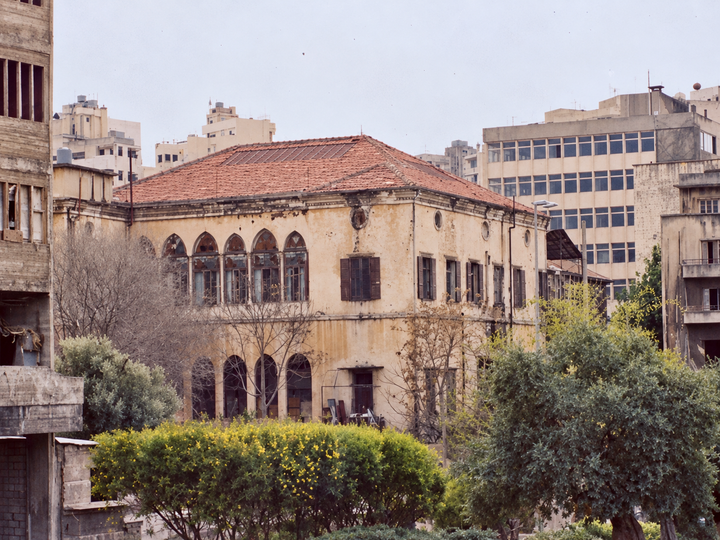
Why Do Lebanese Ask “Where Are You From?” When They Mean Your Village?
In Lebanon, asking someone “Where are you from?” rarely means asking which country they belong to. More often, the question refers to their ancestral village, town or region, even if they were born and raised in Beirut or have never lived in that place themselves.
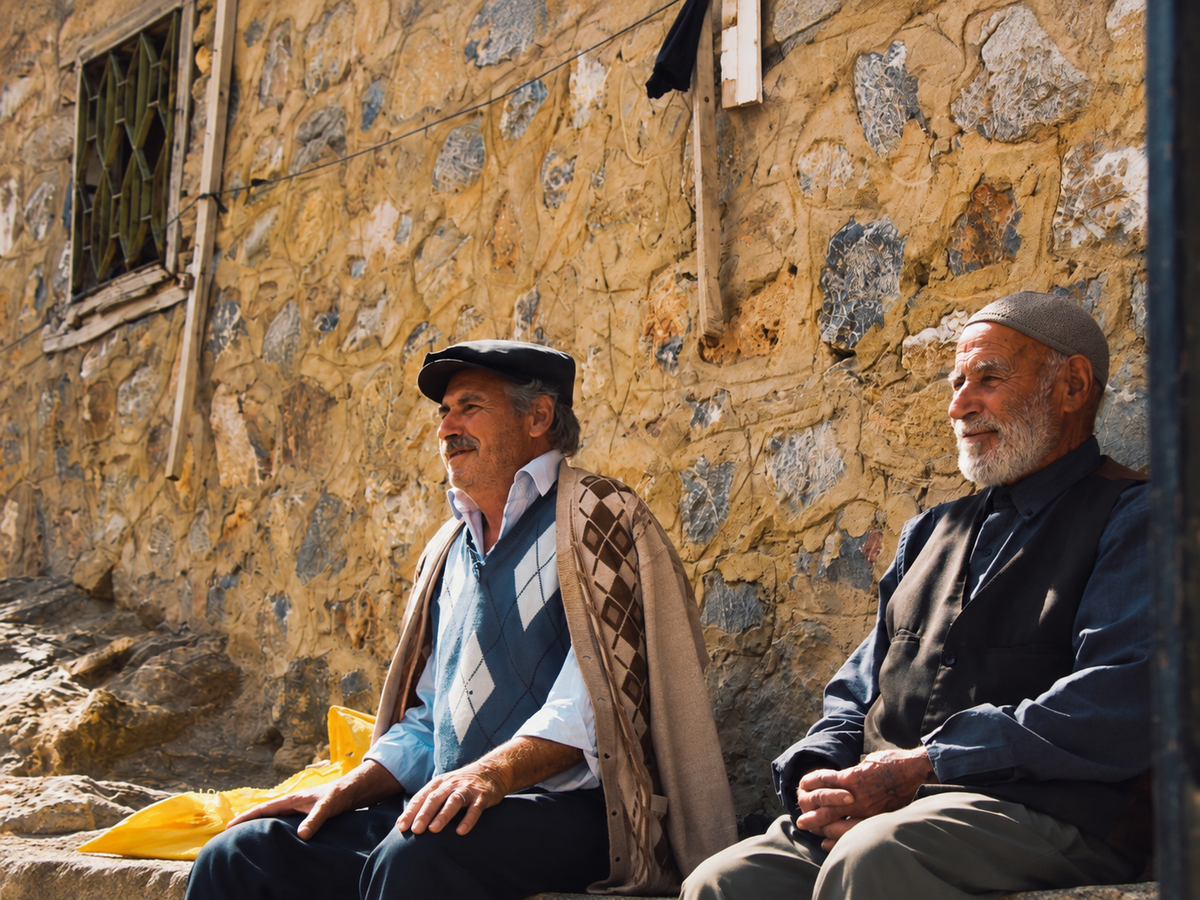
Two Lebanese people meet for the first time.
They exchange names, perhaps mention where they live, and then comes a question almost everyone in Lebanon recognizes.
“Min wen enta?”
Where are you from?
The answer is rarely expected to be Lebanon. It is not necessarily Beirut, even if someone was born there, grew up there and has never lived anywhere else.
What the question often means is something more specific.
What is your family's village?
A person born in Achrafieh might answer that their family is from Bsharri. Someone who has lived their entire life in Beirut might say Deir el Qamar, Jezzine or Zahle.
Sometimes, the person has never even lived in the place they name.
Yet that place remains an important part of their identity.
Why does a country that has undergone generations of urbanization, emigration and social change continue to place so much importance on where someone's family originally came from?
Before the Modern Lebanese State
To understand the question, it helps to look at how communities were organized before the creation of modern Greater Lebanon in 1920.
For centuries, much of the territory that now forms Lebanon consisted of villages, agricultural communities and small towns, alongside established cities such as Beirut, Tripoli and Saida.
Under Ottoman rule, administrative boundaries changed repeatedly. But local communities often retained strong attachments to particular places.
A person's village could reveal important information about their family, social connections and community.
Land was especially significant.
In rural Mount Lebanon, agricultural terraces, olive groves, vineyards and orchards were not simply sources of income. They were often inherited across generations, connecting families to particular settlements.
Family names also became associated with specific villages and regions.
Knowing someone's place of origin could therefore help establish connections between families, even when the individuals had never met.
The question “Where are you from?” was not merely geographical.
It could also mean, “Who are your people?”
The Village as an Extended Family
In many traditional Lebanese communities, family identity extended well beyond the immediate household.
Relatives frequently lived close to one another, sometimes occupying neighboring homes or entire sections of a village.
The village was a place where kinship networks, marriages, agricultural work and community obligations overlapped.
These relationships created a strong sense of belonging.
People often knew not only their neighbors, but also their neighbors' parents, grandparents and extended families.
A surname could suggest a connection to a particular village.
And even when someone moved away, their family name and ancestral home continued to connect them to that community.
This helps explain why Lebanese people frequently identify themselves through villages they have not inhabited for generations.
The village is not always a description of where they live.
It is a statement about family continuity.
The Civil Registry Made Ancestral Origins Official
There is also an important administrative explanation.
Lebanon's civil registration system maintains family records associated with particular localities.
A Lebanese person's registered locality, commonly referred to as mahall al-qayd, may differ from their place of birth or current residence.
Someone born in Beirut, for example, may be registered in a village in Mount Lebanon because their family record is maintained there.
Moving to another city does not automatically change that registration.
This distinction is particularly important in Lebanon's electoral system.
In parliamentary elections, citizens are generally assigned to electoral districts according to their civil registration records rather than their current residential addresses.
As a result, someone who has spent decades in Beirut may still travel to an ancestral village to vote.
The village is therefore more than a sentimental connection.
It can have legal, administrative and political significance.
And while civil registration does not always correspond perfectly to ancestral origin, the distinction between where someone lives and where they are registered remains an important feature of Lebanese civic life.
When Beirut Became Home, but the Village Remained the Origin
During the nineteenth and twentieth centuries, Beirut expanded dramatically.
Its growing port, commercial economy, educational institutions and professional opportunities attracted people from Mount Lebanon and other parts of the region.
Later, internal migration continued as families sought employment, education and improved living conditions in urban centers.
Entire generations grew up in Beirut, Tripoli, Saida and other cities while maintaining connections to their ancestral villages.
For some families, the village remained a weekend destination.
For others, it was where grandparents lived, where relatives gathered during holidays or where the family maintained an old house.
Summer visits became particularly important.
Children who spent the school year in Beirut might spend weeks in the mountains, developing friendships and memories in places their parents still called home.
Over time, these experiences reinforced a distinctive form of geographical identity.
A person could genuinely consider Beirut their home while describing another place as where they were from.
The two answers were not necessarily contradictory.
They referred to different kinds of belonging.
Why the Question Can Reveal More Than Geography
In Lebanon, asking about someone's village can also carry social meaning.
Because many localities have historically been associated with particular religious communities, family networks and political traditions, the answer may provide clues about a person's background.
Sometimes the question is entirely innocent.
Two strangers discover that their families come from neighboring villages. They recognize a shared surname, mention mutual acquaintances or realize that their grandparents knew one another.
The conversation immediately becomes more familiar.
But the same question can also function as a way of identifying someone's communal or sectarian background without asking directly.
This is especially relevant in a country where religious affiliation has long influenced political representation, marriage, personal status law and social networks.
The village, however, is not a reliable substitute for religious identity.
Many Lebanese towns and villages contain multiple religious communities, and individual family histories are more complicated than regional stereotypes suggest.
Nevertheless, the habit illustrates how geography and social identity have become intertwined in Lebanon.
What Emigration Did to the Village
Lebanon's long history of emigration made ancestral villages even more significant.
Beginning particularly in the 1880s, substantial numbers of people left Mount Lebanon and surrounding regions for the Americas.
Later generations emigrated to Africa, Europe, Australia and the Gulf.
Many families abroad maintained connections to particular villages through relatives, family associations, religious institutions and occasional visits.
In some diaspora communities, people continued identifying themselves through their ancestral villages long after their families had left Lebanon.
A Brazilian, Australian or American of Lebanese descent might know the name of their family's village despite knowing relatively little Arabic.
For descendants of emigrants, the village could provide something more specific than a general Lebanese identity.
It offered a geographical connection to their family history.
This is why ancestral villages often feature prominently in diaspora reunions, family histories and visits to Lebanon.
They provide a place where an otherwise distant heritage becomes tangible.
A Country of Several Homes
The Lebanese attachment to ancestral villages is not entirely unique.
People in Greece, Italy, Armenia and other societies with strong regional identities and histories of emigration often maintain similar connections to family origins.
But in Lebanon, the combination of inherited family networks, civil registration, communal geography, urban migration and a large diaspora has made the practice particularly persistent.
It also reveals something about the country's understanding of home.
For many Lebanese, home is not necessarily one place.
It can be the apartment where they grew up, the city where they work, the village where their grandparents lived and the country where they eventually settled abroad.
Each place represents a different part of their identity.
And although some younger generations may feel less connected to ancestral villages, the question continues to appear in everyday conversations.
“Min wen enta?”
Sometimes it is simply an attempt to start a conversation.
Sometimes it is a way of discovering family connections.
And sometimes it reveals how deeply Lebanon's history continues to shape the way its people understand themselves.
Because in Lebanon, where you are from is not always where you were born.
It is often where your family's story began.