Lebanon Needs an Army Commander, Not Another Politician in Uniform
Lebanese Army Commander Rodolphe Haykal has sparked outrage after suggesting that critics of the military have no place in Lebanon, raising serious questions about his understanding of civilian authority and the limits of his position.
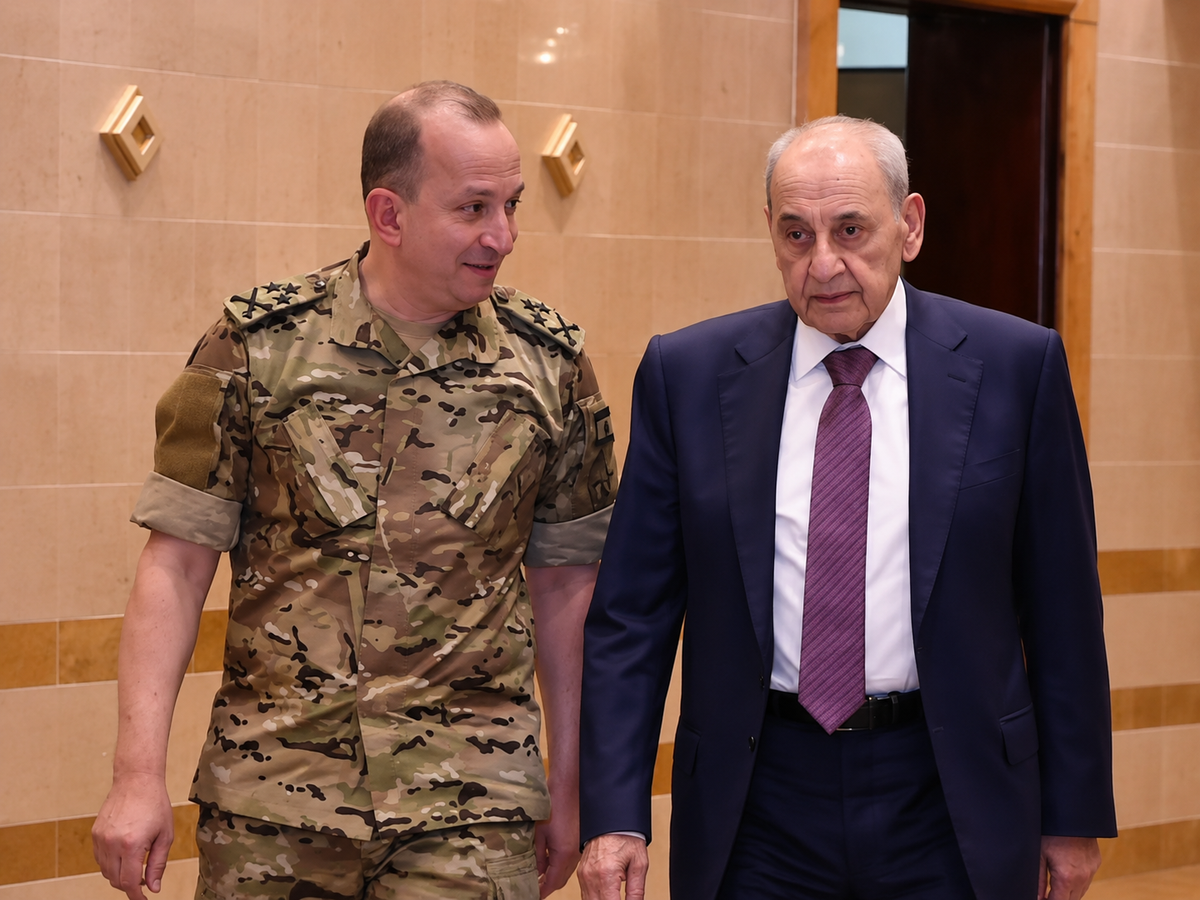
As Lebanon struggles to restore state authority and confront Hezbollah's weapons, Army Commander Rodolphe Haykal has chosen to engage in political confrontations and lecture citizens about patriotism. His conduct raises a fundamental question: has the country's highest-ranking military officer forgotten the limits of his authority?
Lebanon's Army Commander Rodolphe Haykal is facing mounting criticism over his handling of the military's responsibilities, but rather than responding with measurable results and institutional accountability, he has increasingly resorted to political rhetoric that has no place in the leadership of a national army.
His latest remarks, delivered to officers at Yarzeh on November 6 and circulated the following day, crossed a particularly troubling line.
Haykal declared that the army's policy was the national policy and suggested that those who disagreed stood on the opposing side. He went further, saying that anyone who spoke badly of the army had no place in Lebanon and no right to remain in the country.
These are not the words of a military commander simply defending his soldiers. They are the words of an official attempting to turn criticism of his leadership into a question of national loyalty.
Haykal must understand a basic principle: the Lebanese Army belongs to the Lebanese people. The Lebanese people do not belong to its commander.
Lebanon's Constitution places the armed forces under civilian authority. National policy is determined by the country's constitutional institutions, not by military officers.
Haykal is responsible for implementing lawful decisions, preserving military readiness, maintaining security and ensuring that the army fulfills its assigned missions.
He is not responsible for deciding who qualifies as a patriot, which political opinions are acceptable or whether citizens deserve to remain in their country.
MP Mark Daou responded by reminding Haykal that national policy is determined by civilian institutions and that the army must protect political pluralism rather than challenge it.
The distinction could hardly be clearer.
A commander who believes criticism of his performance amounts to disloyalty has fundamentally misunderstood the nature of public service.
Military rank does not confer political authority, and wearing a uniform does not place anyone beyond scrutiny.
Lebanon's soldiers have endured years of economic collapse, inadequate salaries, difficult deployments and dangerous security conditions.
Their sacrifices deserve recognition. But those sacrifices do not provide their commander with immunity from criticism.
There is a fundamental difference between defending the Lebanese Army as an institution and defending every decision made by its leadership.
Haykal appears increasingly determined to blur that distinction.
When politicians question his performance, he responds as though the entire army has been attacked. When citizens demand accountability, he invokes patriotism.
This is an unacceptable way for a senior public official to behave.
What Happened to Hezbollah's Disarmament?
The most serious criticism concerns the army's progress toward implementing government decisions on weapons outside state control.
Haykal presented a five-phase disarmament plan in 2025, but the absence of a firm timetable and the continuing presence of Hezbollah's military capabilities have raised doubts about its implementation.
Earlier this year, the army leadership reported substantial progress south of the Litani River. Yet Hezbollah subsequently launched attacks from southern Lebanon during the renewed regional war, exposing the limitations of those assurances.
Lebanese Forces leader Samir Geagea has criticized Haykal's handling of the issue, while MP Fouad Makhzoumi has argued that the commander should be replaced if he cannot fulfill the government's disarmament directives.
Disarming Hezbollah is undeniably difficult. The army faces genuine resource constraints, political obstacles and the danger of internal confrontation.
But difficulties do not eliminate responsibility. They make transparent reporting, clear priorities and honest assessments even more essential.
Political Ambitions Have No Place in Military Command
Haykal's defenders, including President Joseph Aoun and Defense Minister Michel Menassa, argue that the commander is protecting the army against politically motivated attacks.
Menassa has emphasized that military decisions must account for available capabilities and the need to avoid civil conflict.
Those concerns deserve consideration.
But no amount of political support changes the commander's constitutional position.
If Haykal believes the government's objectives cannot be achieved with existing resources, he should explain the obstacles through the proper institutional channels.
If he disagrees with political decisions, he should not attempt to redefine national policy through speeches to military officers.
And if he cannot execute the responsibilities assigned to him, his continued leadership should be subject to serious review.
Lebanon does not need another military commander behaving like a politician while sheltering behind the prestige of the uniform.
It needs a commander focused on security, discipline, preparedness, border control and the implementation of lawful government decisions.
The army's credibility is too important to be reduced to a political shield for one man.
Haykal should stop lecturing Lebanese citizens about patriotism, stop treating criticism as disloyalty and concentrate on delivering the results his position demands.
If he wants to engage in politics, he should take off the uniform.