The Lebanese Government Backs Down Again as Cabinet Postpones Hezbollah Explosives Case
Lebanon’s Cabinet has postponed a decision to refer Hezbollah’s confiscated explosives case to the Judicial Council, despite the group publicly acknowledging ownership of the shipment.
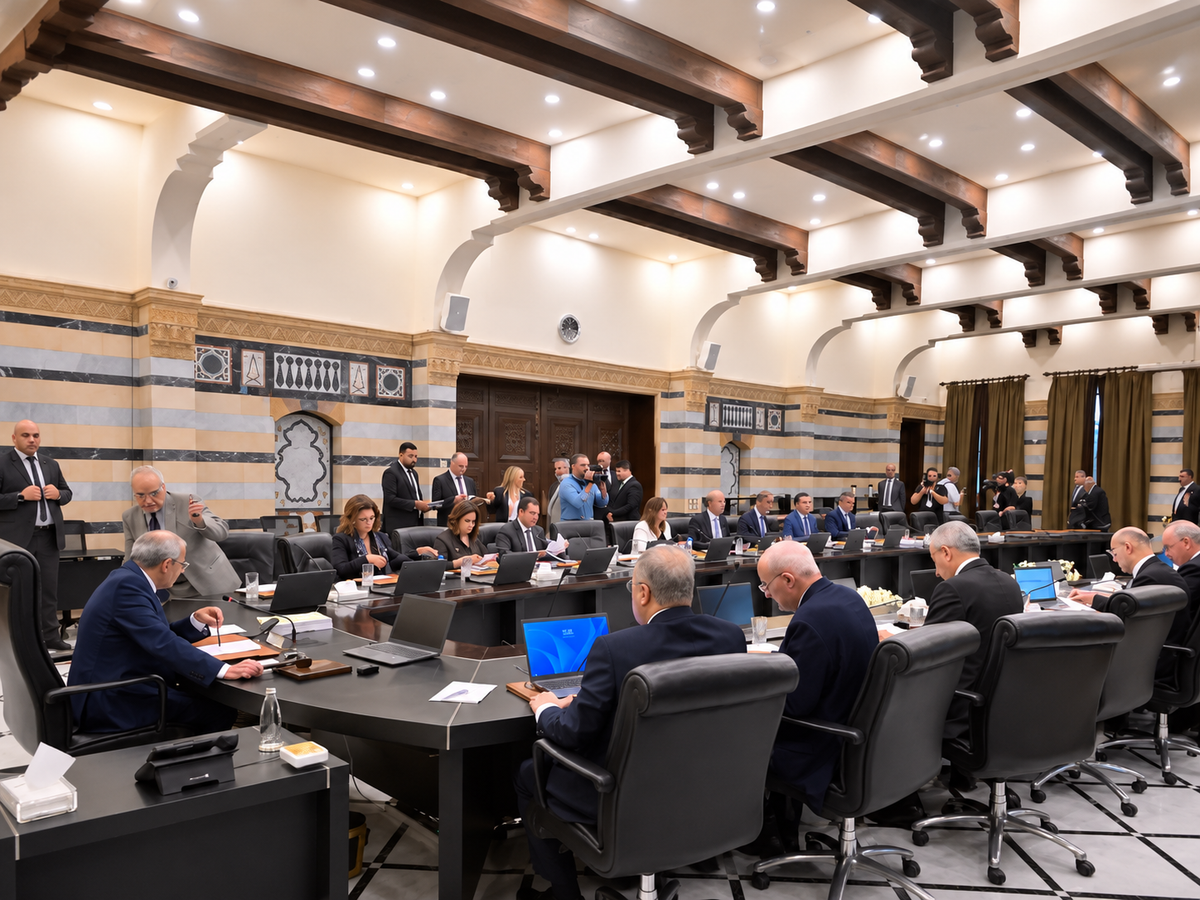
Lebanon’s government has once again demonstrated how difficult it is for the state to confront Hezbollah when political pressure becomes real.
On October 22, the Cabinet postponed a decision to refer the Hezbollah explosives case to the Judicial Council, despite the organization openly admitting that the confiscated explosives belonged to it.
The decision followed disagreements among ministers and reported intervention by Parliament Speaker Nabih Berri, who had urged President Joseph Aoun and Prime Minister Nawaf Salam to delay the referral.
The Lebanese Forces’ ministers walked out of the Cabinet session in protest.
Justice Minister Adel Nassar, who requested the referral, confirmed that the matter had not been rejected outright and would be raised again next week.
Meanwhile, the investigations will continue through the existing judicial channels.
But the political significance is impossible to ignore.
Lebanese security forces intercepted a shipment containing hundreds of kilograms of military explosives.
Hezbollah admitted ownership.
Its MP Hassan Fadlallah demanded the return of the explosives, the vehicle and the release of the detained operatives.
He then warned the Lebanese authorities against continuing their measures, invoking the threat of instability.
And now, instead of immediately escalating the case to Lebanon’s highest court for serious national-security offenses, the government has postponed its decision.
What exactly is the Lebanese state waiting for?
The investigation has already reached beyond the two men arrested while transporting the explosives.
Judicial authorities have reportedly summoned two Hezbollah officials for questioning over their involvement in the shipment.
Justice Minister Nassar has described the case as a threat to national security, arguing that its seriousness justifies referral to the Judicial Council.
His request was accompanied by a draft decree and a legal opinion.
Yet the Cabinet could not reach a decision.
According to MTV, Environment Minister Tamara al-Zein challenged the legal reasoning behind the referral, describing parts of Nassar’s argument as based on assumptions. Youth and Sports Minister Nora Bayrakdarian called for keeping the judiciary and politics separate.
But the Judicial Council is precisely the institution designated to handle cases involving the most serious threats to state security.
The question before Cabinet was not whether the detainees were guilty.
That remains for the judiciary to establish.
The question was whether an admitted Hezbollah explosives shipment, transported outside state authority, warranted referral to a court dealing with national-security offenses.
Even that decision proved politically difficult.
The role of Nabih Berri is particularly revealing.
According to Lebanese media reports, the parliamentary speaker urged Aoun and Salam to postpone the referral until the ongoing investigations were completed.
Other reporting suggested that Hezbollah and Amal opposed moving the case immediately to the Judicial Council.
The dispute exposed the same political calculations that have obstructed Lebanon’s efforts to establish exclusive state control over weapons for decades.
And that is where the government’s credibility is being tested.
President Aoun has repeatedly promised to restore sovereignty.
Prime Minister Salam has declared that there will be no leniency regarding illegal weapons.
The Cabinet has committed itself to establishing the state’s monopoly on arms and decisions of war and peace.
Those are major commitments.
But a government cannot claim to be restoring sovereignty if every significant confrontation with Hezbollah becomes another negotiation over political sensitivities.
The explosives case should have been an opportunity to demonstrate that Lebanese law applies equally to everyone.
Instead, it has become another test of how far the political leadership is prepared to go before retreating into procedural delays.
There is an important distinction: postponing referral does not end the investigation, and it does not mean the explosives will be returned to Hezbollah.
But it does postpone a decision the justice minister considers necessary for national security.
And the timing matters.
Only days ago, U.S. Secretary of State Marco Rubio personally warned President Aoun that returning the confiscated explosives to Hezbollah should be out of the question.
Washington also demanded accountability for those who ordered, financed and directed the shipment.
The United States has become increasingly explicit that Lebanon must demonstrate measurable progress against Hezbollah’s independent military infrastructure.
Yet the Lebanese government continues to struggle with decisions involving weapons already in its possession.
The contradiction is extraordinary.
Lebanon is asking Israel to withdraw from occupied territory.
It is asking the United States and Europe to support reconstruction.
It is asking international partners to strengthen its Army and security institutions.
And it is promising that the Lebanese state will assume exclusive military authority.
But when Hezbollah admits ownership of a massive explosives shipment and demands its return, the Cabinet cannot agree on how to escalate the judicial proceedings.
That creates a serious credibility problem.
The government’s supporters can point to ongoing investigations, successful confiscations and the fact that the judiciary remains active.
Those are genuine institutional actions.
But the responsibility of political leadership is to support those institutions when they confront powerful interests.
Otherwise, security officers take risks, investigators pursue evidence and judges perform their duties while politicians hesitate at the moment when a consequential decision is required.
The broader danger is that Hezbollah continues to operate under a different understanding of state authority.
The organization openly claims the right to transport military explosives independently of the government.
When those explosives are seized, it demands them back.
When the judiciary investigates, the political system becomes divided over how far the case should proceed.
This is precisely the parallel authority Lebanon has promised to end.
The issue is not whether Hezbollah describes its weapons as intended for use against Israel.
No political party should independently determine when, where and how military explosives move through Lebanese territory.
That authority belongs to the state.
For nearly two years, Lebanon’s new political leadership has promised a different approach.
Citizens were told that the era of weak institutions, political interference and concessions to armed groups was ending.
The Dahr al-Baidar case offers a concrete opportunity to demonstrate that change.
Aoun and Salam do not need another speech about sovereignty.
They need to make decisions that uphold it.
The Cabinet will reportedly reconsider the referral next week.
Until then, the explosives remain confiscated and the investigation continues.
But Thursday’s postponement has already exposed the government’s central problem.
It can announce ambitious policies.
It can promise accountability.
It can tell foreign governments that Lebanon is finally rebuilding state authority.
What remains uncertain is whether it will consistently enforce those commitments when Hezbollah objects.
Lebanon does not lack laws, courts or security institutions.
It needs political leaders willing to let those institutions do their jobs without protecting powerful factions from scrutiny.
The government was elected and appointed to restore the authority of the state.
The explosives case will show whether it is prepared to do so.