Lebanon's Illegal Internet Economy May Be Costing the State Nearly $129 Million a Year
Lebanon may be losing approximately $128.8 million annually to unauthorized internet networks, according to a Court of Audit assessment.
More than one million internet subscribers are reportedly connected through unauthorized networks, depriving Lebanon's Treasury of substantial revenue. A new judicial intervention is increasing pressure on authorities to dismantle a parallel telecommunications economy that has expanded despite years of regulatory warnings.
Lebanon could be losing approximately $128.8 million annually because of unauthorized internet distribution networks, according to findings by the Court of Audit, exposing a major source of lost public revenue in a telecommunications sector increasingly dominated by unlicensed operators.
The findings, detailed in the Court's 2026 report and examined by Lebanese media, estimate that more than one million subscribers receive internet through networks operating outside the authorized regulatory framework.
The problem extends beyond illegal connections. Investigators have raised concerns about years of inadequate enforcement, weaknesses in public oversight and the continued expansion of unauthorized networks despite the existence of laws intended to regulate the sector.
How Lebanon Is Losing $129 Million
COURT OF AUDIT — ESTIMATED ANNUAL FINANCIAL IMPACT
$219M
Potential gross revenue
$90.2M
Estimated service costs
$128.8M
Estimated annual net revenue loss
1M+
Subscribers outside authorized networks
Figures based on the Court of Audit's estimation methodology, not audited cash losses.
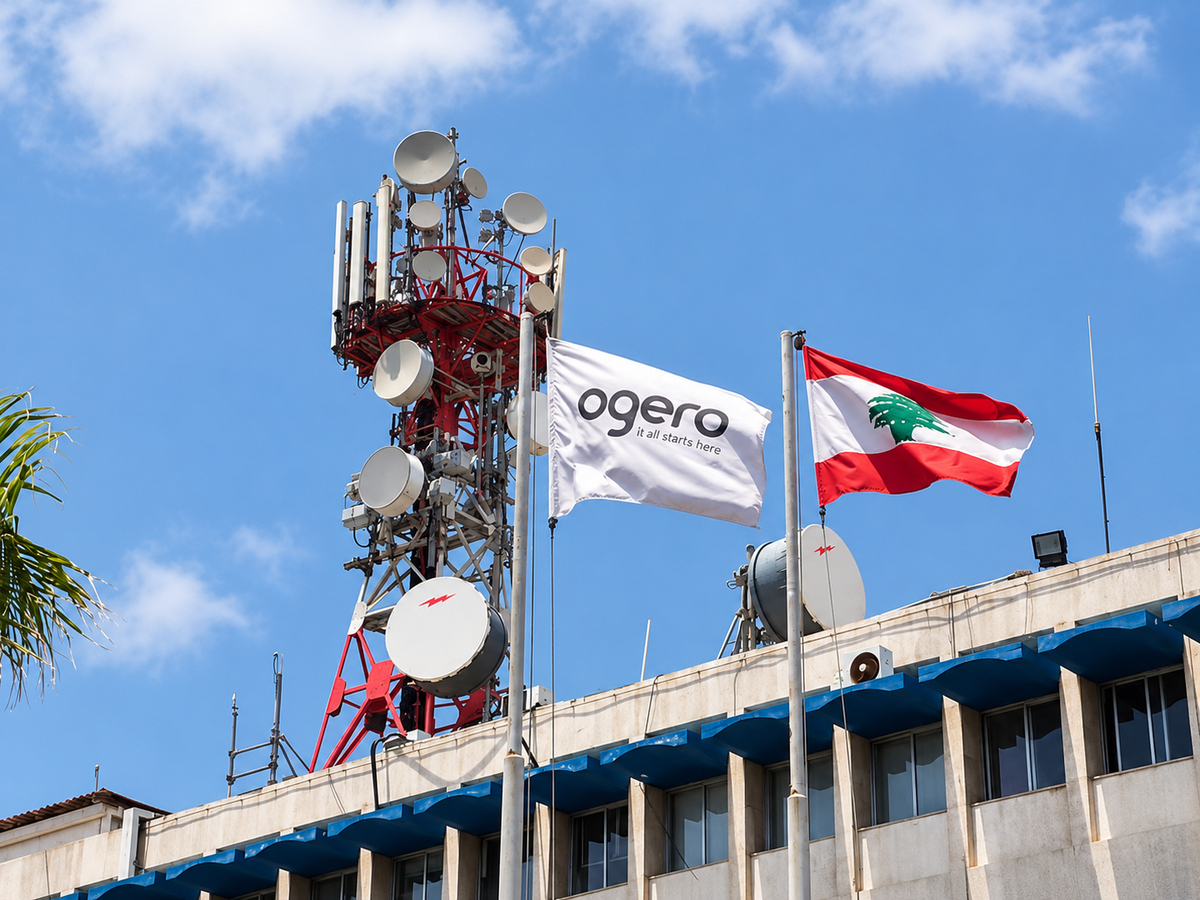
Lebanon's internet market includes the state-owned operator Ogero, licensed private internet service providers and hundreds of unauthorized distribution networks.
Many unlicensed operators obtain connectivity through legitimate wholesale providers before redistributing it to households and businesses without the necessary authorization or payment of applicable public dues.
The Court of Audit estimates that the state could generate approximately $219 million in annual revenue from the affected market, against roughly $90 million in service costs.
The resulting $128.8 million figure represents estimated net revenue forgone, rather than money proven to have been stolen directly from the Treasury.
A Parallel Market Larger Than the Official System
The scale of unauthorized distribution is particularly concerning.
In 2024, the Telecommunications Ministry identified 638 illegal networks operating across Lebanon.
More recent estimates suggest that unlicensed networks account for over 70% of fixed-internet distribution, serving more than one million subscribers.
The expansion resembles Lebanon's private generator sector, where decades of unreliable public services allowed parallel operators to become essential to everyday life.
For many households, unauthorized internet providers may offer connections in areas where official infrastructure is inadequate or unavailable.
This complicates enforcement: abruptly shutting networks could disconnect substantial numbers of customers, including those who had no practical alternative.
Regulators Face Criticism Over Delayed Action
The Telecommunications Regulatory Authority (TRA) issued Decision No. 4/2026 in February, requiring licensed providers to transfer customers connected through unauthorized networks onto approved infrastructure.
Implementation began in selected areas served by Ogero, including Beirut, Baabda, Hazmieh and Tripoli.
However, the Court of Audit has criticized aspects of the regulatory approach, arguing that existing laws were not being adequately enforced and questioning whether the new arrangements could effectively legitimize unauthorized networks.
The controversy entered the judicial system in October when three lawyers submitted a complaint to the Financial Public Prosecutor's Office, requesting an investigation into potential losses of public funds and administrative failures.
In November, Prosecutor General Ahmad Rami al-Hajj instructed the TRA to take the necessary measures to facilitate the transfer of subscribers to licensed networks, adding judicial pressure to the reform effort.
Why This Matters for Lebanon's Economy
The estimated losses come as Lebanon struggles to finance public services, restore damaged infrastructure and secure international assistance.
Recovering even part of the missing revenue could help fund telecommunications upgrades, improve internet reliability and reduce pressure on public finances.
However, legalization alone will not solve the problem.
Authorities must establish transparent licensing procedures, enforce payment obligations, prevent unfair competition and ensure that legitimate operators can provide affordable services.
A successful transition must also protect customers from sudden disconnections and unjustified additional charges.
Most importantly, the government must determine why unauthorized operators were allowed to expand for so long despite repeated warnings.
Lebanon's illegal internet economy illustrates a broader failure of state authority: public infrastructure and revenue opportunities have increasingly been captured by parallel networks while official institutions struggle to enforce their own rules.
The challenge is not simply recovering $129 million. It is demonstrating that the state can regulate an essential service rather than allowing an unauthorized market to operate indefinitely.