Netanyahu Addresses the UN Today in a Speech Expected to Focus on Gaza, Iran, Lebanon
Benjamin Netanyahu addresses the UN General Assembly today in a speech expected to focus heavily on Gaza, Iran, Hezbollah, the West Bank and Israel’s growing confrontation with international critics.
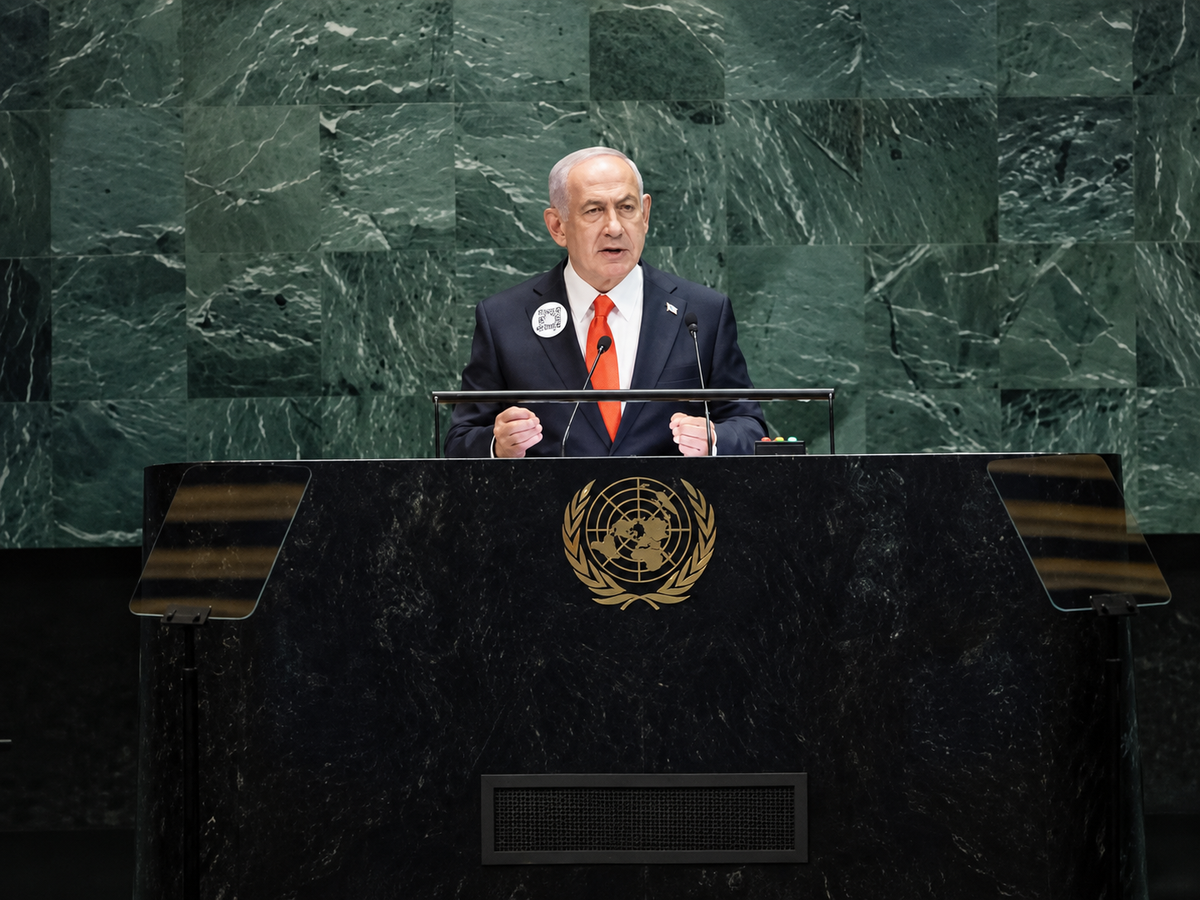
Israeli Prime Minister Benjamin Netanyahu will address the United Nations General Assembly in New York today in what is expected to be one of his most politically charged UN appearances yet.
Netanyahu departed Israel overnight and is making an unusually short visit to the United States, arriving in New York today, delivering his speech in the afternoon and returning to Israel the same evening. Unlike some previous visits, no meeting with President Donald Trump has been announced.
The speech comes at an unusually consequential moment for Israel.
The war in Gaza remains unresolved. Hezbollah remains armed despite months of fighting and negotiations over southern Lebanon. The U.S. and Iran have just reopened direct diplomatic channels in New York. Western governments are increasing pressure over Israeli settlements in the West Bank. And Israel itself is only weeks away from a national election.
Netanyahu has already promised that the address will contain “surprises.”
In a video released before leaving Israel, he said he was traveling to New York to defend Israel and the Israeli military against what he described as false accusations being made at the UN.
Gaza will almost certainly occupy a major part of the speech.
Israel’s nearly three-year campaign began after the Hamas-led October 7, 2023 attack, which killed around 1,200 people in Israel and saw 251 people taken hostage, according to Israeli authorities. Gaza health authorities say more than 73,000 Palestinians have since been killed in Israel’s military campaign; their figures do not distinguish between civilians and combatants. Israel rejects accusations that its operations constitute genocide and says its objective has been dismantling Hamas.
Netanyahu is expected to defend the conduct of Israeli forces and argue that Hamas must ultimately be disarmed.
Iran may be just as important.
Israel and Iran have fought two major rounds of direct conflict, while Washington and Tehran have spent much of this year in their own military confrontation. Yet the diplomatic picture changed significantly this week after U.S. officials held a three-hour meeting with Iranian representatives in New York.
Trump described those talks as productive and said another meeting is planned.
That creates a potentially important divergence between Washington and Jerusalem.
Israel has consistently pushed for maximum pressure on Tehran and has treated Iran’s nuclear and missile capabilities as an existential security issue. The Trump administration is now simultaneously maintaining military pressure while exploring a possible diplomatic settlement.
Netanyahu’s handling of Iran at the UN will therefore be watched for indications of how Israel views the emerging negotiations.
Lebanon is another likely subject.
Israel has significantly weakened Hezbollah through repeated military operations and currently holds positions inside southern Lebanon. Israeli officials are increasingly linking further withdrawals to the Lebanese Army’s ability to replace Hezbollah and prevent its military infrastructure from returning.
Netanyahu is expected to present those developments as evidence that Israel has changed the security balance on its northern border.
But the underlying problem remains unresolved.
Hezbollah has not been fully disarmed, Israeli forces remain on Lebanese territory, and the U.S.-brokered process linking Israeli withdrawal to greater Lebanese state control has moved slowly.
The speech also comes as pressure grows over the West Bank.
Israeli media reports that Netanyahu is expected to push back against new European measures targeting Israeli settlements and settler violence. Britain, France and Canada have moved toward restrictions on goods originating in settlements, while a wider group of Western states has supported additional measures.
U.S. Secretary of State Marco Rubio said this week that Trump does not believe the region needs another crisis in the West Bank, an indication that even Washington has concerns about further escalation there.
But one of the most unusual parts of Netanyahu’s address may have little to do with foreign governments.
He has explicitly said he intends to confront New York Mayor Zohran Mamdani from the UN podium.
Mamdani has called Netanyahu a war criminal and described him as responsible for what the mayor calls a genocide in Gaza. He previously said he would seek Netanyahu’s arrest if the Israeli leader visited New York, before acknowledging that the city government lacks the legal authority to enforce the International Criminal Court’s arrest warrant against him.
Netanyahu responded by accusing Mamdani of supporting Hamas and inciting hostility toward New York’s Jewish community. Reuters noted that Netanyahu’s allegation that Mamdani supports Hamas was false; Mamdani has condemned antisemitism and says criticism of Israeli policy is being wrongly conflated with hostility toward Jews.
Netanyahu has nevertheless made clear that the feud will enter the General Assembly itself.
“I’m going to tell the truth about our heroic soldiers,” he said before the trip, adding that he would also address Mamdani directly.
That makes the setting unusually symbolic.
Netanyahu is arriving in a city whose mayor has publicly condemned him, while taking the podium of an international institution that has become increasingly critical of Israeli policy.
Last year, large numbers of delegates walked out as Netanyahu began his UN address. Israel’s ambassador to the UN, Danny Danon, has said he expects another form of protest this year.
The domestic context is also impossible to separate from the speech.
Israel is heading toward elections in roughly five weeks, meaning Netanyahu’s UN appearance will be watched not only in diplomatic capitals but by Israeli voters.
He has long used major international speeches to reinforce his image as a leader focused on national security and Israel’s position in the world. This year gives him an unusually long list of issues to point toward: Gaza, Iran, Hezbollah, the West Bank and Israel’s increasingly strained relationship with several Western governments.
The difference is that none of those files is fully settled.
Hamas has not been completely eliminated.
Hezbollah remains armed.
Iran remains a major regional adversary despite renewed U.S. diplomacy.
Israel remains under intense international criticism over Gaza and settlements.
And Israeli forces remain deployed beyond Israel’s internationally recognized borders in multiple theaters.
Netanyahu will therefore be trying to present an argument larger than any single conflict.
His message is expected to be that Israel has fundamentally altered the regional balance through military power while facing international institutions and governments that, in his view, increasingly misunderstand or unfairly condemn its actions.
His critics will point to the enormous human cost of the wars, continued instability and the absence of final political settlements.
That tension will define today’s speech.
Netanyahu is expected to take the UN podium at approximately 2 p.m. New York time — around 9 p.m. in Lebanon.
And given his promise of “surprises,” Gaza, Iran and Lebanon may not be the only issues he intends to address.