Only Half Of Lebanon’s Residents are Lebanese, The Refugee Question Can No Longer Be Avoided
A Lebanese Army demographic study estimates that only around 3.7 million of Lebanon’s 6.86 million residents are Lebanese citizens, while the country continues to host a very large Syrian population and lose its own young people to emigration.
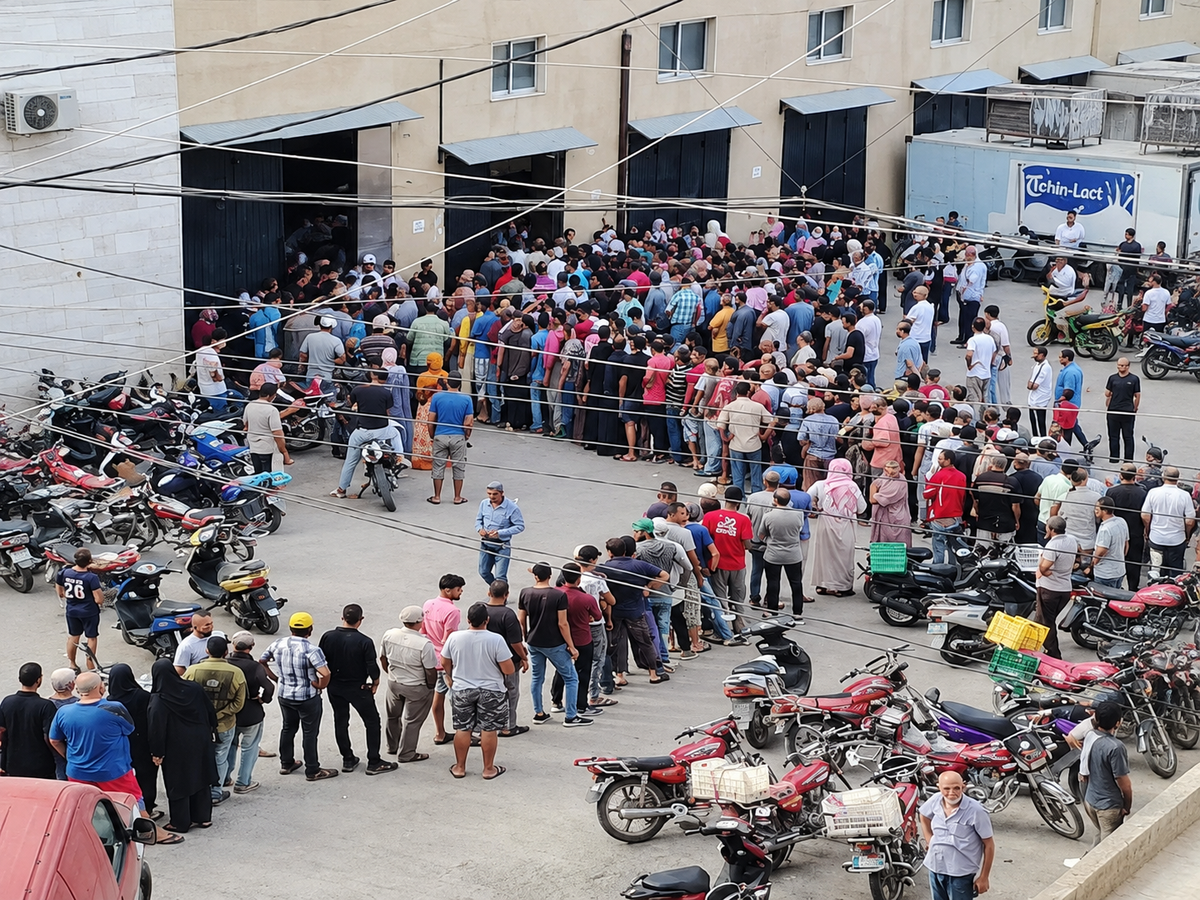
Lebanon’s demographic problem is no longer one crisis. It is two crises moving in opposite directions.
Lebanese citizens are leaving the country in extraordinary numbers.
At the same time, Lebanon continues to host a very large Syrian population that arrived because of a war whose political and security circumstances have since changed fundamentally.
Together, those trends are reshaping the country.
A demographic study published by the Lebanese Army estimates that Lebanon had approximately 6.86 million residents in mid-2024, but only around 3.7 million were Lebanese citizens. The study estimated approximately 2.1 million displaced Syrians, 230,000 Palestinians and 830,000 other foreign residents, although it acknowledges that these figures are estimates assembled from several datasets rather than a modern census.
On those numbers, Lebanese citizens represented only around 54% of the people living in Lebanon.
That should be enough to force a serious national discussion.
The Syrian presence was created by extraordinary circumstances. Millions fled a devastating civil war, and Lebanon, despite its own limited resources, absorbed a population enormous relative to its size.
But the circumstances that produced that displacement have changed substantially.
Lebanese General Security itself stated in June that the reasons for displacement had largely receded, citing improved political and security conditions in Syria, while announcing additional measures to facilitate departures and warning that immigration and residency laws would subsequently be enforced more strictly.
Returns are already happening on a significant scale.
According to figures cited by Social Affairs Minister Hanine El Sayed and published by General Security, 501,603 displaced Syrians left Lebanon during 2025. The Lebanese government continued its organized return program throughout 2026, while General Security reopened centers across the country specifically for Syrians seeking to return.
That changes the policy question.
Lebanon cannot treat a displacement crisis that began in 2011 as though nothing has changed fifteen years later.
A country of Lebanon’s size cannot reasonably operate on the assumption that more than a million people displaced by a neighboring war will simply remain indefinitely.
There is a difference between temporary protection during war and permanent settlement after the circumstances that caused mass displacement have changed.
Lebanon also has every right to distinguish between people legally working in the country and people remaining without lawful residency.
General Security is currently regularizing Syrian workers who meet legal requirements while simultaneously launching enforcement measures against illegal employment and residency. That distinction should have existed much more clearly years ago.
The demographic issue becomes considerably more serious when viewed alongside Lebanese emigration.
While hundreds of thousands of Syrians remained in Lebanon, hundreds of thousands of Lebanese were leaving.
An analysis by economist Charbel Nahas using General Security entry and exit data calculated a net departure of 729,062 Lebanese citizens between January 2020 and April 2026.
That is nearly four times the net outward movement recorded between 2014 and 2019.
The number requires an important qualification: border movement data cannot prove that every individual permanently emigrated.
But a net imbalance approaching 730,000 people in just over six years is an extraordinary demographic signal.
And the people most capable of leaving are often precisely those Lebanon can least afford to lose.
Doctors.
Engineers.
Entrepreneurs.
University graduates.
Young couples.
Professionals with internationally transferable skills.
The World Bank had already warned early in the crisis that 57% of highly educated Lebanese surveyed were considering emigration, describing the resulting brain drain as a direct threat to the talent Lebanon would eventually need for economic recovery.
Among younger Lebanese, the figures were even more alarming: a World Bank assessment reported that 77% of people aged 18 to 24 surveyed wanted to leave the country.
This is what makes Lebanon’s demographic problem so unusual.
It is not simply immigration.
And it is not simply emigration.
It is demographic substitution occurring through two simultaneous movements: a shrinking or increasingly expatriated Lebanese population alongside an exceptionally large non-citizen population.
The Lebanese Army study projects that, if its assumptions continue, Lebanese citizens could fall to between 45% and 48.8% of Lebanon’s resident population by 2035. It also projects rapid aging, with people over 65 potentially representing one quarter of the Lebanese population by 2050.
Those are projections, not predetermined outcomes.
But they illustrate where current trends lead.
Lebanon is already famous for having more people of Lebanese origin abroad than at home.
That diaspora has historically been celebrated as a source of strength.
But there is an enormous difference between a diaspora created over 150 years and the sudden loss of hundreds of thousands of residents during one national collapse.
Since 2019, Lebanese have endured the destruction of bank deposits, currency collapse, deteriorating public services, the Beirut port explosion, political paralysis and repeated conflict.
For many families, leaving became the logical economic decision.
The tragedy is that what makes sense for each household can become disastrous for the country.
A Lebanese doctor working in France may send money home, but Lebanon has still lost a doctor.
An engineer in Dubai may support parents in Beirut, but the company employing that engineer, the taxes generated by the job and the children eventually raised by that family are now elsewhere.
Lebanon increasingly survives through remittances from people it failed to retain.
That is not a development model.
Nor can Lebanon solve the demographic crisis simply by addressing the Syrian presence while ignoring why Lebanese themselves leave.
Both problems have to be discussed simultaneously.
The state needs a clear return policy for displaced Syrians whose original reason for remaining in Lebanon has ended, with residency and labor laws meaningfully enforced rather than periodically announced and forgotten.
But Lebanon must also make staying possible for Lebanese citizens.
That requires functioning banks.
Housing finance.
Reliable electricity.
Competitive jobs.
Security.
Schools worth raising children near.
A judicial system people trust.
And enough political stability that a young Lebanese couple does not automatically assume its future will be better somewhere else.
Otherwise, Lebanon could accelerate departures of Syrians and still continue shrinking demographically because Lebanese themselves keep leaving.
The issue is therefore much bigger than a refugee file.
It is about whether Lebanon intends to remain a country in which Lebanese citizens can actually build their lives.
The country has spent decades watching its most productive people depart while treating demographic policy as too sensitive to confront.
Even today, Lebanon has no modern census. Its last official census was conducted in 1932.
Nearly a century later, the state still cannot say with precision how many Lebanese and non-Lebanese actually live inside its borders.
That alone shows how neglected the issue has become.
Lebanon cannot control every demographic trend.
But it can decide whether temporary displacement becomes indefinite, whether immigration laws are enforced, and whether its own economy continues pushing citizens abroad.
The most troubling number is therefore not 2.1 million Syrians or 729,062 Lebanese departures by itself.
It is the combination.
A country losing its own population while struggling to manage one of the world’s largest displaced populations relative to its size is facing a structural national problem.
And the longer Lebanon avoids treating both sides of that equation together, the harder it becomes to reverse.