Rubio Warns Aoun: Hezbollah’s Seized Explosives Must Not Be Returned
Marco Rubio has told President Joseph Aoun that returning hundreds of kilograms of confiscated explosives to Hezbollah should be “out of the question,” while demanding accountability for those who ordered and financed the shipment.
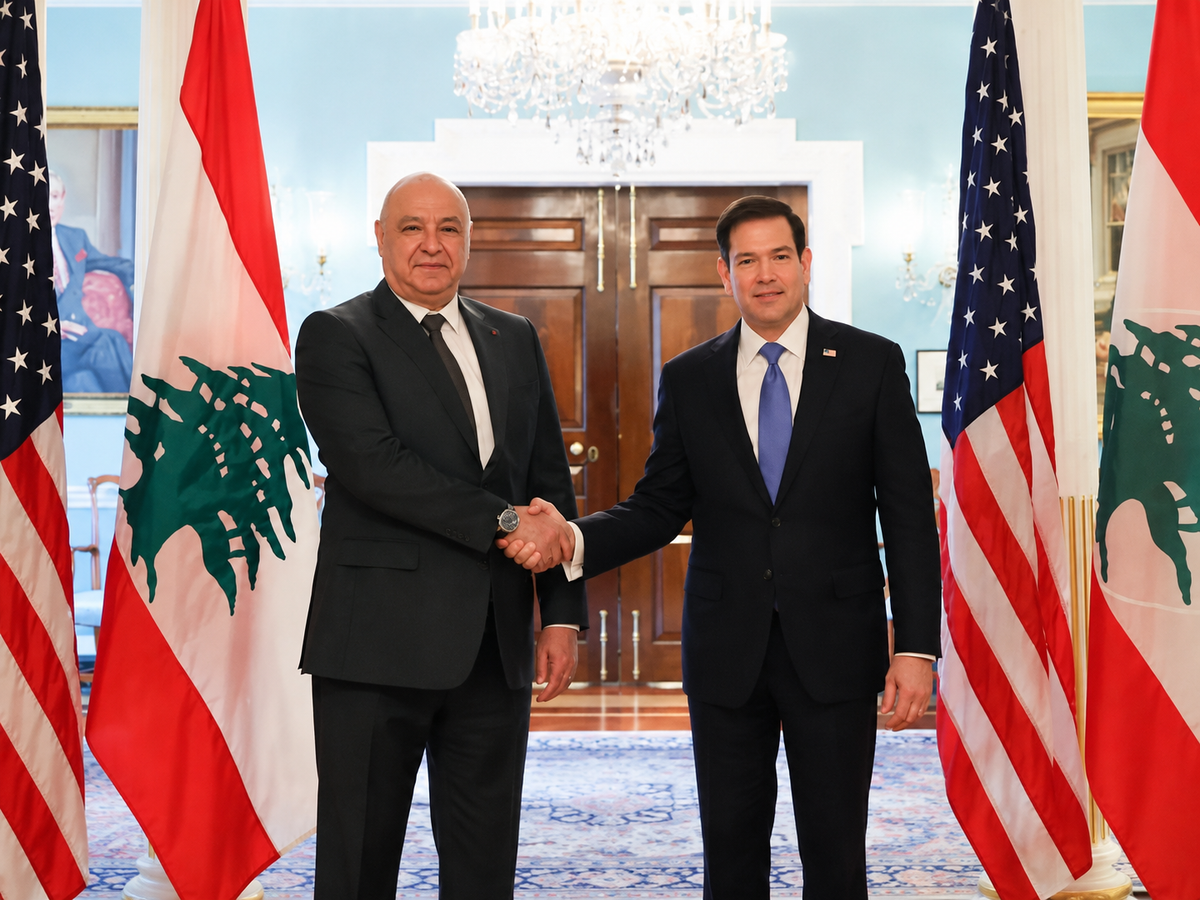
U.S. Secretary of State Marco Rubio has delivered an unusually direct message to Lebanon’s leadership: the explosives confiscated from Hezbollah must not be returned.
During a phone call with President Joseph Aoun, Rubio urged Lebanese authorities to hold accountable those who ordered, financed and directed the shipment and “underscored that returning explosives to Hezbollah should be out of the question,” according to a State Department official.
The fact that Washington even feels the need to say this exposes the deeper problem.
Lebanese security forces intercepted hundreds of kilograms of explosives being transported across the country.
Hezbollah then publicly admitted they belonged to the organization.
MP Hassan Fadlallah demanded the release of the detained men and the return of both the vehicle and its cargo. Reuters reported that Hezbollah says the material was intended for explosive drones targeting Israeli forces.
In a functioning state, that should have ended the discussion.
An armed organization outside the state was caught transporting explosives. The government has already declared Hezbollah’s independent military activity illegal. The weapons should remain confiscated, the detainees should face due process, and investigators should determine who authorized the shipment.
Instead, Lebanon has reached the point where the American secretary of state has to remind its president not to hand the explosives back.
That is an extraordinary illustration of how weak the Lebanese state still is when confronted by Hezbollah.
President Aoun told Rubio that the Army and security services were fully implementing government decisions to prevent armed displays, confiscate weapons and combat smuggling.
The seizure itself supports that claim.
Security forces did their job.
The more difficult question is whether the political leadership will allow the consequences of that seizure to stand once Hezbollah begins applying pressure.
That has been Lebanon’s problem for years.
The state often possesses institutions capable of acting.
What it has repeatedly lacked is the political will to defend those institutions when Hezbollah challenges them.
Police can seize weapons.
The Army can dismantle positions.
Judges can open investigations.
Cabinet can declare that only the state has the right to wage war.
But none of those decisions means very much if the government retreats whenever Hezbollah insists that its military infrastructure enjoys a separate status.
This case makes that contradiction impossible to hide.
In March, the Lebanese government explicitly banned Hezbollah’s military activities after the group launched rockets at Israel and helped pull Lebanon into the wider regional war.
Lebanon then committed through U.S.-brokered negotiations to disarm Hezbollah as part of a framework linked to gradual Israeli withdrawal.
Yet months later, Hezbollah was still transporting a large cache of explosives through Lebanese territory.
When those explosives were seized, Hezbollah did not deny ownership.
It demanded them back.
That is not compliance with state authority.
It is a direct test of whether that authority exists.
The explosives case is particularly revealing because there is no complicated constitutional question here.
The issue is not whether Hezbollah should eventually disarm under some future national-defense strategy.
It is not a theoretical debate over Israel, Iran or the resistance.
It is a truck carrying explosives today.
Either the Lebanese state has the authority to confiscate military material moving outside its control, or it does not.
There is no meaningful middle ground.
Rubio also demanded accountability beyond the men found with the shipment.
Washington wants Lebanese authorities to identify those who ordered, financed and directed it.
That may prove to be an even greater test.
Lebanese investigations have often been strong at the moment of arrest and far weaker when they approach politically protected command structures.
Prime Minister Nawaf Salam promised a full investigation after authorities initially seized 780 kilograms of explosives, including TNT and C4.
Now Hezbollah itself has confirmed ownership.
That should make the investigation easier, not harder.
Who ordered the shipment?
Where were the explosives stored?
Who supplied them?
Who financed their movement?
Who was meant to receive them?
What other shipments are moving through Lebanon?
If investigators stop with the drivers while avoiding the command chain, the investigation will have answered almost nothing.
The government’s credibility is therefore tied directly to what happens next.
Aoun and Salam have repeatedly spoken about sovereignty and the state’s monopoly on weapons.
Those principles are easy to announce in speeches.
They become meaningful only when enforcing them creates political risk.
This is that moment.
Hezbollah is effectively asking the government to make an exception to its own policy because the weapons belong to Hezbollah.
If Beirut complies, it would establish a devastating precedent: state security forces may confiscate illegal weapons, but Hezbollah can reclaim them once it asserts ownership.
That would turn disarmament into theater.
It would also severely damage Lebanon’s position with Washington and other international partners already linking reconstruction, military assistance and financial support to measurable progress on restoring state authority.
The U.S. message is increasingly clear.
Washington is no longer satisfied with Lebanese leaders promising that Hezbollah’s weapons will eventually be addressed.
It wants evidence that state decisions survive contact with Hezbollah.
The seized truck provides exactly such a test.
Lebanese officers stopped it.
Lebanese authorities confiscated the explosives.
Hezbollah admitted ownership.
Everything now depends on whether Lebanon’s political leadership stands behind its own security forces.
Returning the explosives would not be a compromise.
It would be an admission that the government’s monopoly on weapons exists only until Hezbollah objects.
And if the Lebanese state cannot keep a truckload of explosives it has already seized, it is difficult to see how it intends to disarm an entire organization.