Salam and Aoun Want Another UN Force. But After 50 Years, Why Can’t the Army Protect the South?
Lebanon is asking for an international security presence to remain in the south after UNIFIL completes its withdrawal, with several European countries discussing a possible replacement mission.
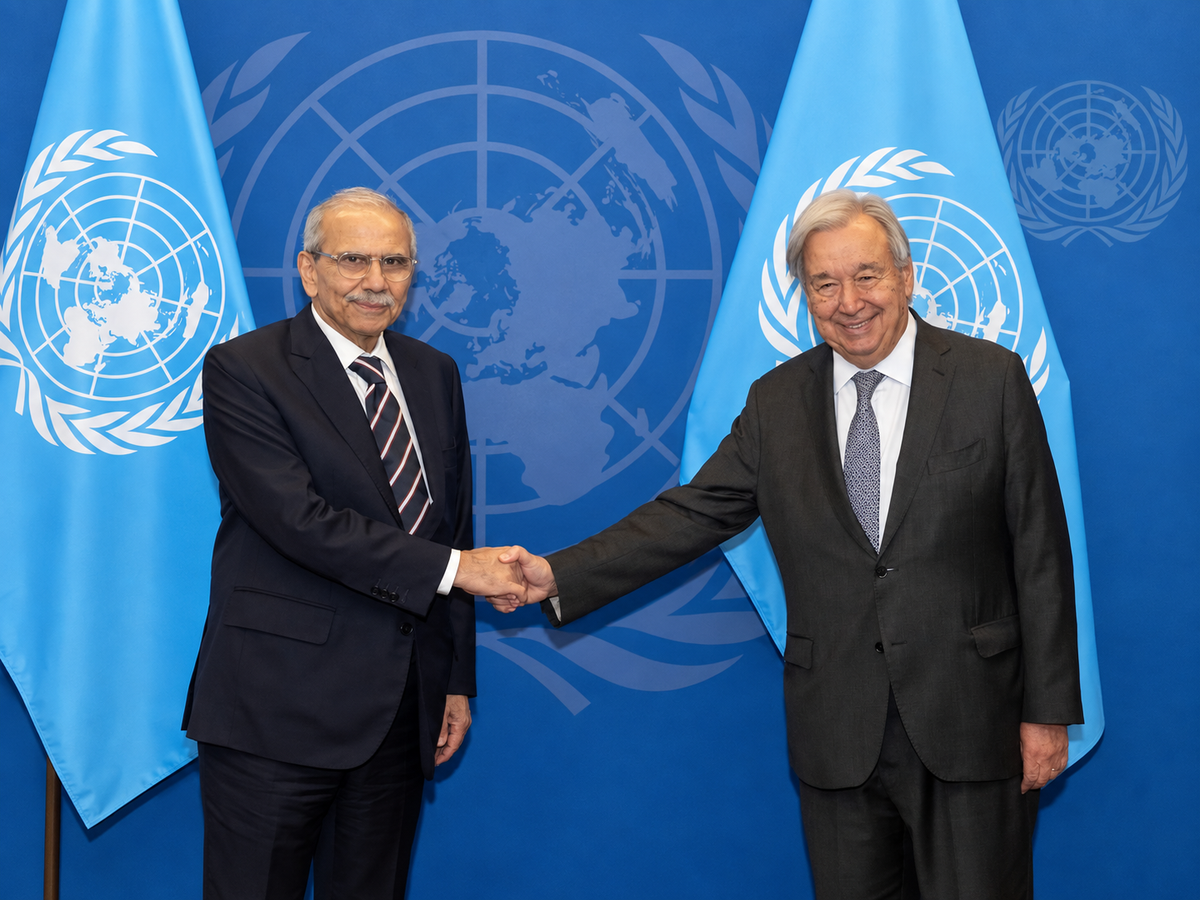
Lebanon is already looking for an international security presence to replace UNIFIL after the United Nations force completes its withdrawal from southern Lebanon, reopening a fundamental debate over whether Beirut is preparing for genuine sovereignty or simply replacing one layer of international dependency with another.
President Joseph Aoun has said Lebanon would welcome countries willing to keep troops in the south after UNIFIL leaves, under a new formula designed to assist the Lebanese Armed Forces, monitor developments and prevent a security vacuum. His office says several European countries have already expressed interest in maintaining units in southern Lebanon.
France and Italy are among the countries exploring alternatives. More than 10 EU states have indicated willingness to contribute personnel or resources to a possible mission focused on advising and training Lebanese forces. France has also discussed combinations involving a European mission, a multinational force or some continued UN presence.
Aoun is in a tough spot.
UNIFIL’s departure comes while Israeli forces still control parts of southern Lebanon, Hezbollah has not been fully disarmed, hundreds of thousands remain displaced and the Lebanese Army is being asked to take responsibility for an increasingly dangerous border.
UNIFIL commander Maj. Gen. Diodato Abagnara has warned that transferring the mission’s responsibilities will be difficult, particularly because more than half of its positions are currently located in areas controlled by Israel. The force has also been escorting humanitarian convoys and serving as an international observer of violations in the south.
But the discussion also exposes a much more uncomfortable question.
UNIFIL arrived in Lebanon in 1978.
Almost half a century later, Lebanon is preparing for its departure by asking who can replace it.
At what point does the objective become building a Lebanese state capable of replacing it itself?
That is the criticism facing Beirut as President Aoun seeks another international security arrangement.
The government says the Lebanese Army is the institution through which sovereignty will ultimately be restored. Aoun says troop numbers south of the Litani are being increased toward more than 10,000 and insists the Army is carrying out its assigned duties there.
Yet if the Army is intended to become the sole legitimate armed authority in Lebanon, a permanent cycle of replacing one foreign force with another raises questions about when that transition actually ends.
UNIFIL itself illustrates the problem.
The force was originally created in 1978 to confirm an Israeli withdrawal and assist the Lebanese government in restoring authority in the south. Its mandate expanded substantially after the 2006 Israel-Hezbollah war under UN Security Council Resolution 1701.
But UNIFIL was never given the mandate or military capacity to forcibly disarm Hezbollah on its own.
Its role was to monitor, report, coordinate with the Lebanese Army and help maintain an area south of the Litani free of unauthorized armed personnel and weapons. Enforcement ultimately depended on the Lebanese state.
That distinction matters when assessing nearly five decades of the mission.
Calling UNIFIL completely useless overlooks real functions it performed. It maintained liaison channels between Israel and Lebanon, documented violations, supported humanitarian access, patrolled the border area and at times helped prevent local incidents from escalating.
But its central political objective was never achieved.
Hezbollah built an extensive military infrastructure in southern Lebanon despite Resolution 1701. Israel repeatedly accused the group of storing weapons, constructing tunnels and maintaining military positions close to the border. Years of UN reporting documented violations while the underlying military balance remained largely unchanged.
Then another devastating war came anyway.
That history gives critics of a replacement force a powerful argument: international observers can monitor Lebanon’s sovereignty problem, but they cannot solve it for Lebanon.
A European soldier can patrol beside the Lebanese Army.
A UN observer can record a violation.
A multinational mission can provide training, intelligence and logistics.
None of them can make the political decision that only the Lebanese government can make: that no organization outside the state will maintain an independent army.
The international debate increasingly reflects that reality.
France’s ambassador to the UN has said explicitly that the purpose of any post-UNIFIL arrangement must remain Lebanese sovereignty, including an end to both unauthorized Israeli presence and Hezbollah’s armed challenge to the state’s monopoly on force.
The United States and Israel have meanwhile been skeptical of simply creating what U.S. officials have described as another version of UNIFIL. Both have pushed instead for a stronger Lebanese Army capable of assuming responsibility itself.
That position also explains why international attention is increasingly shifting toward Army performance.
The EU’s proposed mission is specifically being designed to advise and train Lebanese forces, partly so that more Lebanese troops can be dedicated to implementing the government’s weapons monopoly and dealing with Hezbollah’s remaining military presence.
The challenge, however, is not purely military.
The Lebanese Army unquestionably needs additional resources.
Years of economic collapse devastated military salaries, weakened recruitment and strained maintenance, equipment and logistics. AP reported that shortages of manpower and financing continue to restrict the Army precisely as the government asks it to assume far greater responsibilities.
That makes international support for the Army defensible.
But supporting the Army and replacing it are two very different things.
Training Lebanese soldiers, paying salaries, providing armored vehicles, surveillance systems and border equipment can increase Lebanon’s sovereign capacity.
Deploying another indefinite international force because the Lebanese state is still unable or unwilling to perform those functions itself risks institutionalizing the opposite.
Aoun has described the proposed international presence as temporary and says its purpose would be to assist the Army rather than substitute for it. He has also argued that full Lebanese deployment remains impossible while Israeli troops continue occupying Lebanese territory.
That is an important qualification.
Israel’s continued occupation unquestionably complicates the transition. Lebanon cannot simply deploy into positions physically held by Israeli troops, and any durable security architecture requires Israeli withdrawal as well as Hezbollah’s disarmament.
The criticism therefore cannot fairly be reduced to saying Lebanon alone created the current security vacuum.
But there is still a difference between requesting international assistance during a transition and constructing yet another long-term security arrangement around foreign troops.
Lebanon has lived under variations of the latter for decades.
UNIFIL has been present since 1978.
Syrian troops remained in Lebanon until 2005.
Israeli forces occupied parts of southern Lebanon until 2000 and again hold Lebanese territory today.
Hezbollah has maintained an armed structure independent of the state for decades.
The common thread is that the Lebanese state itself has repeatedly failed to exercise exclusive security authority over its territory.
That is the structural problem another international force cannot fix.
If Lebanon emerges from the current conflict with a stronger Army, one government controlling weapons, an internationally recognized border under state authority and no parallel military structure, then international assistance during the transition may eventually have served a purpose.
If UNIFIL simply disappears and is replaced by another foreign deployment performing largely the same functions indefinitely, the country will have changed the uniform without solving the problem.
The central objective of Beirut’s diplomacy therefore should be measurable.
How many Lebanese troops will control the south?
Which responsibilities currently performed by UNIFIL will transfer to them, and by what date?
Who will monitor the border once international forces eventually leave?
Will Hezbollah’s remaining military infrastructure come under state control?
And what is the exit strategy for any replacement mission?
Those questions matter more than the name printed on the blue helmets.
Lebanon has spent nearly half a century with an international force deployed on its territory.
The post-UNIFIL period presents an opportunity to make international assistance a bridge toward Lebanese control rather than another substitute for it.
Whether Beirut uses it that way will be the real measure of sovereignty.