Saudi-Backed Forces Push the Houthis Out of Bab el-Mandeb as the Mecca Pact Is Activated
Saudi-backed Yemeni forces have retaken most of the territory around Bab el-Mandeb that the Houthis captured last month, including the strategic port of Mocha, under heavy Saudi air cover.
Saudi-backed Yemeni forces have pushed the Houthis out of most of the territory they seized around the Bab el-Mandeb Strait, while Saudi Arabia, Turkey and Pakistan have simultaneously activated the collective-defense provisions of their new Mecca pact.
The two developments mark a sharp shift in the regional balance after weeks of Houthi advances along Yemen’s Red Sea coast and attacks against Saudi targets.
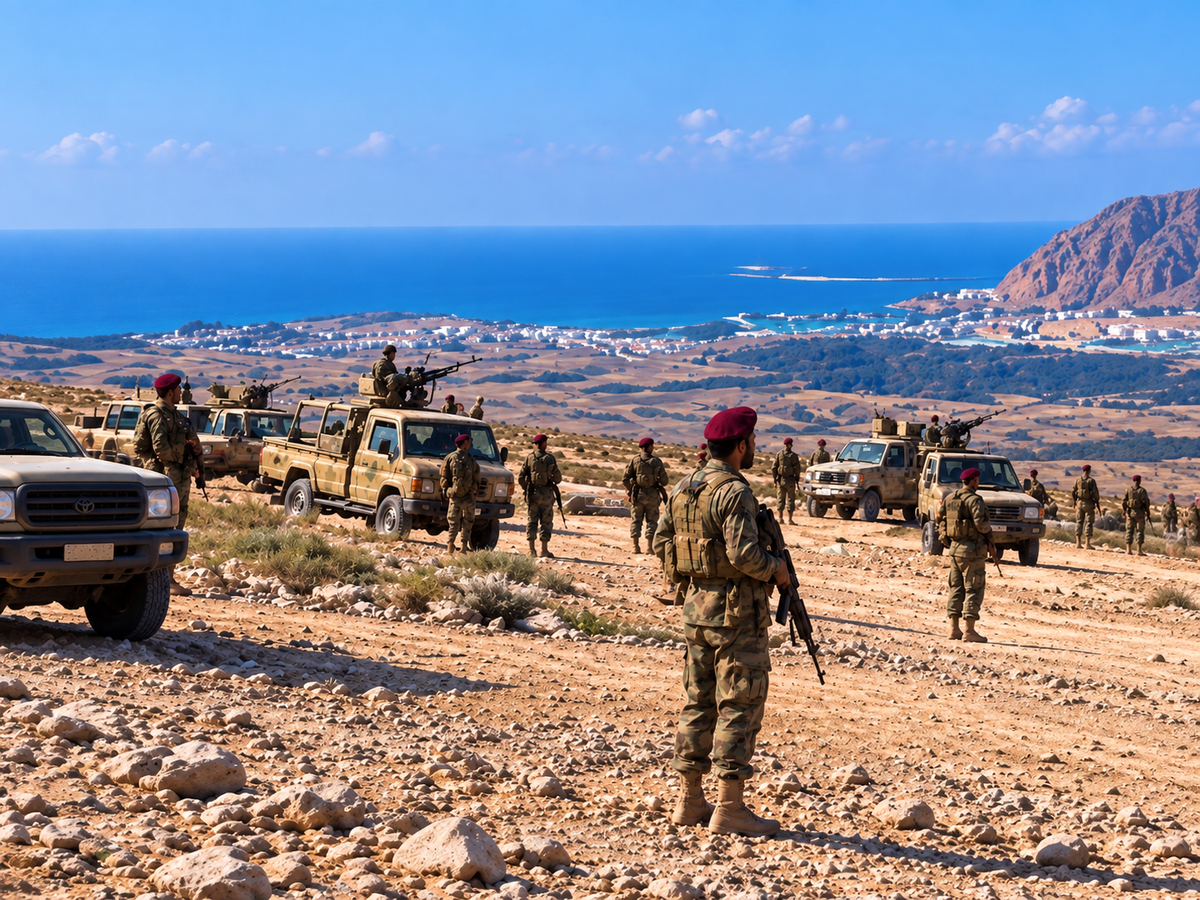
On October 5, forces loyal to Yemen’s internationally recognized government launched a rapid counteroffensive around Bab el-Mandeb under heavy Saudi air cover.
Government units retook Dhubab, Bab and Hadeid and advanced north along the Red Sea coast. By October 6, Yemeni forces said they had also recaptured Mocha, the strategically important port city the Houthis had seized during their September offensive.
The advance effectively removed Houthi ground forces from most of the Yemeni coastline immediately surrounding Bab el-Mandeb.
That matters far beyond Yemen.
Bab el-Mandeb is one of the world’s most important maritime chokepoints, connecting the Red Sea and Suez Canal with the Gulf of Aden and Indian Ocean.
Around 12% of global trade normally passes through the route, according to reporting cited by the Associated Press. Control of the surrounding coastline gives armed groups the ability to threaten vessels using missiles, drones and coastal weapons even without physically blocking the strait.
Saudi Arabia treated the Houthi advance as a direct strategic threat.
More than 100 Saudi coalition aircraft have been involved in the new campaign, according to coalition spokesman Maj. Gen. Turki al-Malki, providing continuous air support to Yemeni ground forces and what Riyadh described as “air protection” for Bab el-Mandeb.
The offensive has been named “Yemen Dawn.”
Rashad al-Alimi, head of Yemen’s Presidential Leadership Council, said the operation is intended not merely to recover the coast but to restore state institutions and eventually retake Houthi-controlled Sanaa.
That makes the current operation potentially much larger than a limited battle for the strait.
The Houthis had dramatically altered the military map only weeks earlier.
During September, they pushed down Yemen’s western coastline, captured Mocha and seized several Red Sea islands, temporarily giving them a much stronger position over the Yemeni side of Bab el-Mandeb.
They also advanced elsewhere around Taiz, including the strategically important town of Turbah, showing that the group remains capable of offensive operations even as it comes under intense Saudi air attack.
The battle therefore remains far from over.
Even if Houthi forces lose direct control of the coast, they retain ballistic missiles, cruise missiles and drones capable of threatening ships and Saudi territory from deeper inside Yemen.
The Houthis have already claimed attacks on airports, oil infrastructure and military facilities across Saudi Arabia during the latest escalation. Saudi and Yemeni authorities say some of those attacks have targeted civilian infrastructure and areas close to Islam’s holy cities.
Those attacks have now triggered a second major development.
Saudi Arabia, Turkey and Pakistan have activated the collective-deterrence provisions of the Mecca Defence Agreement signed by their leaders on August 7.
Following an emergency meeting in Riyadh, the three countries agreed to move immediately toward the rapid deployment of agreed military forces and capabilities to Saudi Arabia.
The pact is significant because it turns what had previously been a new political and defense framework into an operational alliance.
Saudi Crown Prince Mohammed bin Salman, Turkish President Recep Tayyip Erdoğan and Pakistani Prime Minister Shehbaz Sharif signed the agreement in Mecca only two months ago.
Its activation means Riyadh is no longer responding to the Houthi escalation through Saudi forces alone.
Turkey and Pakistan are now formally committing military capabilities to support the kingdom’s defense.
The exact composition and size of those deployments have not yet been fully disclosed.
But the agreement specifically calls for the rapid deployment of agreed forces and military capabilities under the three countries’ approved legal and defense arrangements.
Pakistan brings one of the Muslim world’s largest militaries and its only declared nuclear arsenal.
Turkey brings NATO’s second-largest military, a major drone industry and extensive combat experience across Syria, Iraq, Libya and the Caucasus.
Saudi Arabia provides enormous financial resources, advanced Western-supplied aircraft and the geographic position directly confronting the Houthi threat.
Together, the three states represent a much more substantial military bloc than the bilateral security arrangements Riyadh relied on during much of the previous Yemen war.
The United States is also supporting the Saudi-backed campaign.
American officials told the Associated Press that Washington has provided intelligence sharing, target identification and planning assistance, although there has been no announcement of direct U.S. combat participation in the offensive. U.S. Secretary of State Marco Rubio said Saudi Arabia had a right to defend itself and reclaim territory taken by the Houthis.
The renewed conflict marks the collapse of the relative calm that followed Yemen’s 2022 truce.
For several years, Saudi Arabia had increasingly tried to disengage from direct war with the Houthis and negotiate a political settlement.
That approach became much harder to sustain once Houthi forces again advanced toward strategic Red Sea territory and expanded attacks against Saudi targets.
The humanitarian cost is already severe.
The latest fighting has killed at least 959 people and wounded more than 4,200, according to the World Health Organization figures cited by the Associated Press. Around 174,000 people have been displaced inside Yemen, with thousands more fleeing across the Red Sea to Djibouti.
For Saudi Arabia, however, allowing the Houthis to retain control over Bab el-Mandeb would carry consequences far beyond Yemen.
The kingdom depends heavily on Red Sea shipping routes, especially while instability elsewhere in the Gulf has increased the strategic importance of western export corridors.
A hostile armed group positioned directly beside Bab el-Mandeb could threaten Saudi trade, global shipping and energy flows whenever it chose.
That explains the scale of Riyadh’s response.
Within days, Saudi-backed ground forces have reversed much of the Houthi coastal advance.
At the same time, Saudi Arabia has activated a new military alliance with Turkey and Pakistan.
The battle for Bab el-Mandeb has therefore become more than another front in Yemen’s civil war.
It is now testing whether a new Saudi-led regional security architecture can contain the Houthis and secure one of the world’s most important trade routes.