Spain Heads to Snap Elections as Sánchez Faces Corruption Cases and a Migration Backlash
Pedro Sánchez has called a snap Spanish election for November 29 after years of parliamentary instability and a major defeat over housing policy.
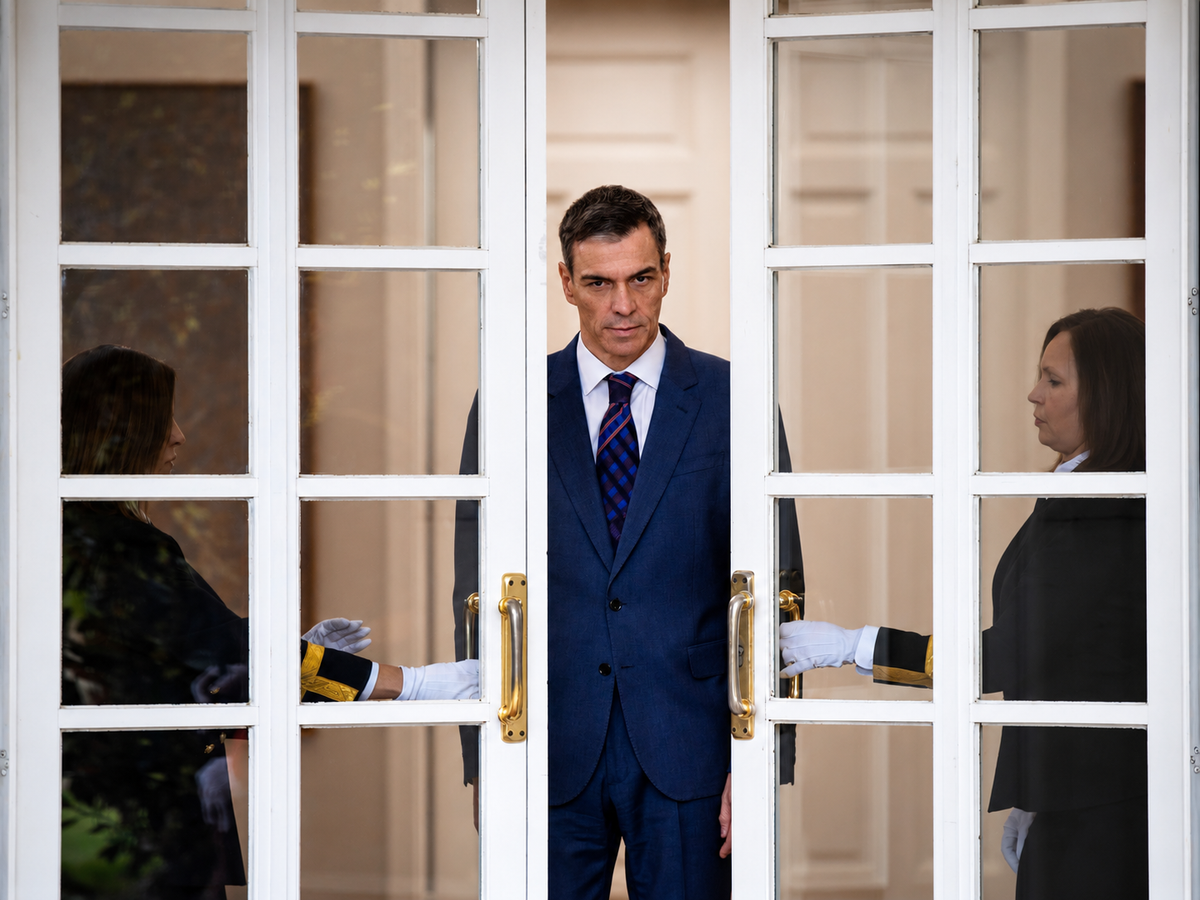
Spanish Prime Minister Pedro Sánchez has dissolved parliament and called a snap general election for November 29, bringing one of Europe’s longest-running left-wing governments to an early electoral test.
Sánchez announced the decision on October 5 after informing King Felipe VI and convening an extraordinary cabinet meeting. In a statement from Moncloa, he said Spain needed a new mandate after years of governing through an increasingly fragmented parliament.
The immediate trigger was a major parliamentary defeat over housing.
Congress rejected two government decrees intended to address Spain’s housing crisis, exposing how difficult it had become for Sánchez’s minority coalition to pass legislation. His government has also failed to pass a new national budget since 2023.
But the decision comes after months of pressure extending far beyond housing.
Sánchez enters the campaign with corruption investigations and court proceedings surrounding people close to him, including his wife, his brother and senior Socialist figures.
His wife, Begoña Gómez, is due to face trial over allegations including misuse of public funds and influence peddling connected to her work at Madrid’s Complutense University. She denies wrongdoing, while Sánchez has repeatedly described the case as politically motivated.
His brother, David Sánchez, has also faced criminal proceedings related to his public-sector employment in Extremadura. The case has become politically damaging for the prime minister because it feeds a wider opposition argument that institutions surrounding the Socialist government have become too closely intertwined with political patronage.
Several former or current Socialist-linked figures have also been drawn into separate investigations. A Spanish National Court case involving former PSOE activist Leire Díez has examined allegations of efforts to undermine judicial cases affecting the party or government, with figures including former senior Socialist official Santos Cerdán among those investigated.
None of these cases establishes personal wrongdoing by Sánchez himself.
Politically, however, the accumulation matters.
For a prime minister who has governed Spain since 2018, the election is increasingly becoming a referendum on whether voters still trust the political system built around his coalition.
Then came Ceuta.
At the end of July, tens of thousands of migrants crossed from Morocco into the Spanish enclave in North Africa in one of the largest irregular migration surges ever recorded on European Union territory.
Official estimates varied during the crisis, but parliamentary and European sources place the number above 70,000. The European Parliament’s research service later estimated roughly 80,000 crossings, while dozens of people died trying to reach the enclave.
Ceuta itself has a population of only around 80,000.
The scale of the influx therefore briefly transformed the city.
Reception facilities were overwhelmed, thousands slept in improvised shelters, neighboring European governments tightened controls and Madrid faced immediate questions about how one of the EU’s external borders had effectively been overrun.
Sánchez described the event as a violation of Spain’s territorial integrity and deployed additional resources to the enclave.
But the crisis has strengthened a broader argument already gaining ground across Europe: governments that maintained relatively permissive migration policies for years are discovering how difficult it is to restore control once migration systems become overwhelmed.
The fallout has continued.
More than two months after the initial crossing, thousands of migrants remained in Ceuta. Spanish police were still clearing an improvised camp containing around 3,000 people on October 4.
The government representative in Ceuta resigned in late September after intense criticism of the authorities’ handling of the crisis.
Migration is therefore likely to become one of the defining issues of the campaign.
Sánchez has spent much of his premiership defending a comparatively liberal approach to migration and presenting Spain as an alternative to the tougher policies adopted elsewhere in Europe.
That position now faces a much more skeptical electorate.
Across Europe, political momentum has increasingly moved toward stricter border enforcement, faster deportations and tighter asylum rules. Even EU institutions are discussing expanding Frontex and establishing return centers outside the bloc.
Spain’s conservative opposition believes the political environment has shifted in its favor.
The center-right Popular Party, led by Alberto Núñez Feijóo, has focused heavily on corruption, institutional credibility, housing and immigration.
Vox has pushed an even harder line, particularly on illegal migration and border control.
Current polling places Sánchez’s Socialist Party behind the Popular Party, although an election campaign lasting almost two months leaves considerable room for movement. Reuters described the election as a risky attempt by Sánchez to rebuild a stronger parliamentary mandate after years of legislative deadlock.
Sánchez is attempting to make housing the center of the campaign.
Spain has experienced strong economic growth and relatively low unemployment, but younger voters have become increasingly frustrated by rents, property prices and the difficulty of buying a home.
The government’s defeated housing proposals were designed partly to restrict evictions and temporary rentals. Sánchez is betting that voters will blame conservative parties for blocking them rather than blame his government for allowing the housing crisis to become so severe.
The opposition will make the opposite argument.
After more than eight years in power, Sánchez can no longer convincingly present Spain’s major problems as somebody else’s inheritance.
Housing shortages, uncontrolled migration pressures, political scandals and parliamentary paralysis have all developed during his premiership.
That makes November 29 unusually consequential.
Spain is one of the last major Western European countries still governed by the traditional center-left.
A change of government would strengthen the wider political shift already visible across Europe toward tougher immigration policy, stronger border enforcement and more conservative governments.
Sánchez has survived repeated political crises before.
This time, instead of negotiating another parliamentary compromise, he has decided to put his government directly before the voters.