The Aoun/Salam Government Is Running Out of Excuses
Energy Minister Joe Saddi is boycotting Cabinet meetings over the failed electricity system while fuel and generator costs soar. All while the economy remains weak, depositors are still trapped and Hezbollah remains armed despite all the promises to restore state sovereignty.
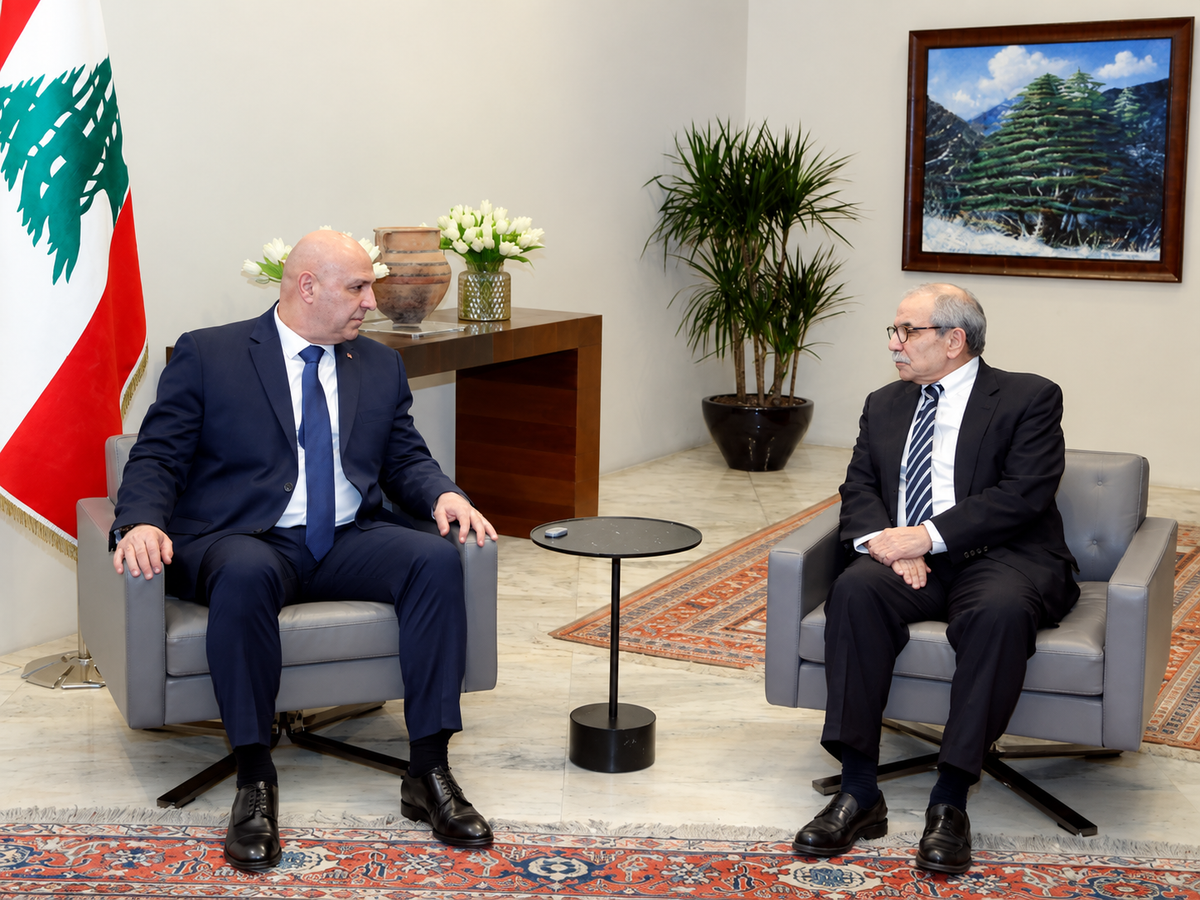
When Joseph Aoun was elected president in January 2025 and Nawaf Salam formed his government a month later, Lebanon was promised something different.
A functioning state.
Economic reform.
A monopoly on weapons.
Electricity.
Reconstruction.
Accountability.
Nearly 21 months after Aoun’s election, and 20 months after Salam’s government took office, Lebanese citizens are entitled to ask a very simple question:
Where is it?
On Tuesday, Energy Minister Joe Saddi announced that he would stop attending Cabinet meetings until the government takes the decisions he says are necessary to address Lebanon’s electricity crisis.
Think about what that means.
The minister responsible for energy has reached the point where he believes boycotting his own government is necessary to force that government to deal with energy.
Saddi said Lebanon fundamentally lacks generating capacity, that required investments have not been made and that private investors want financial and security guarantees before putting money into the sector. He has also said a significant share of electricity losses are non-technical losses, meaning theft and unpaid consumption.
This is happening in a country where state electricity remains almost nonexistent by any reasonable standard.
Électricité du Liban said this summer that average nationwide supply had fallen to around four hours per day.
Four hours.
In 2026.
After decades of reform plans, loans, conferences, emergency measures and billions of dollars poured into an electricity sector that still cannot reliably keep the lights on.
Lebanese families therefore continue paying twice.
Once to the state.
Then again to private generator operators because the state cannot provide the service.
And those generator bills are becoming more painful.
Diesel prices nearly doubled between late February and September, pushing official generator tariffs sharply higher.
This is not an abstract economic indicator.
It is the restaurant trying to keep refrigerators running.
The shop paying for air conditioning.
The family calculating how many hours of generator electricity it can afford.
The worker paying more to drive to work.
The small business watching another portion of its margin disappear.
Meanwhile, Lebanon’s economy is expected to contract sharply this year, inflation remains elevated and the country is still carrying the unresolved burden of the 2019 financial collapse.
And what is the government preparing to do?
Ask taxpayers for dramatically more money.
The 2027 budget expects tax revenues to more than double compared with what the state collected in 2024, even as households continue paying privately for electricity, water, education, healthcare and transportation.
Lebanon increasingly resembles a state that wants far more revenue without first proving that it can provide the basic services taxpayers are supposedly funding.
Yet electricity and taxation are only part of the failure.
The central political promise of the Aoun-Salam era was supposed to be the restoration of the Lebanese state itself.
Aoun entered office pledging that weapons would be placed exclusively under state authority. Salam’s government committed itself to implementing Resolution 1701 and restoring sovereignty.
Hezbollah remains armed.
More than a year and a half later, Lebanon is still debating how, when and under what conditions the country’s most powerful non-state military organization might surrender its weapons.
The Army has not done nothing, while Hezbollah has openly rejected disarmament, and progress remains painfully limited relative to the magnitude of the problem.
A government cannot indefinitely describe the existence of an independent armed organization as a problem awaiting favorable circumstances.
Either the Lebanese state possesses sovereignty or it does not.
The same applies to the Army.
Lebanon’s soldiers have repeatedly demonstrated professionalism under extraordinarily difficult conditions. But political leaders cannot continually hide behind the Army while denying it the political decisions, equipment and authority required to impose state control.
The government announced a plan.
Hezbollah rejected it.
Months passed.
The weapons remain.
Israel continues striking Lebanon.
The Lebanese state continues protesting.
This is not sovereignty.
It is managed impotence.
And Washington increasingly appears to be losing patience with it.
U.S. sources told MTV on October 6 that there has been a “clear shift” in the administration’s approach toward Beirut. According to those sources, Washington is no longer satisfied with political commitments and now wants results that are measurable and verifiable.
The warning went further.
The same sources told MTV that if Lebanon’s commitments do not translate into action, the next confrontation with Washington may extend beyond the political level and involve the U.S. Treasury Department directly. MTV separately reported that sanctions are drawing closer and that names, routes and networks are under scrutiny.
That should be taken seriously.
For years, Lebanese governments have survived on statements.
Commitments.
Frameworks.
Roadmaps.
Promises to disarm Hezbollah.
Promises to reform banks.
Promises to fix electricity.
Promises to fight corruption.
Promises to rebuild institutions.
Washington’s reported message is that the era of accepting promises without evidence may be ending.
And the economic front is no better.
There has been some movement.
Parliament passed amendments to the Bank Resolution Law. The government reopened serious discussions with the IMF. The Fund has acknowledged those steps while also making clear that a new program still depends on further banking reform, a credible 2027 budget and a medium-term fiscal framework.
But seven years after banks locked depositors out of their savings, Lebanon still has no completed solution for the financial collapse.
Depositors remain trapped.
The banking system still does not perform its normal role of financing an economy.
Public debt restructuring remains unfinished.
Basic reforms continue moving through government at a speed completely disconnected from the urgency of the country’s situation.
This administration was not elected into normal circumstances.
It came to power precisely because Lebanon had reached the end of the old model.
That should have required emergency-level reform.
Electricity should have been treated as a national economic emergency.
Bank restructuring should have been accelerated.
Public administration should have been digitized and cut.
Corruption and patronage networks should have been confronted aggressively.
Hezbollah’s weapons should have been addressed through a clear and enforceable timetable.
Investment barriers should have been removed.
Instead, Lebanon again finds itself discussing plans, committees, negotiations and frameworks while citizens continue solving the country’s failures privately.
No electricity? Buy generator power.
No reliable water? Buy water.
Weak public schools? Pay tuition.
Weak healthcare? Buy insurance.
No functioning banking system? Keep cash.
No public transport? Buy a car.
No security certainty? Hope nothing happens.
And then the same state asks for more taxes.
The Aoun-Salam government still has time to change course.
But the grace period is over.
This government presented itself as the break with Lebanon’s failed political era.
After nearly two years, it can no longer judge itself by how much worse previous governments were.
It has to be judged against what it promised.
Lebanon does not need another government capable of explaining why reform is difficult.
It needs one capable of producing results.
And if MTV’s reporting is accurate, Washington may soon be judging it by exactly the same standard.