This Is Beirut and i24NEWS Move Toward Open Media Cooperation
This Is Beirut and Israel’s i24NEWS are increasingly appearing within the same media and political ecosystem, with Lebanese and Israeli journalists, analysts and officials engaging more openly across platforms.
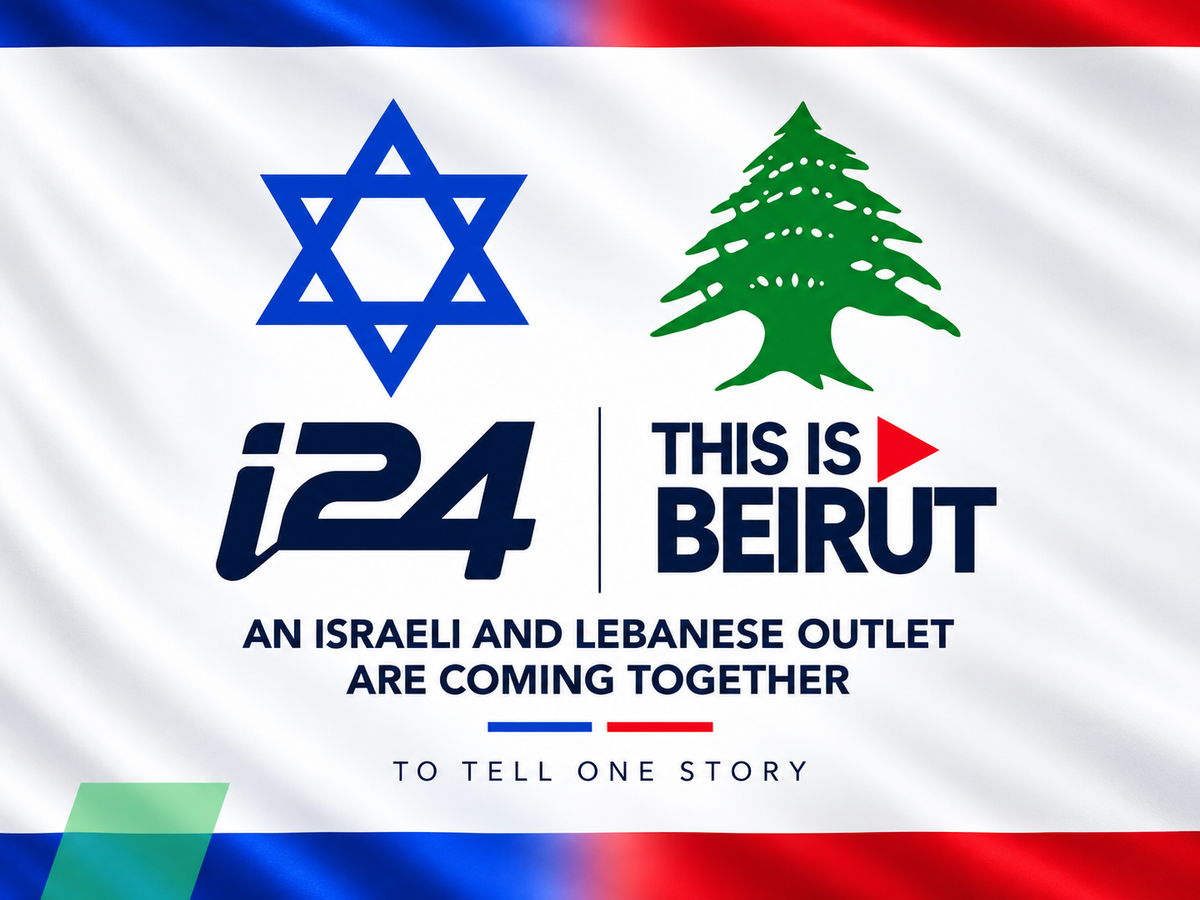
Lebanese outlet This Is Beirut and Israeli broadcaster i24NEWS appear to be moving into an increasingly open relationship, marking another notable step in the gradual erosion of old taboos surrounding Lebanese-Israeli contact.
This Is Beirut has already positioned itself very differently from much of Lebanon’s traditional media landscape. The outlet openly says it supports peace between Lebanon and Israel, opposes Hezbollah’s armed role and wants Lebanon integrated into a regional order built around state sovereignty rather than militia power. Its editorial line has increasingly emphasized direct engagement with Israeli voices and U.S.-led diplomacy.
That engagement is no longer theoretical. This Is Beirut has previously co-hosted a Lebanese-Israeli civil panel with the Israeli think tank MIND Israel at the Munich Security Conference and has published interviews and reporting involving Israeli officials and Israeli-based voices.
The overlap with i24NEWS is also becoming more visible. Analysts and contributors linked to This Is Beirut have appeared on i24NEWS discussing Lebanon-Israel negotiations, Hezbollah and the emerging postwar order, while both outlets increasingly cover the same themes: normalization, Hezbollah’s disarmament, direct negotiations and the possibility of peace.
What is significant is not simply that Lebanese journalists are speaking to Israeli media. That has happened before, usually quietly or through intermediaries. What is changing is the willingness to do it openly and frame such exchanges as part of a legitimate public conversation about Lebanon’s future.
This matters because Lebanon and Israel remain formally at war, and Lebanese law and political culture have historically placed extremely strong restrictions on contact with Israelis. Any structured media cooperation therefore carries political weight well beyond the journalism itself.
It also fits into a broader pattern. Lebanese and Israeli officials are now engaged in U.S.-mediated direct dialogue, Lebanese business figures have appeared publicly alongside Israeli leaders, and media outlets such as This Is Beirut are increasingly treating Israeli perspectives as something to engage with rather than automatically exclude.
For supporters, this represents the normalization of a long-overdue conversation: Lebanon cannot negotiate peace, borders, security and economic relations with Israel while pretending Israeli society does not exist.
For critics, it represents normalization before a political settlement has been reached, particularly while Israeli forces remain active inside southern Lebanon.
Either way, the taboo is clearly weakening.
The growing relationship between This Is Beirut and i24NEWS is therefore more than a media story. It is another indication that parts of Lebanese civil society are beginning to prepare publicly for a relationship with Israel that would have been politically unthinkable only a few years ago.