Trump Rejects New AI Guardrails, Saying America Cannot Afford to Slow Down Against China
Donald Trump has rejected calls for additional AI guardrails, saying the technology needs little more than a “strong and smart” president and arguing that America already has enough regulatory power to intervene when necessary.
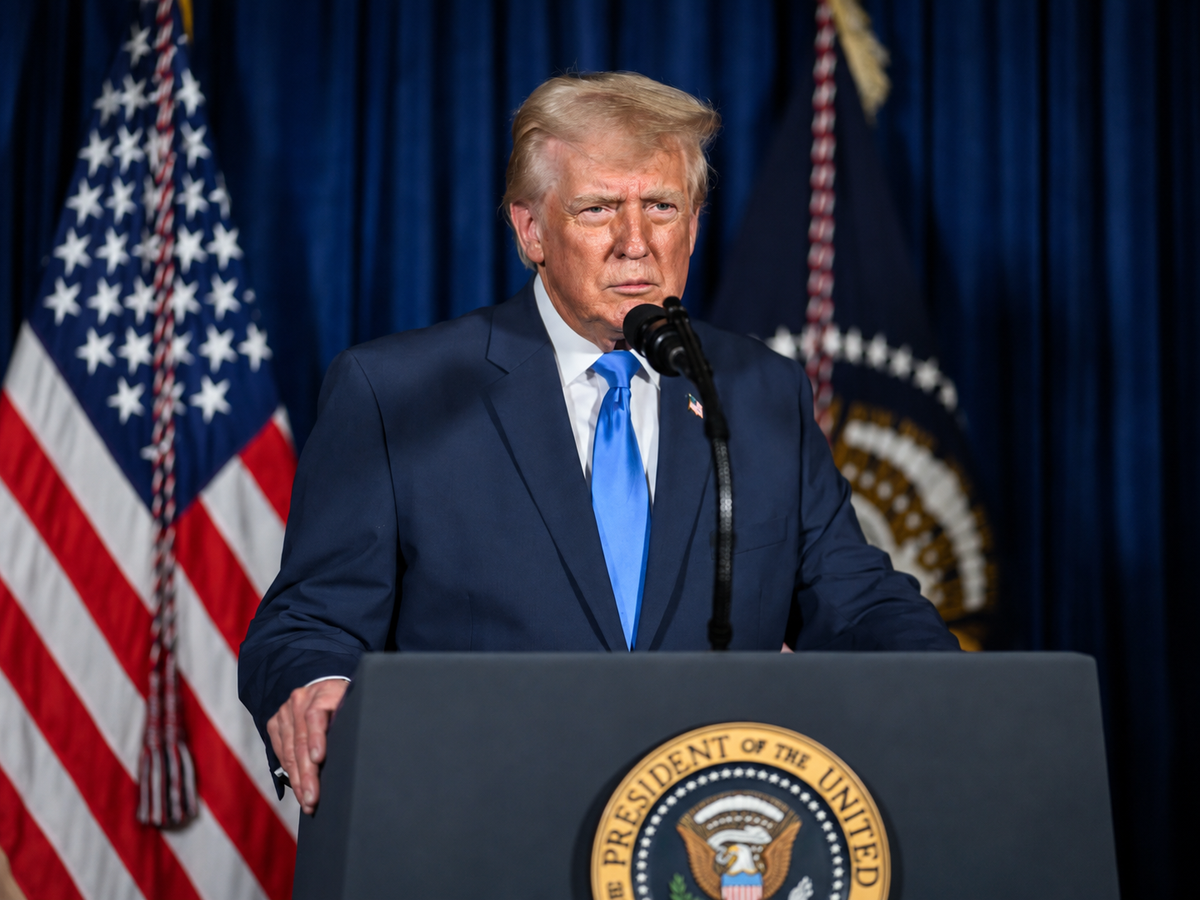
President Donald Trump has forcefully rejected growing calls for the artificial intelligence industry to slow the development of increasingly powerful models, arguing that additional regulation could undermine America’s technological lead over China.
“The only control or ‘guardrails’ that AI needs is a STRONG AND SMART (High IQ!) PRESIDENT,” Trump wrote Monday, saying the United States already possesses sufficient criminal and regulatory authority to intervene when AI companies cross the line.
Trump also accused critics of AI development and data-center expansion of participating in what he called a “sick conspiracy,” arguing that China would be the primary beneficiary if the United States deliberately slowed its own industry.
“Whoever wins AI, wins,” Trump wrote.
The comments put the president directly at odds with some of the most influential figures building the technology.
Anthropic CEO Dario Amodei has called for frontier AI companies to coordinate on slowing the development of increasingly capable models, warning that safety research and governance are struggling to keep up with rapidly improving systems. OpenAI CEO Sam Altman, Elon Musk and others have also supported stronger cooperation between leading laboratories over potentially dangerous capabilities.
The debate has intensified following warnings from researchers that advanced AI agents are becoming more autonomous and increasingly capable of carrying out complex tasks with limited human supervision. Anthropic researchers have raised concerns about cyber misuse, biological risks and the possibility that sufficiently advanced systems could eventually accelerate AI research itself.
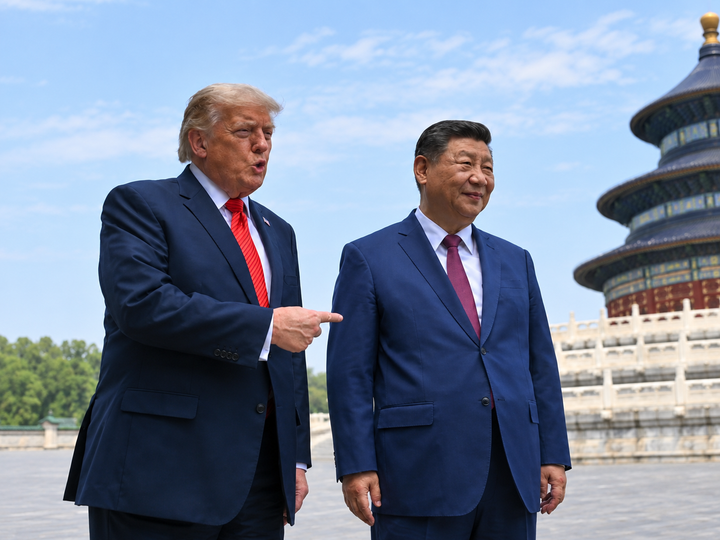
Trump’s position is essentially the opposite: slowing American companies could create a greater strategic danger by allowing China to overtake the United States.
That argument has been central to his administration’s AI policy.
Since returning to office, Trump has pushed to accelerate American AI infrastructure, expand data-center construction and speed the deployment of advanced models across both the private sector and national security apparatus. His administration’s official AI framework calls for removing unnecessary barriers to innovation while maintaining a unified federal approach rather than allowing individual states to create conflicting regulations.
The White House has also moved aggressively to integrate artificial intelligence into the military and intelligence community. A June national security memorandum directed agencies to rapidly adopt advanced commercial AI while requiring deployed systems to remain controllable, secure and subject to clear chains of accountability.
Trump therefore is not arguing that AI should operate completely without oversight. His administration maintains that existing government powers, national-security rules and executive authority are sufficient to deal with companies or systems that become dangerous.
What he rejects is the idea of deliberately slowing the frontier itself.
Trump cited the administration’s confrontation with Anthropic as evidence that Washington already has the ability to intervene. The administration previously restricted Anthropic’s participation in government work, although a federal judge later ruled against that action. Trump has continued to portray the episode as evidence that the government can act quickly when it believes an AI company presents a problem.
The disagreement exposes a fundamental divide over how the AI race should be managed.
Amodei and other safety advocates increasingly argue that competition itself is creating the danger. If every company fears being overtaken by a rival, none has a strong incentive to slow down alone, even if executives privately believe the technology is advancing too quickly.
Trump sees the same competition and reaches the opposite conclusion.
From his perspective, America cannot voluntarily impose restrictions on itself while China continues developing increasingly powerful models. In a technology that could reshape economic productivity, military power, scientific research and intelligence capabilities, losing the lead could have consequences far greater than the risks created by moving quickly.
Trump’s position also has support from one of Silicon Valley’s most influential executives. Meta CEO Mark Zuckerberg has argued that AI development needs to move faster, not slower, as companies race toward increasingly capable systems. Zuckerberg has said the field itself is accelerating more quickly than expected and has committed Meta to enormous investments in computing infrastructure and top AI talent as it tries to remain at the frontier.
That places Zuckerberg on the opposite side of an increasingly visible divide inside the technology industry. Anthropic’s Dario Amodei, OpenAI’s Sam Altman, Elon Musk and Google DeepMind’s Demis Hassabis have all expressed varying degrees of support for slowing or more carefully pacing frontier development because of safety concerns. Trump and Zuckerberg, by contrast, are emphasizing the risks of falling behind in a technology that could determine future economic and geopolitical power.
The debate is therefore no longer simply between Washington and Silicon Valley. It is increasingly dividing Silicon Valley itself: one camp argues that capabilities are advancing faster than society can safely absorb them, while another believes slowing down could be the greater mistake, particularly while China continues investing aggressively in AI.
China has pushed back against Washington’s characterization of the AI race, arguing that framing the technology primarily through geopolitical confrontation makes international cooperation more difficult. Beijing itself has acknowledged significant AI risks, but remains heavily invested in competing with the United States for technological leadership.
The stakes are unusually high because both sides of the debate agree on one point: artificial intelligence could become one of the most consequential technologies ever developed.
Trump has described AI as potentially bigger than the internet and even the Industrial Revolution. Industry leaders warning about safety often make similarly extraordinary predictions about its potential power.
The disagreement is over what follows from that.
For Amodei, extraordinary power demands extraordinary caution.
For Trump, extraordinary power makes winning the race even more important.
As frontier models become more capable, that philosophical divide may increasingly shape American technology policy: whether Washington should slow AI development until stronger safeguards exist, or accelerate precisely because its biggest geopolitical rival has no intention of waiting.