Trump Strikes Russian Diesel Deal Despite Sanctions Over Ukraine
Donald Trump has reached a deal with Vladimir Putin to release more than 1.8 million metric tons of Russian diesel into U.S. and global markets, with Washington temporarily easing sanctions to allow the shipments.
Donald Trump has reached a deal with Vladimir Putin to bring Russian diesel back into U.S. and global markets, temporarily easing sanctions on a country Washington is still trying to pressure over its war in Ukraine.
Trump announced on October 9 that Russia would immediately supply more than 300,000 metric tons of diesel, followed by another 500,000 tons in November and 1 million tons after that. The U.S. Treasury subsequently issued a six-month license allowing Russian diesel exports that would otherwise be caught by American sanctions.
The decision is a sharp reversal.
Only weeks earlier, Trump signed legislation designed to increase pressure on Russian energy revenues, one of the Kremlin’s most important sources of money.
Now Washington is making an exception for one of Russia’s most valuable petroleum exports.
The reason is not difficult to understand.
Diesel prices have exploded.
The war with Iran has disrupted energy supplies across the Middle East, refinery capacity is under pressure and global inventories have become increasingly thin. In the United States, diesel prices have climbed to around $6.28 per gallon, compared with roughly $3.68 a year earlier.
That matters far beyond truck drivers.
Diesel powers freight, agriculture, construction, industry and large parts of the logistics system.
When diesel becomes expensive, almost everything becomes more expensive with it.
Food has to be transported.
Factories need fuel.
Construction equipment has to run.
Supermarkets depend on trucks.
Higher diesel prices eventually become higher consumer prices.
With U.S. congressional elections approaching on November 3, Trump has little interest in allowing another energy shock to feed inflation.
So he called Putin.
The result is a deal that places domestic economic pressure ahead of one part of Washington’s Russia sanctions strategy.
Trump said Moscow would release the diesel immediately into the U.S. and international markets in an attempt to push prices down.
Russia, for its part, said it would begin lifting domestic export restrictions ahead of schedule.
Moscow had previously limited diesel exports after repeated Ukrainian strikes damaged Russian refineries and reduced domestic production.
The International Energy Agency estimates Russian diesel output has fallen by roughly 30%.
That creates an obvious irony.
Ukraine has spent months attacking Russian refineries precisely because energy exports finance Moscow’s war.
Those attacks worked well enough to tighten diesel supply.
But the resulting shortage helped push global fuel prices higher.
Now Washington is easing sanctions on Russian diesel partly to deal with the consequences.
The Trump administration has also been pressing Kyiv to stop striking Russian refineries.
The Financial Times reported that American officials warned Ukraine that continued attacks on Russian energy infrastructure could jeopardize U.S. intelligence sharing.
The logic from Washington is economic.
The logic from Kyiv is military.
Russia earns enormous revenue from energy.
Every damaged refinery weakens its ability to export fuel, supply military operations and finance the war.
Ukraine therefore sees Russian energy infrastructure as one of the few strategic vulnerabilities it can strike far behind the front line.
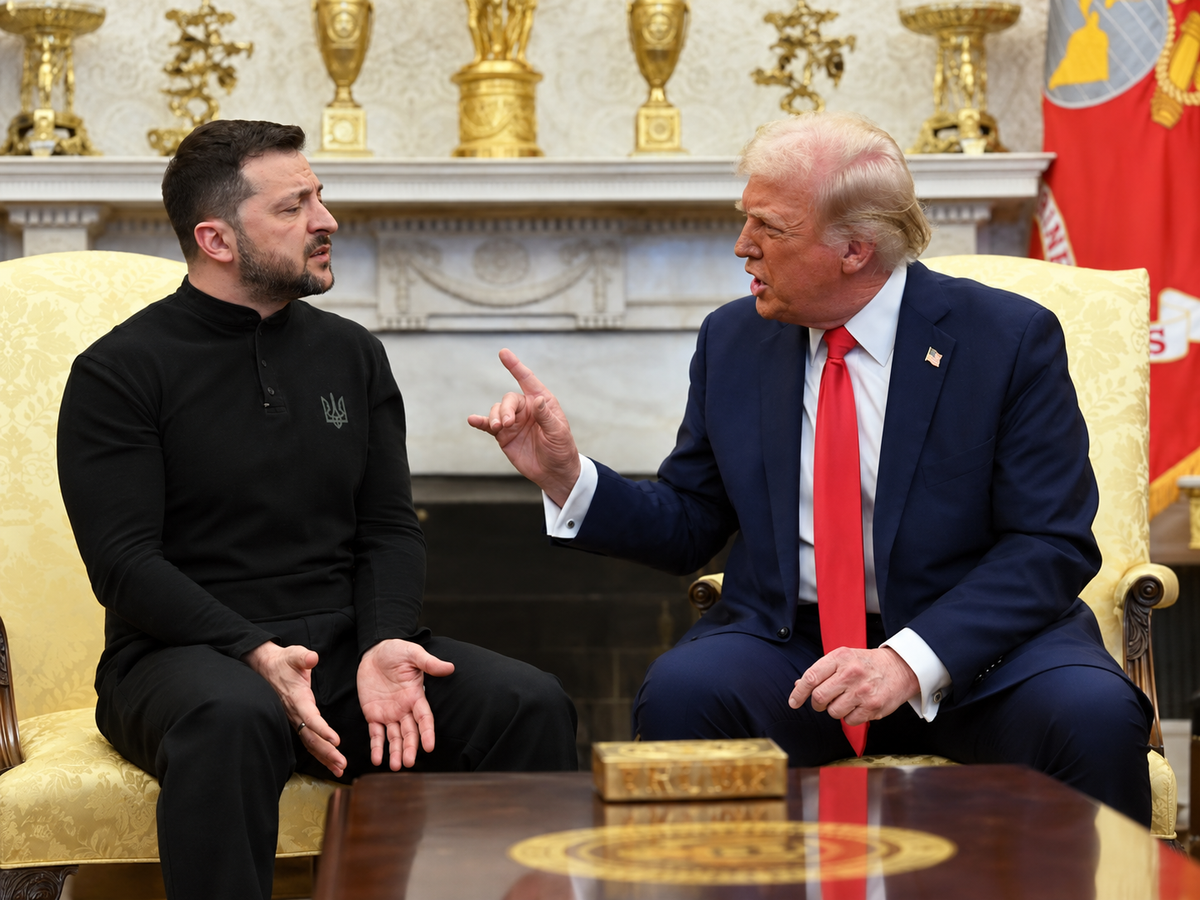
Zelensky reacted angrily to Trump’s deal.
He described the decision as “not fair and not honest” and argued that reopening Russian diesel exports effectively gives Moscow additional resources while it continues attacking Ukrainian cities.
European governments have raised similar concerns.
Their argument is straightforward: sanctions are supposed to increase the economic cost of continuing the war.
Relaxing them because those same sanctions create economic inconvenience in the West weakens their credibility.
That criticism became even sharper because the announcement came as Russian attacks on Ukraine continued.
A major Russian strike on Zaporizhzhia killed civilians shortly after the deal was announced, adding to a series of deadly attacks across Ukraine in recent days.
But there is another side to the calculation.
Sanctions are not an end in themselves.
They are a policy tool.
If maintaining a particular restriction produces significantly higher fuel prices in the United States while failing to force Russia toward a settlement, Trump appears willing to reconsider it.
That fits his broader approach to foreign policy.
He has generally treated sanctions, tariffs and economic pressure as negotiating instruments rather than permanent ideological commitments.
The administration is effectively arguing that American consumers should not bear unlimited costs simply to preserve a sanctions regime whose strategic results remain uncertain.
The problem is whether the diesel deal actually solves much.
Analysts are skeptical.
Russia was already an important diesel exporter before sanctions and wartime disruptions, but the additional volumes announced by Trump may still be relatively small compared with the scale of the global shortage.
One energy analyst described the move as largely shifting existing barrels between buyers rather than creating substantial new supply.
If Russia sends more diesel to the United States, some of its existing customers may simply have to purchase fuel elsewhere.
Markets nevertheless responded.
Diesel prices moved lower after the announcement, suggesting traders believe even limited additional Russian supply could ease some immediate pressure.
Politically, however, the deal is much larger than its physical volume.
For years, Western strategy toward Russia has rested partly on restricting Moscow’s access to global energy markets.
Europe reduced purchases.
The United States imposed sanctions.
Russian oil was subjected to price caps and financial restrictions.
Countries continuing to buy Russian energy came under increasing Western pressure.
Trump himself repeatedly criticized governments that purchased Russian energy while claiming to oppose the war.
Now the United States is making an exception for itself.
The decision has even created opposition inside Trump’s own party.
Republican Congressman Brian Fitzpatrick is preparing legislation intended to block Russian oil and fuel purchases, arguing that the United States should not finance Moscow while Russia continues its war.
That exposes the broader contradiction Washington now faces.
The United States wants Russia economically constrained.
It wants Ukraine to retain leverage.
It wants lower energy prices.
And it wants the Iran war to stop disrupting the global economy.
Those objectives no longer fit neatly together.
Restrict Russian fuel and diesel prices rise.
Allow Russian fuel back onto the market and Moscow earns more money.
Encourage Ukraine to hit Russian refineries and global supply tightens further.
Tell Ukraine to stop and one of its most effective forms of economic pressure disappears.
Trump has made his choice, at least temporarily.
For the next six months, keeping diesel flowing and prices under control is taking priority over maintaining maximum pressure on Russian fuel exports.
That does not end U.S. sanctions on Russia.
But it demonstrates something important about how quickly economic reality can reshape foreign policy.
Washington spent years trying to keep Russian energy out of Western markets.
A global fuel shortage has now forced it to invite some of it back.