Washington Defends Lebanon’s Ambassador as Complaint Reaches a Military Court Long Accused of Hezbollah Influence
A complaint against Lebanon’s ambassador to Washington, Nada Hamadeh Moawad, has reached the military judiciary, prompting an unusually strong U.S. response. Washington called the case “shameful” and said Lebanese authorities should focus instead on Hezbollah operatives.

Lebanon’s ambassador to Washington, Nada Hamadeh Moawad, is facing a complaint before the military judiciary after a lawyer identified by the U.S. State Department as pro-Hezbollah accused her over alleged contacts connected to Lebanon’s diplomatic track with Israel.
The State Department responded forcefully, calling the case “shameful” and saying Lebanon’s military judiciary should focus instead on Hezbollah operatives allegedly acting against the Lebanese state. Washington added that it had “run out of patience with attempts at obstruction.”
Moawad has not been formally charged. The complaint was referred by Lebanon’s public prosecutor to the government commissioner at the Military Court for review, meaning the case remains at an initial procedural stage.
But the institution handling it is itself controversial.
Lebanon’s Military Court has long been accused by lawyers, activists and rights organizations of heavy political influence and a lack of independence. Human Rights Watch documented longstanding concerns that the court has been used for political intimidation and retaliation, with one Lebanese lawyer describing political interference there as “really heavy.”
Inside Lebanon, the court has also frequently been viewed as particularly susceptible to the influence of Hezbollah and its political allies. That characterization remains politically contested rather than an established judicial finding, but it is central to why this case has triggered such a strong reaction.
The complaint reportedly concerns claims that Moawad contacted Israel’s ambassador in Washington after his son was injured in the West Bank. Whether that conversation occurred as alleged has not been established.
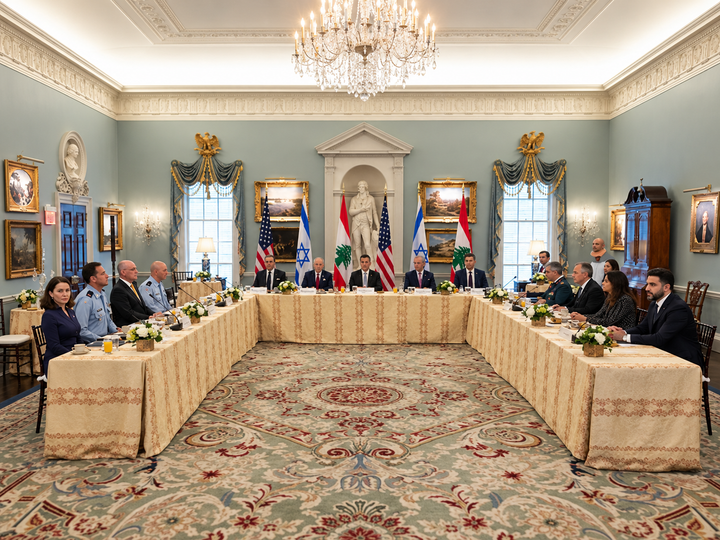
The broader issue is Moawad’s role in the U.S.-brokered diplomatic track between Lebanon and Israel.
She has been involved in negotiations concerning Israeli withdrawal, security arrangements in southern Lebanon and implementation of Lebanon’s official foreign policy. Washington’s position is therefore that an ambassador acting on behalf of her government should not face legal pressure for participating in diplomacy authorized by that same government.
The timing only deepens the controversy.
Lebanon is under pressure to establish exclusive state control over weapons, while Washington has become increasingly vocal about Hezbollah’s disarmament. Lebanese authorities are also investigating nearly one ton of recently seized explosives, including a large shipment that security and judicial sources have linked to alleged Hezbollah members.
Against that backdrop, the optics are difficult to ignore.
A diplomat participating in state negotiations is facing a complaint before one of Lebanon’s most politically controversial institutions, while the country is simultaneously being asked to demonstrate that its institutions are capable of confronting illegal weapons and armed networks.
The longstanding accusations of political interference surrounding the military court, together with the widespread perception among Hezbollah’s opponents that the group exercises influence over parts of Lebanon’s security and judicial system, are precisely why Washington is treating the complaint as more than an ordinary legal filing.
The question now is whether the case goes any further.
Moawad was carrying out official Lebanese policy, allowing politically motivated legal complaints to intimidate diplomats would undermine the same state authority Beirut says it is trying to restore.