Washington Is Losing Patience With The Lebanese Army, Says Actions Will Matter More Than Promises
Washington is showing growing frustration with the gap between Lebanon’s promises and the Lebanese Army’s performance on the ground.
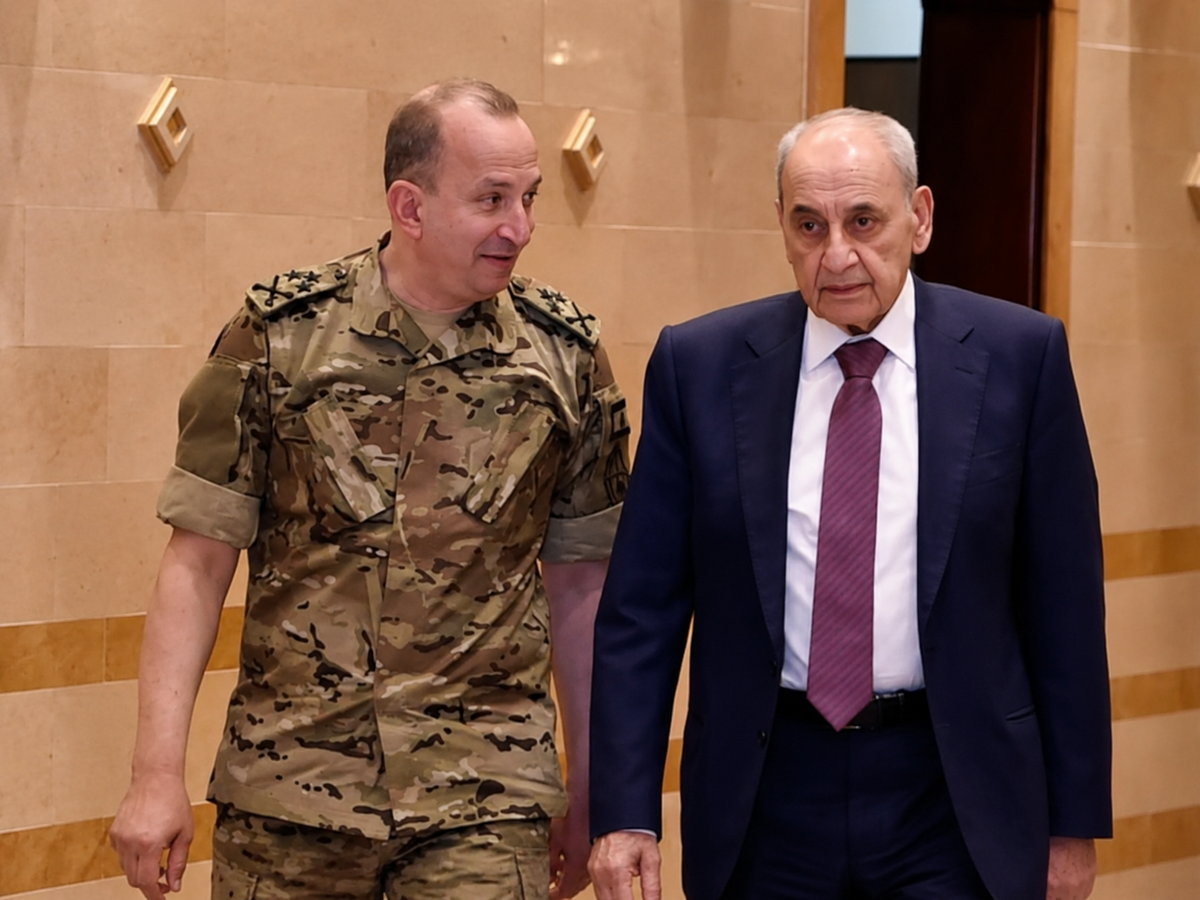
Washington’s patience with Lebanon appears to be wearing thin.
After months of declarations about restoring state sovereignty and establishing a monopoly over weapons, U.S. officials are increasingly signaling that speeches, plans and deployments are no longer enough. What matters now is what the Lebanese state and the Lebanese Armed Forces actually do on the ground.
Recent U.S.-linked reporting says Washington believes the optimistic rhetoric surrounding international support for the Lebanese Army does not fully match reality, particularly when it comes to Hezbollah’s remaining military infrastructure and the pace of disarmament. U.S. sources cited by Nidaa al-Watan and reported by Kataeb said the Army has expanded its presence in the south, but that deployment has not yet produced the level of dismantlement Washington expected.
That distinction is becoming increasingly important.
Lebanon can point to thousands of soldiers deployed in the south, new checkpoints, patrols and political commitments to state authority. But from Washington’s perspective, the real measure is whether those deployments actually result in Hezbollah surrendering weapons, military positions being dismantled and the state becoming the only armed authority capable of controlling Lebanese territory.
The confrontation over Ali al-Taher has sharpened those doubts.
The strategic ridge near Nabatiyeh had become one of the clearest tests of the U.S.-brokered framework. Washington wanted Hezbollah to hand the area over to the Lebanese Army as part of a broader process of disarmament. Hezbollah refused, according to reporting by the Associated Press, and Israeli forces subsequently fought for and claimed operational control of the ridge.
For Washington, episodes like Ali al-Taher raise an uncomfortable question: if the Lebanese Army cannot assume control of a strategically important position after Hezbollah is asked to withdraw, what exactly does the state’s commitment to sovereignty mean in practice?
U.S. officials cited in Lebanese reporting have increasingly suggested that the problem is not only the Army’s resources.
One former Pentagon official quoted in the recent reporting argued that the deeper problem was “not lack of resources, but will.”
That is a much more serious criticism.
For years, Lebanon has argued that the Army requires greater funding, equipment, training and international support before it can assume responsibilities previously exercised by Hezbollah. The United States has been one of the Army’s largest foreign supporters, while France, Jordan and other partners are now trying to mobilize even more assistance ahead of UNIFIL’s expected withdrawal.
But Washington appears increasingly reluctant to treat additional assistance as an end in itself.
The emerging message is that support must produce measurable outcomes.
That means the Army will increasingly be judged not simply by how many troops it deploys, but by whether it actually enters areas previously dominated by Hezbollah, secures military positions, prevents the rebuilding of infrastructure and enforces government decisions on weapons.
That also places President Joseph Aoun’s recent comments in Paris under greater scrutiny.
Aoun said Lebanon had “done what was required,” arguing that continued Israeli occupation and attacks were now the principal obstacles to implementing the latest agreement.
There is truth in part of that argument.
Israel continues to hold territory inside Lebanon, Israeli strikes have continued despite the June framework, and those actions complicate Lebanese Army deployments and make Hezbollah’s disarmament politically more difficult. The June agreement itself links Israeli withdrawal to Hezbollah’s disarmament and the deployment of Lebanese state forces.
But Washington’s growing frustration suggests that U.S. officials do not consider Lebanon’s side of the bargain complete.
Hezbollah remains armed.
Its military structures have not disappeared.
The government has not established an uncontested monopoly over force.
And the Army has not yet taken full control of all the territory and military positions expected under the framework.
That is why the language coming from Washington increasingly focuses on actions rather than intentions.
This is not yet a formal American abandonment of the Lebanese Army. Washington continues to treat the LAF as a critical national institution and has not announced an end to military assistance.
But the political conditions surrounding that assistance are becoming tougher.
Recent reporting indicates that future U.S. backing could increasingly depend on demonstrable progress toward Hezbollah’s disarmament rather than simply continued promises that the process will happen eventually.
The shift is important because the Lebanese Army has long benefited from a relatively broad international consensus.
Even governments sharply critical of Hezbollah have generally treated the Army separately, portraying it as a professional national institution that should be strengthened rather than blamed for Lebanon’s political paralysis.
That separation may now be becoming harder to maintain.
The question Washington appears to be asking is straightforward: if the Army continues receiving weapons, equipment, training and money, what measurable change is occurring on the ground?
That does not mean the Army alone controls the answer.
Military commanders ultimately operate under political authority. If the Lebanese government does not authorize confrontations with Hezbollah or restricts where the Army can move, responsibility cannot simply be placed on soldiers in the field.
The Ali al-Taher episode illustrates that problem.
The Army said it was prepared to deploy to areas vacated by Israeli forces, while reporting around the ridge suggested that the broader political and security environment prevented a clean transfer from Hezbollah to state control. Israel ultimately seized the initiative itself.
So the credibility problem facing Lebanon is increasingly political as much as military.
President Aoun, Prime Minister Nawaf Salam and the government have repeatedly declared that the state must hold a monopoly over weapons.
Washington now appears to be asking when those declarations become enforceable decisions.
The timing matters.
UNIFIL is scheduled to begin withdrawing in 2027, and France is already discussing alternative arrangements to prevent a security vacuum. European and Arab military leaders meeting in Paris this week focused heavily on strengthening the Lebanese Army so it can eventually assume responsibilities currently supported by the UN mission.
That creates both an opportunity and a deadline.
If Lebanon wants international partners to fund and equip the Army as the sole security authority in the south, it will increasingly need to demonstrate that the Army is actually becoming that authority.
Deployments alone will not prove it.
Statements alone will not prove it.
International conferences will not prove it.
The test will be whether Hezbollah’s independent military infrastructure continues to exist and whether the Lebanese state is prepared to enforce its own decisions when those decisions are resisted.
Washington’s message is becoming clearer.
Lebanon has spent years asking the international community to strengthen its army.
The United States now appears to be asking what Lebanon intends to do with it.